
Forgetting My Mother
Every day, when I’m done with work, I call my mom. Today she was in a good mood; she told me that grandpa came to lunch. My grandpa died twenty-five years ago.
My mom told me that this morning she got up early, showered, and got dressed. She went to the kitchen, where she set up the tablemats for breakfast; she couldn’t make coffee though, because her arms are not strong enough anymore and she can’t reach the stove. One day, she leaned over to touch the tips of her feet, but her arms seemed to have grown shorter out of nowhere, the tips further away. She was stuck, folded like the page of a book you closed in a hurry.
After breakfast, she asked my dad to go get groceries, and she gave him a list of all the food my grandpa liked and she wanted him to have for lunch. She remembers all the things my grandpa ate twenty-five years ago, and even before that. She remembers the latte, the biscuit bread, the polenta, cut into slices—he ate it with boiled meat, a spoonful of horseradish sauce on top. When my father came back from the grocery store, he helped her make the broth; they put the meat inside, and as it cooked, my father sat on the couch and read the newspaper. As she waited, my mom set the table for three, and when the timer went off, she grabbed the pieces of meat and placed them on a serving dish.
She sat there for almost an hour; the boiled meat was getting cold, but grandpa didn’t show up. So she went to the bedroom, the one she thought was grandpa’s room, but grandpa wasn’t there. His clothes weren’t there—the tiny, hand-sewn leather slippers, the glass on the nightstand, the glasses with the leather cord hanging from the frame. She couldn’t find his wool underwear, the one I never understood how he could wear without getting orchitis, and his fustian vest, his tartan blazer. When she was done counting everything that was missing, she went back to the kitchen, grabbed her address book and the cordless phone—the black one with the screen as big as the seven 300 mg pills of Depakin Chrono she takes every week, mixed with a dozen other meds I stopped counting.
There are nine big buttons on my parents’ phone. They’re lined up by three; the one-to-nine digits first. The zero button is at the end, centered between two icons of a telephone—one red, the other green. My mom called the sister on the first line of the address book, then the one on the second, the third, the fourth, but grandpa wasn’t at their place either. So she went back to the kitchen and sat down in front of her husband—my father—and, ignoring the empty dish on the table, she asked, “And where have you been, since you weren’t at my sisters’?”
My mom was a good cook. Now she can’t do anything anymore, so, when I visit her, I tell her to prepare the salad, just to kill time. She peels away the bad leaves, and I tell her, “Throw them away and leave the good ones.” She starts, but then she forgets, so we eat the rotten salad and we mix it with curcuma and balsamic vinaigrette to cover the bad taste. We still buy cooking magazines for her. When she finds the pictures of meat dishes, she asks for a knife and tries to slice the roast in the picture, but it stays whole, so she asks for another. “Give me a steak knife,” she says. She grabs it and pushes it hard against the page, but the roast doesn’t cut, so she gets angry and tosses the knife on the floor and gets even angrier because she can’t pick it up.
The things that my mother drops make a different noise than others, as if they fell from below. Her hands shake, but she’s not moving them. For years, my mother’s hands have been in the right place, well-kept, with polished nails and rings on her fingers. I don’t remember that they had a good scent—they always smelled like bleach, she used it everywhere, before, during and after. My mom forgets she’s sick; she has been forgetting many things lately. Her memory hiccups, slips between her fingers like sand; since she had a diagnosis, we’ve been noticing it, but before that, we didn’t really. Before, we got pissed. That’s what happens when you don’t understand illness.
Sometimes my mother mixes me up with her nurse—probably because she assists her like I should do: she feeds her, talks to her, washes her, walks her around the house. She pushes the wheelchair into rooms that my mother doesn’t recognize, where she’s looking for something she forgets. Sometimes my mother calls her by my name. Every time it happens, a piece of my shadow disappears. She doesn’t know who I am anymore; she doesn’t know my name; how old I am; she doesn’t know when I come to visit her; she doesn’t remember when I leave nor how long I stay. Some days I dream to wake up and forget that I live far away; I dream to wake up without feeling all the miles apart; I dream of throwing my sense of guilt away like eggs against a wall. Sometimes I dream to lose my memory and to find everything else.

Ogni giorno, finito di lavorare, telefono a mia mamma. Oggi era di buon umore, mi ha raccontato che il nonno era stato a pranzo da loro. Mio nonno è morto 25 anni fa.
La mamma mi ha detto che stamattina si è alzata presto, lavata e vestita. È andata in cucina dove ha preparato le tovagliette per la colazione, il caffè no ché nelle braccia non ha più forza e ai fornelli non ci arriva. Un giorno si è piegata in avanti, come a toccarsi le punte, solo che le braccia erano diventate improvvisamente più corte, o le punte più distanti, ed è rimasta piegata su sé stessa come una pagina dentro un libro chiuso in fretta.
Dopo colazione, ha chiesto a mio papà di andare a fare la spesa, gli ha fatto la lista di tutte le cose che piacevano al nonno e che voleva fargli trovare a pranzo. Se le ricorda tutte le cose che mangiava mio nonno 25 anni fa e anche prima. Si ricorda del caffellatte, del pane biscottato, della polenta, quella gialla, tagliata a fette che voleva con il bollito sul quale metteva un cucchiaino di cren. Quando mio padre è tornato dal supermercato l’ha aiutato a preparare il brodo, ci hanno messo dentro la carne e intanto che cuoceva, mio papà si è messo sul divano a leggere il giornale. Mentre aspettava, mia mamma ha apparecchiato la tavola per tre e quando il timer è suonato ha tirato fuori i pezzi di carne e li ha appoggiati sul piatto da portata.
È rimasta seduta quasi un’ora, il bollito si raffreddava ma, mio nonno, non arrivava. Allora, è andata fino alla camera da letto, quella che era convinta fosse la stanza di mio nonno, ma il letto era fatto, e il nonno non c’era. Non c’erano i suoi vestiti, le piccole ciabatte di pelle cucite a mano, il bicchiere sul comodino, gli occhiali con il cordino di pelle attaccato alle stanghette. Non c’erano le mutande di lana – che non ho mai capito come riuscisse a portare senza farsi venire l’orchite –, il panciotto di fustagno, la giacca scozzese. Quando ha finito di contare quello che non c’era, è tornata in cucina, ha preso la rubrica e il cordless, quello nero con lo schermo grande come le sette pastiglie di Depakin Chrono 300 mg che prende ogni settimana, insieme a un’altra decina di farmaci dei quali ho smesso di chiedermi l’utilità.
Sul telefono dei miei ci sono nove tasti grandi. Sono disposti in fila per tre, prima i numeri dall’uno al nove; il tasto dello zero è in fondo, al centro, tra una cornetta verde e una rossa. La mamma ha chiamato, in ordine, la sorella sulla prima riga della rubrica, quella sulla seconda, sulla terza e, infine, quella sulla quarta ma il nonno non era neanche da loro. Allora è tornata in cucina, si è seduta di fronte a suo marito, mio padre, e, ignorando il piatto vuoto a tavola, gli ha chiesto: Allora, dove sei andato che dalle mie sorelle non ci sei stato?
Mia mamma era brava a cucinare. Adesso non riesce più a fare quasi niente così quando vado a trovarla, per riempire le ore, le do da pulire l’insalata. Togli le foglie brutte, mettile da parte e tieni quelle belle dall’altra, le dico. Lei inizia, ma poi si dimentica e così mangiamo insalata che sa di marcio e la condiamo con curcuma e aceto balsamico per sentirlo di meno. Le compriamo ancora qualche rivista di cucina. Quando trova delle foto con piatti di carne chiede il coltello, lo passa avanti e indietro sulla foto dell’arrosto ma l’arrosto rimane intero, allora ne chiede un altro: Dammene uno che abbia il seghetto, mi chiede. Lo impugna e lo preme forte sulla pagina, ma l’arrosto non si taglia, allora lei si arrabbia e butta il coltello per terra e poi si arrabbia di più perché non riesce a raccoglierlo.
Le cose che cadono a mia madre fanno un rumore diverso dalle altre, come di un peso che cade dal basso. Ha le mani che tremano, non stanno ferme, ma non è lei a muoverle. Per anni le mani di mia madre sono state al loro posto, curate, con le unghie smaltate e gli anelli alle dita. Non le ricordo profumate, puzzavano sempre di varecchina, la usava dappertutto, prima, durante e dopo. Mia mamma dimentica di essere ammalata, dimentica un sacco di cose da qualche tempo. Ha la memoria a singhiozzo, le scivola come sabbia dalle mani; da quando ci hanno dato la diagnosi ci facciamo caso, prima meno. Prima, ci incazzavamo. Succede così, quando non capisci le malattie.
Mia madre ogni tanto mi scambia con la badante, probabilmente perché la assiste come dovrei fare io: la imbocca, le parla, la lava, l’accompagna in giro per casa. Spinge la sedia a rotelle dentro stanze che mia madre non riconosce più dove cerca qualcosa che non ricorda. A volte mia madre la chiama col mio nome. Ogni volta che succede, un pezzo della mia ombra scompare. Lei non sa più chi sono, come mi chiamo, quanti anni ho; non sa quando arrivo, non ricorda quando parto né quanto mi fermo. Ci sono giorni in cui sogno di svegliarmi e dimenticarmi che vivo lontano, svegliarmi senza sentire i chilometri di distanza tirare i miei sensi di colpa come uova contro il muro. Alle volte sogno di perdere la memoria ritrovando, così, tutto il resto.
Translator Statement
I follow Italian literary magazines because, as a writer myself, I think writing can’t just be a solitary act; I like to think of writing as a conversation between different artists. When I read Barbara Bedin’s story, I didn’t know her work, but I knew immediately that I was going to translate “Dimenticare Mia Madre.” I was particularly touched by the description of the mother’s cooking; as cliché as this may sound, food is a tool of acceptance and union in Italian culture, and the vividness of the details in tastes, textures, and fabrics made the characters really come alive. For me, this story has all: the extremely specific cultural elements and the universality. The narrator’s mother is suffering from an illness that we know very well and that many writers have depicted before. Yet, those details made the story unique for me. Translating wasn’t easy because of the specificity of such details (some of the food is typical of a specific region of Northern Italy). It was a challenge, but it gives me great satisfaction to bring this bit of Italy to an American audience.
Barbara’s original story was published in Narrandom, an Italian literary magazine.
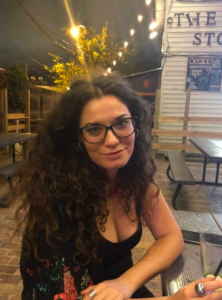
Rachele Salvini is a PhD student in fiction at Oklahoma State University. Her short stories, both in English and Italian, are published or forthcoming in several magazines online and on paper, such as Sarah Lawrence Review, Litro UK, Takahe Magazine and others. She is also a translator, and her translations from English to Italian have been published or forthcoming in several Italian journals, such as L’Elzeviro, L’Inquieto, Lunario, and YAWP!.
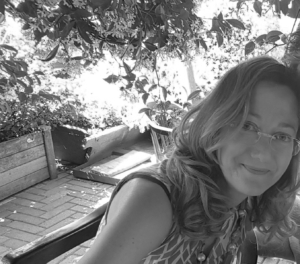
Barbara Bedin was born in the province of Padua and she lives in Lodi with her family. She holds a degree in business administration; she had many jobs, but has been working in the commercial department of a cosmetics company since 2004. Her stories have been published in several Italian literary magazines, both in print and online (Cadillac Magazine, effe, Grafemi, Narrandom, inutile and Squadernati). She just finished her first novel.