Lunch Ticket
  • Current Issue
  • Archive
    • Issues Archive
      • Issue 28: Winter/Spring 2026
      • Issue 27: Summer/Fall 2025
      • Issue 26: Winter/Spring 2025
      • Issue 25: Summer/Fall 2024
      • Issue 24: Winter/Spring 2024
      • Issue 23: Summer/Fall 2023
      • Issue 22: Winter/Spring 2023
      • Issue 21: Summer/Fall 2022
      • Issue 20: Winter/Spring 2022
      • Issue 19: Summer/Fall 2021
      • Issue 18: Winter/Spring 2021
      • Issue 17: Summer/Fall 2020
      • Issue 16: Winter/Spring 2020
      • Issue 15: Summer/Fall 2019
      • Issue 14: Winter/Spring 2019
      • Issue 13: Summer/Fall 2018
      • Issue 12: Winter/Spring 2018
      • Issue 11: Summer/Fall 2017
      • Issue 10: Winter/Spring 2017
      • Issue 9: Summer/Fall 2016
      • Issue 8: Winter/Spring 2016
      • Issue 7: Summer/Fall 2015
      • Issue 6: Winter/Spring 2015
      • Issue 5: Summer/Fall 2014
      • Issue 4: Winter/Spring 2014
      • Issue 3: Summer/Fall 2013
      • Issue 2: Winter/Spring 2013
      • Issue 1: Spring 2012
    • Genre Archive
      • Creative Nonfiction
      • Essays
      • Fiction
      • Flash Prose
      • Interviews
      • Lunch Specials
      • Poetry
      • Translation
      • Visual Art
      • Young Adult
  • About
    • Mission Statement
    • Lunch Ticket Staff
      • Issue 28: Winter/Spring 2026
      • Issue 27: Summer/Fall 2025
      • Issue 26: Winter/Spring 2025
      • Issue 25: Summer/Fall 2024
      • Issue 24: Winter/Spring 2024
      • Issue 23: Summer/Fall 2023
      • Issue 22: Winter/Spring 2023
      • Issue 21: Summer/Fall 2022
      • Issue 20: Winter/Spring 2022
      • Issue 19: Summer/Fall 2021
      • Issue 18: Winter/Spring 2021
      • Issue 17: Summer/Fall 2020
      • Issue 16: Winter/Spring 2020
      • Issue 15: Summer/Fall 2019
      • Issue 14: Winter/Spring 2019
      • Issue 13: Summer/Fall 2018
      • Issue 12: Winter/Spring 2018
      • Issue 11: Summer/Fall 2017
      • Issue 10: Winter/Spring 2017
      • Issue 9: Summer/Fall 2016
      • Issue 8: Winter/Spring 2016
      • Issue 7: Summer/Fall 2015
      • Issue 6: Winter/Spring 2015
      • Issue 5: Summer/Fall 2014
      • Issue 4: Winter/Spring 2014
      • Issue 3: Summer/Fall 2013
      • Issue 2: Winter/Spring 2013
      • Issue 1: Spring 2012
    • Achievements
    • Community
    • Contact
  • Weekly Content
    • Friday Lunch Blog
    • Midnight Snack
    • Amuse-Bouche
    • School Lunch
  • Contests
    • Diana Woods Award in CNF
      • Issue 28: Winter/Spring 2026
      • Issue 27: Summer/Fall 2025
      • Issue 26: Winter/Spring 2025
      • Issue 25: Summer/Fall 2024
      • Issue 24: Winter/Spring 2024
      • Issue 23: Summer/Fall 2023
      • Issue 22: Winter/Spring 2023
      • Issue 21: Summer/Fall 2022
      • Issue 20: Winter/Spring 2022
      • Issue 19: Summer/Fall 2021
      • Issue 18: Winter/Spring 2021
      • Issue 17: Summer/Fall 2020
      • Issue 16: Winter/Spring 2020
      • Issue 15: Summer/Fall 2019
      • Issue 14: Winter/Spring 2019
      • Issue 13: Summer/Fall 2018
      • Issue 12: Winter/Spring 2018
      • Issue 11: Summer/Fall 2017
      • Issue 10: Winter/Spring 2017
      • Issue 9: Summer/Fall 2016
      • Issue 8: Winter/Spring 2016
      • Issue 7: Summer/Fall 2015
      • Issue 6: Winter/Spring 2015
      • Issue 5: Summer/Fall 2014
      • Issue 4: Winter/Spring 2014
      • Issue 3: Summer/Fall 2013
    • Gabo Prize in Translation
      • Issue 28: Winter/Spring 2026
      • Issue 27: Summer/Fall 2025
      • Issue 26: Winter/Spring 2025
      • Issue 25: Summer/Fall 2024
      • Issue 24: Winter/Spring 2024
      • Issue 23: Summer/Fall 2023
      • Issue 22: Winter/Spring 2023
      • Issue 21: Summer/Fall 2022
      • Issue 20: Winter/Spring 2022
      • Issue 19: Summer/Fall 2021
      • Issue 18: Winter/Spring 2021
      • Issue 17: Summer/Fall 2020
      • Issue 16: Winter/Spring 2020
      • Issue 15: Summer/Fall 2019
      • Issue 14: Winter/Spring 2019
      • Issue 13: Summer/Fall 2018
      • Issue 12: Winter/Spring 2018
      • Issue 11: Summer/Fall 2017
      • Issue 10: Winter/Spring 2017
      • Issue 9: Summer/Fall 2016
      • Issue 8: Winter/Spring 2016
      • Issue 7: Summer/Fall 2015
      • Issue 6: Winter/Spring 2015
    • Twitter Poetry Contest
      • 2021 Winners
      • 2020 Winners
      • 2019 Winners
  • Submissions
  • Click to open the search input field Click to open the search input field Search
  • Menu Menu
  • Link to Facebook
  • Link to Instagram
  • Link to X

Litdish: Elham Hajesmaeili, Artist
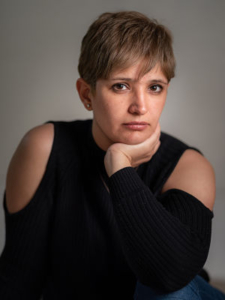
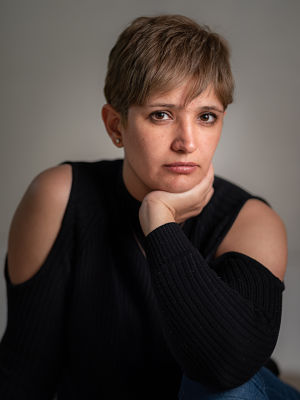
April 15, 2019/in Amuse-Bouche, Amuse-Bouche 2019 / Interviewed by Sara Voigt

Elham Hajesmaeili

Born in Iran in 1984, Elham Hajesmaeili received a BFA in handicrafts from the Shiraz University in 2006, an MA in art studies from the University of Art, Tehran, Iran in 2010, and an MFA in painting and drawing from the Pennsylvania State University, US in 2017. She has held multiple groups and solo exhibitions in Iran and the United States. Currently, she is a dual-titled PhD student in art education and women studies at the Pennsylvania State University. When Elham arrived in the United States in 2015, she experienced living in a liminal space between Iranian and American cultures and has continued her works based on identity issues. Her works represent an observation of an identity oscillating between two geographical contexts, while sexuality remains the silent power holder.

Ten Questions with artist Elham Hajesmaeili

1. What’s your creative process like? Do you have a set routine (e.g., music playing, time of day, lucky token, etc.)? Is there a difference when you’re starting a new project or continuing one you’ve already started?

Generally, when the pressure of expressing myself can no longer be contained, I create art. I prefer silence when I am starting a new project in order to fully focus. The process of making sculpture is totally different than painting because in sculpture I can touch and feel. Painting is a pure feeling and a controlled art form. However, in sculpture, each material used has a different melody and I have to dance to the music the material plays. For example, when working with clay, there are boundaries, you adapt to the clay’s potential. Usually, I am looking for materials that are connected to the idea that I am trying to convey because every material has a personality. The difference between starting a new project or continuing an old one is that when beginning something new, I feel free and unrestrained because it is a fresh idea and it sets the standard for the rest of the series. However, when I go back to a previous work, I have parameters because the flow has already been established.

2. What’s the most recent thing you’ve created or curated?

My most recent project is “About the Body,” which concentrates on the color of human skin—specifically, the curves of the female form. The project is still in progress. I am using a CNC machine to create three-dimensional images, by generating shapes, then stretching canvases on top of the shapes rather than just painting on the ordinary flat surface of the canvas. I attempt to make as many pigments of human skin as I can. The most interesting thing about skin color is the variations and mixtures of red, blue, yellow, and white. It fascinates me because these colors react to one another and produce a color that really has no name. Oftentimes a subject will reveal itself on its own. For example, “Spanked” is a work where the red pigment radiated and reminded me of the tones associated with spanked skin.
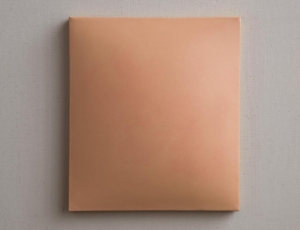
Spanked, Acrylic on canvas, 2017

3. Where do you find your inspiration? Are there certain places or people you look to?

My inspiration comes from the places I go, the people I meet, and the politics associated with them. I do not identify with any specific artists or styles. It is difficult to categorize my art because each project differs from the other. I am inspired daily by my surroundings and the general patterns that I grew up seeing around me. Place and time are strong factors that impact my expressive proclivities.

4. Was there a specific artist or piece of art that inspired you to become an artist yourself? When did you discover the artist calling?

I discovered art myself and not through any specific person or influence. Around 10 years ago, in Iran, I remember consulting with an art professional and I asked him to teach me how to make art. I needed proper training in order to be accepted into a school of art. However, his words strongly resonated with me. He said “One cannot train someone to be an artist. If your calling is to be an artist, the artist in you will come out on its own.” And this was exactly how it happened for me. After graduating from the University of Art in Iran and got my MA degree in art studies, I started teaching formal art history at several colleges and universities in Iran. During that period in my life, I was distraught, and I felt displaced. One day I bought some canvas and pigments and my skillset evolved through practice and time. Then one day I opened my eyes, and I was surrounded by about ten paintings—my first series. During its construction, I did not intend for the self-portraits to be a series. In fact, naturally, to me, art was always individualistic, but at that moment, I looked around me, at my space and my immediate surroundings became—without intent—my first series, which came to be titled A Goddess Never Stands Alone.

5. How does your day job inform or affect your art and creative process?

After receiving my MFA at Pennsylvania State University, I am now in the art education PhD program. From the perspective of an aspiring educator, I am interested in how art education and art as a creative process merge.

6. What’s the most important thing(s) you want to get across in your art?

Art is a language, a language in which I can express my thoughts without having to use words. It is the most beautiful form of expression and nothing in this world can take its place. Many ask me what the long necks in my A Goddess Never Stands Alone series means. To me, it is the suppression of my words. The words I never said. Furthermore, for others, I would like for each individual viewer to get out of my art whatever they want to get out of it. I have had several mentions to me that my art makes them feel uncomfortable. I wanted to delve more into why that was. I asked one such person what it was about my work that made them feel discomfort. Her response resonated so strongly with me. She told me that by feeling discomfort, she asked herself why. This led her to confront herself and her deeper feelings about her sexuality and femininity. She learned something quite
profound about herself, as a result of my work; therefore, I felt that my work did what it was intended to do.

7. What advice would you give to any emerging artists?

Pay attention to your creative process and discover new things about yourself along the way. Skill and technique are learned, but creativity is unique to each artist.

8. Which artist(s) should we be paying attention to right now? What are some great works you’ve seen recently?

Any type of art that provokes an emotion within the viewer is worthwhile. For me, Iranian and western art are two distinctive types. I can strongly connect to Iranian art. I would encourage for those interested to begin by studying Shirin Neshat. She has paved the way for feminism in Iranian art. Any Iranian artist and/or activist that can open up conversations regarding the oppression of female expression and sexuality is important. Many movements are going on in Iran right now. For example, “White Wednesdays” where women protest against obligatory Hijab. Kiana Honarmand’s work encompasses many of these elements.

9. What are your interests outside of the creative and artistic world?

Hobbies and interest change based on time and place. For an artist that felt displaced at certain stages in her life, sometimes the mere switching and changes of interests could be labeled a hobby.

10. What question do you wish I’d have asked you, and what would your answer be? Is there any common theme that tends to manifest itself in all of your work?

Whether intentional or not, my Persian roots always surface. There are two essential aspects in my work: female sexuality and cultural identities. Female sexuality is exhibited through skin tonality and material that can produce an heir of sensuality. And traces of my culture can be found through colors, patterns, and architectural ornamentation. Female sexuality and culture are present in all my works; however, one theme will outweigh the other in intensity, this occurs naturally during the art-making process.
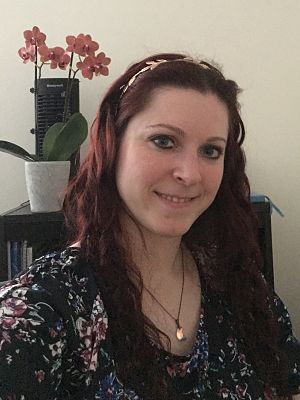
 

Sara Voigt is a current MFA candidate at Antioch University Los Angeles where she’s pursuing her masters in creative writing. She also works on the literary journal Lunch Ticket, where she’s working as proof edit manager and managing editor. Originally from Wisconsin, she currently lives and works in the Los Angeles area.

https://lunchticket.org/wp-content/uploads/2019/04/Elham-Hajesmaeili-headshot_opt.jpg 400 300 Interviewed by Sara Voigt https://lunchticket.org/wp-content/uploads/2021/12/lunch-ticket-logo-white-text-only.png Interviewed by Sara Voigt2019-04-15 08:43:512019-06-28 16:47:19Litdish: Elham Hajesmaeili, Artist

Amuse-Bouche Archive

  • 2026
  • 2025
  • 2024
  • 2023
  • 2022
  • 2021
  • 2020
  • 2019
  • 2018
  • 2017
  • 2016
  • 2015
  • 2014
  • 2013

Friday Lunch Blog

Friday Lunch! A serving of contemporary essays published the second Friday of every month.

Today’s course:

Being A Girl is Hard

November 28, 2025/in Blog / Shawn Elliott
Read more
https://lunchticket.org/wp-content/uploads/2025/11/Headshot_Shawn-Elliott_1500x2000.jpeg 2000 1500 Shawn Elliott https://lunchticket.org/wp-content/uploads/2021/12/lunch-ticket-logo-white-text-only.png Shawn Elliott2025-11-28 11:00:252025-12-11 17:48:50Being A Girl is Hard

Diagnosis: Persisted or Silent Inheritance

November 7, 2025/in Blog / Paula Williamson
Read more
https://lunchticket.org/wp-content/uploads/2025/12/Headshot_Paula-Williamson_1467x2000.jpg 2000 1467 Paula Williamson https://lunchticket.org/wp-content/uploads/2021/12/lunch-ticket-logo-white-text-only.png Paula Williamson2025-11-07 11:00:072025-12-11 17:48:51Diagnosis: Persisted or Silent Inheritance

The Queer Ultimatum Made Me Give My Own Ultimatum

September 26, 2025/in Blog / Lex Garcia
Read more
https://lunchticket.org/wp-content/uploads/2025/09/Garcia_Headshot.jpg 1088 960 Lex Garcia https://lunchticket.org/wp-content/uploads/2021/12/lunch-ticket-logo-white-text-only.png Lex Garcia2025-09-26 11:00:112025-09-24 11:22:02The Queer Ultimatum Made Me Give My Own Ultimatum

More Friday Lunch Blog »

Midnight Snack

Take a bite out of these late night obsessions.

Tonight’s bites:

The Lilac and The Housefly: A Tale of Tortured Romanticism

October 24, 2025/in Midnight Snack / Nikki Mae Howard
Read more
https://lunchticket.org/wp-content/uploads/2025/10/Headshot_Nikki-Howard_1770x2000.jpg 2000 1770 Nikki Mae Howard https://lunchticket.org/wp-content/uploads/2021/12/lunch-ticket-logo-white-text-only.png Nikki Mae Howard2025-10-24 23:55:032025-10-20 10:59:03The Lilac and The Housefly: A Tale of Tortured Romanticism

Dig Into Genre

May 23, 2025/in Midnight Snack / Lauren Howard
Read more
https://lunchticket.org/wp-content/uploads/2025/05/Lauren-Howard-credit-Terril-Neely-scaled-773x1030-1.jpg 1030 773 Lauren Howard https://lunchticket.org/wp-content/uploads/2021/12/lunch-ticket-logo-white-text-only.png Lauren Howard2025-05-23 23:59:492025-06-17 18:29:02Dig Into Genre

The dreams in which I’m (not) dying

April 25, 2025/in Midnight Snack / paparouna
Read more
https://lunchticket.org/wp-content/uploads/2025/04/paparouna-photo.jpeg 960 720 paparouna https://lunchticket.org/wp-content/uploads/2021/12/lunch-ticket-logo-white-text-only.png paparouna2025-04-25 23:55:312025-08-14 16:18:41The dreams in which I’m (not) dying

More Midnight Snacks »

School Lunch

An occasional Wednesday series dishing up today’s best youth writers.

Today’s slice:

I’ve Stayed in the Front Yard

May 12, 2021/in School Lunch, School Lunch 2021 / Brendan Nurczyk
Read more
https://lunchticket.org/wp-content/uploads/2021/05/SL-Insta-Brendan-Nurczyk-2.png 1500 1500 Brendan Nurczyk https://lunchticket.org/wp-content/uploads/2021/12/lunch-ticket-logo-white-text-only.png Brendan Nurczyk2021-05-12 10:18:392022-02-01 13:24:05I’ve Stayed in the Front Yard

A Communal Announcement

April 28, 2021/in School Lunch, School Lunch 2021 / Isabella Dail
Read more
https://lunchticket.org/wp-content/uploads/2021/04/SL-FB-Isabella-Dail.png 788 940 Isabella Dail https://lunchticket.org/wp-content/uploads/2021/12/lunch-ticket-logo-white-text-only.png Isabella Dail2021-04-28 11:34:132021-04-28 11:34:13A Communal Announcement

Seventeen

April 14, 2021/in School Lunch, School Lunch 2021 / Abigail E. Calimaran
Read more
https://lunchticket.org/wp-content/uploads/2021/04/SL-Insta-Abigail-E.-Calimaran.png 1080 1080 Abigail E. Calimaran https://lunchticket.org/wp-content/uploads/2021/12/lunch-ticket-logo-white-text-only.png Abigail E. Calimaran2021-04-14 11:22:062021-04-14 11:22:06Seventeen

More School Lunch »

Word From the Editor

Editing issue 28, I felt something similar to the way I feel near water: I dove into my own private world. The world above the surface kept roaring, of course. The notifications, deadlines, the constant noise was always there. But inside the work, inside these poems and stories and artwork, there was a quiet that felt entirely mine. A place where I could breathe differently.

More from the current editor »
Current Issue »

Connect With Us

lunchticket on facebooklunchticket on instaX
Submit to Lunch Ticket

A literary and art journal
from the MFA community at
Antioch University Los Angeles.

Get Your Ticket

We’ll keep you fed with great new writing, insightful interviews, and thought-provoking art, and promise with all our hearts never to share your info with anyone else.

Newsletter Signup
Copyright © 2012-2025 LunchTicket.org. All Rights Reserved. Web design and development by GoodWebWorks.
Scroll to top Scroll to top Scroll to top