
The Many Drafts of My (Writing) Life
Rough Draft: 1979
I write a short story about Ayatollah Khomeini because his image consumes the front page of The Boston Globe on my hippie teacher’s desk. My teacher reads my writing aloud to my sixth grade class. She tells my parents I should write more stories. She’s a natural. My lower-middle-class parents say thank you, proud but a little embarrassed by the small-town attention. I tell them that the writing process, with the many drafts we have to rewrite, frustrates me, hurts my hand. I am more focused on my mother not letting me captain the flag football team because football is for boys.
Fifty-two American hostages are in the news daily.
I pray for them every night.
Draft 1: 1979–1985
In school, I only read the books I’m assigned, but I write about local sports for the weekly town paper. Every Sunday night, I pound my fingers onto the keys of my 1940s Royal typewriter I inherited from my grandfather, who used it only for plumbing invoices. I submit my articles every Monday morning for six years. The editor hands me a camera, but I fail, returning always to that strange satisfaction of writing words in my reporter’s notebooks, then lined paper, then the typewriter.
Iran releases the hostages hours after Jimmy Carter leaves the White House.
A disease spreads across the gay community.
President Reagan ignores this.
I ignore this.
I am a townie, still home after graduation. My mother, terrified, insists I go to community college. My psychology professor assigns a paper. “Find recent research in magazines, not encyclopedias,” he says. “Something current that piques your curiosity.” I write about AIDS. I learn that Rock Hudson was gay. I am flabbergasted to learn that AIDS will kill a hundred million people in Africa in the next twenty years. I tell my townie friends that AIDS isn’t a gay disease. They don’t believe me.
Draft 2: 1986
I work three jobs to travel to London as an exchange student. My art history professor, a mousy, brilliant woman, meets us at galleries and teaches us about Botticelli, Titian, and Caravaggio. Her passion is infectious. I don’t even know I have a crush.
I take a theater class. My only previous experience is seeing The Nutcracker with my mother. Every December, she forced me into a dress. Mother Ginger, played by a man, sidestepped across the stage. The Polichinelles emerged from under her dress and soared gleefully in the air, the boys in pink, the girls in blue. I was drawn to Mother Ginger, happy in her dress and so far away from me.
I watch sweat drip from the actors’ foreheads at Donmar Warehouse. Afterwards, I see the playwright at a pub. I can’t believe I’m this close to a playwright. Though I don’t know his name, I conjure the courage to walk over, shake his hand, tell him I liked his play. When I walk home, across Trafalgar Square, a woman hands me a flyer. I ask her who Mandela is. Her wide eyes elicit so much shame from me, I still feel it in my bones. I learn the word apartheid. I write in my journal that night, I met a playwright and the world should free Mandela and I have so much to learn. I write a letter to my mother. Every time I write, I feel less lonely.
I visit a friend in Berlin. She takes a photo of me in front of the Berlin Wall. In twenty years, I will teach the Cold War, and my students won’t recognize me in the picture. Your hair is so long.
Draft 3: 1987
I transfer to a college in Amherst. Two weeks later, I receive a letter from my mother. I have leukemia. I go straight to the library. Cancer of the blood. The next day, I take a bus to Boston to see her in the hospital. I don’t know what to say. I return to school and drink myself into oblivion. I go home every weekend to iron my father’s shirts and buy groceries. I learn that my American literature professor is a published writer with a book being made into a movie. She tells us writing is rewriting. I will share this advice with my students twenty years later. She invites us to attend office hours because she just sits there alone. “I’m lonely,” she jokes. I wonder if she’s serious. I sit with Marilynne Robinson, staring out the window with her. I don’t know what questions to ask, but I have so many. The silence comforts me.
Draft 4: 1988–1990
I return to my small town. I transfer to UMass Boston to be closer to my mother, who lies in a hospital bed a few blocks away. We will take her home soon. I choose the class registration table with an attractive woman, the acting teacher. I am terrified to admit that I love women. She encourages me to take a playwriting class. Within three weeks, I know this is what I will do, forever: write. I bashfully tell my mother about the class. I say the words before she can: not practical. It is one of the last conversations we have. She dies a few days later with a strange small smirk on her face. I read the poem “Footprints” at her funeral without shedding a tear or cracking my voice. The day after, my brothers golf with my father. I go to my playwriting class and don’t tell anyone where I’ve been.
Weeks later, I write my first play. It’s about a homeless woman looking for her son, whom she lost outside of Fenway Park twenty years before. I type it on my new used Smith-Corona Electra typewriter, a hand-me-down from my aunt, the only one of her siblings who attended college.
A year later, my play is produced in a small theater in Boston. I am so nervous, I have a drink at a bar, alone. I feel empty during the performance. I feel overwhelmed when people applaud. My father approaches me with his new girlfriend. “Profound,” he says. “How did that come from you?” I feel strangely ashamed by his comment, embarrassed. Years later, I will understand my play didn’t come from me, and yet it did. I go home and drink, alone. I quit drinking the next day. Years later, I will understand that I quit drinking so I could feel as alive as the characters in my play.
My father brings home a Mac286 computer from work. “Obsolete, but you can still use it,” he says. I type more plays. I save them on 5.25″ floppy discs. I don’t let anybody read them.
I see flyers on campus for an AIDS walk. I mention it to my townie friends. They look at me suspiciously, then crack a joke. I go alone. I recognize the artistic director of the theater that produced my play. I smile and wave. He snubs me. I walk alone for five miles, surrounded by signs I don’t understand: Silence = Death, Ignorance = Fear. But I feel the rage, the suffering.
The Berlin Wall comes down. A man stands before a tank in Tiananmen Square. My father says, “The world will change now.” I still have so much to learn.
Draft 5: 1991–1992
I cut my hair short. I move to Alaska. I meet hippies, feminists, loggers, Indigenous Americans. I say to a new friend, “I thought the Native Americans were dead.” She responds, “Never repeat that.” I teach inmates in jail. I journal feverishly. I write more plays. I win a playwriting contest. I have tea with a new friend. She tells me she is a lesbian. I tell her, “I am a lesbian.” It is the first time I say the words aloud. A weight is lifted. “I’m scared,” I tell her. “Piffle,” she says. I look at her confused. “It means nonsense, silly talk,” she says. We become each other’s confidantes. We laugh for hours. She tells me she will inherit her mother’s Huntington’s gene. I am too young to grasp this. She will die in 2020, age fifty-six. I will regret not staying in better contact. I will hear her response: piffle.
In a remote cabin, I kiss my first woman. I follow this kiss all the way down to Albuquerque.
Draft 6: 1992–1997
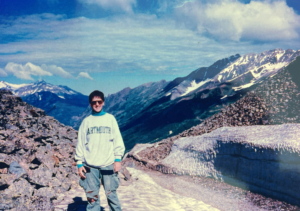
I move to New Mexico. The woman says no. My first broken heart. I play third base on a lesbian softball team. They take me under their wings, teach me about the butch/femme culture. I am butch, a puppy playing with her littermates. I laugh every day. I write more plays—tragic, absurd, epistolary, lesbian rom-com—on legal notepads, then on my new Toshiba laptop. I save them on 3.5ʺ floppy discs. I see my characters come alive on stage.
I write in my journals until my hand throbs.
I befriend gay men. They tell me how many funerals they have attended. Three count how many people they know who have died from the Plague. They lose track after one hundred and fifty.
I meet a girl. I fall in love. I break up with her.
My father remarries. His wedding is the last time I wear a dress.
I march in my first Pride parade. People hold signs: you are sin.
I laugh.
Draft 7: 1997–2009
I move to Los Angeles.
I attend my first WNBA game. I feel giddy watching professional women athletes.
I befriend more gay men. One tells me that he needs to get a “real job” for the first time in his thirty-five years. “I didn’t think I would live this long,” he says. “It’s something we can live with now.”
I voraciously read books that teach me about history, culture, politics.
In Wyoming, Matthew Shepard is tortured and beaten, tied to a fence post to die alone. His death brings the queer community together. It will give birth to hate-crime laws.
I write my first novel on my new Gateway 2000 desktop computer. I write and direct a short film.
The sharp winds of my comparative mind bump me off course. I fall for the myth: you’re only a real writer if you get paid. I remember Alaska, teaching in the jail, my supervisor saying, “You’re a natural teacher.” I become Ms. McDonald, the English teacher. I channel my creative energy into lesson plans, curriculums, grading essays. I stop writing for me.
Two planes fly into the World Trade Center. I call my father. He says, “The world will change now.”
I meet a woman, move in with her, buy a house with her. Gay marriage in California becomes legal on the same day she says, “We need to divorce.” “We’re not married,” I say. “Domestic partnership and sharing property is marriage,” she says. Six months later, California voters pass Proposition 8, an antigay marriage bill. My students’ parents are the bill’s biggest supporters.
I quit teaching.
I write a short story, the first since sixth grade. I start a blog. Writing is the only thing that makes sense.
Draft 8: 2009–2019
I am an urban monk in a San Francisco Buddhist monastery seeking to reduce my suffering, to make sense of the world. I write in my blog all that I learn: the first drafts in Google Docs, the last in my Blogger account. I call myself a nonwriter. I am a. Non. Writer.
A Rutgers student, Tyler Clementi, jumps off the George Washington Bridge after his roommate posts a video of him kissing a man in his room. I return to being Ms. McDonald. I choose books with queer protagonists for my students like him.
I fall in love. I marry her. I help raise her child.
Trayvon Martin is murdered. I teach so many Travyons. I march with strangers and staple a Black Lives Matter poster to the front of my classroom. Each year I add more: butterflies, rainbows, the man in front of the tank at Tiananmen Square.
My students run into my classroom during lunch, terrified. ICE is in their neighborhood. I tell them: ICE is wrong. You’re safe in this classroom.
Draft 9: 2020–2025
I live past the age of my mother. I breathe a sigh of relief.
A virus crawls into an airplane. The world shuts down.
My students’ family members die. He needed to keep working, they say. I rally my colleagues. We raise money. It is never enough.
I work seventy hours a week keeping capitalism alive. My health weakens. This pandemic squeezes me so tight, a novel bursts from my body. The short story from ten years ago enters my dreams. Characters old and new whisper into my ear until they scream. I take a fiction class.
My writing is my only way out of this pandemic. I earn a sabbatical and attend graduate school.
Americans vote for him. Again. Including some of my students’ families. I tell myself I don’t understand. I track the wisdom in my body. I understand they feel fear.
My father says, “The world has changed.”
My father dies. My world has changed.
Draft 10: 2026
I retire from teaching. I am no longer Ms. McDonald.
Finally, I accept that I am a writer. I become more direct, more succinct, more intentional. I allow the writing to come through me. I embrace literary citizenship and support fellow writers. I gain acceptance into residencies. I submit my work. I get more rejections than acceptances, but they don’t slow down. I write my novel, still reaching for the final draft.
I remember Buddhism teaches that there is no final draft, only a bardo of thoughts that play tug-of-war with my mind. Revision after revision.
So I write.
And rewrite.
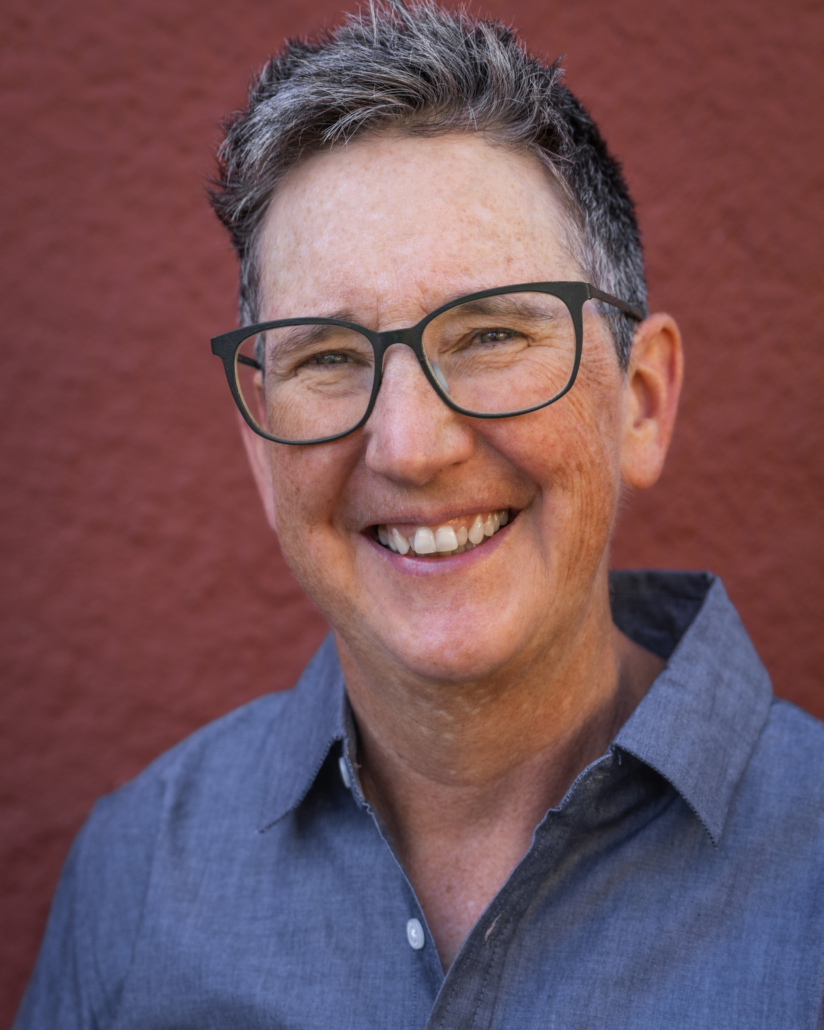
Caren is a Bay Area writer of drama, fiction, and nonfiction. Her short film, Shaving, circulated the national and international queer film festivals in 2001. She has had six plays produced in Boston, Albuquerque, Mexico, and Los Angeles. Her nonfiction has been published in Green Teacher and Mindful Schools. While living as a Zen monk in a Buddhist monastery, Caren wrote a weekly blog about how one’s spiritual practice intertwines with creativity. She is a recipient of a 2026 Tao House fellowship from the Eugene O’Neill Foundation and will be a 2027 recipient of the Hypatia-in-the-Woods Residency. Caren has an MFA in creative writing from Antioch University and an MA in dramatic writing from the University of New Mexico.