
Litdish: Ten Questions with Lise Quintana
For twenty plus years, Lise Quintana has worn numerous writing-related hats: author, editor, publisher, book reviewer, educator, and more. She’s the founder and Editor-in-Chief of Zoetic Press, which publishes cutting edge short-form literature. Zoetic is the home of the award-winning journal NonBinary Review and the fiction and poetry podcast Alphanumeric. Quintana has edited several anthologies published by Zoetic, such as Heathentide Orphans 2021.
Lunch Ticket, a literary journal at Antioch University, was fortunate to have Quintana on staff for five issues, as Editor-in-Chief, Marketing and Communications Manager, Assistant Managing Editor, Assistant Fiction Editor, Interviewer, Essayist, and creator of other content. Her prize-winning writing, which includes a Pushcart nomination, can be found in Drunk Monkeys, Red Fez, Role Reboot, Instant Magazine, (b)OINK, and other acknowledged publications. Her short works also appear on her blog, Junglemonkey. She is currently working on a novel.
Quintana earned her BA in English from the University of California, Los Angeles, and her MFA in Creative Writing from Antioch. In addition to her literary ventures, Quintana invented a new kind of e-reader (Lithomobilus) for nonlinear literature. She was on Antioch University Los Angeles Board of Trustees and served for several years on National Novel Writing Month’s Board of Directors. She lives in Santa Cruz, California.
I was excited to interview Quintana about her writing, her literary journal, and the challenges of running an indie press.
- You founded Zoetic in 2014 upon leaving Lunch Ticket. What propelled you to start your own literary journal?
One of the most satisfying parts of my Antioch experience was reading new work from all over. Once I left Antioch, I started Zoetic to create a proof-of-concept for my software project, but after that was wrapped up, I didn’t want to give up the “read amazing new lit” aspect of the work.
- What was the original editorial philosophy of Zoetic, and has it changed?
When I started, I was writer-focused. I wanted to create a community where writers felt supported. That mission is still very much in place, but I’ve shifted my focus to mentoring people in the editorial arts. Of course, our readers will be getting the best literature and art out there—that goes without saying. But training new editors means we can spread our mission of community and inclusion to more publications.
- Besides producing NonBinary Review and a weekly podcast, Zoetic is also the home of Random Access Memory (RAM), an online methodology for non-linear storytelling that allows readers to change a story’s direction and outcomes through the use of hypertext narrative. Can you explain RAM’s importance as a storytelling medium?
I’ve always been a fan of non-linear storytelling. I love being able to tell many different stories with the same groups of building blocks. Instead of going from A to B to C to create a narrative, non-linear stories allow story details to slowly accumulate, building a narrative layer by layer in the reader’s mind. Non-linear storytelling requires more work from the reader, but I love stories that allow me to participate in the telling.
- Zoetic is not affiliated with a university or large press. What difficulties have you experienced in running a small independent press? Have you had mentors along the way?
The single hardest thing is attracting and retaining our volunteer staff. Finding folks is easy, but finding competent, engaged people willing to evaluate works based in cultures and value systems other than their own (not to mention willing to work five to ten hours a week for free) is tough. The more competent and engaged people are, the more likely they are to find a great paying gig in their field and leave us. It’s bittersweet, because I work hard training editors to move out into the world, knowing full well that I’m shooting myself in the foot.
Attracting readers is similarly difficult. So many lit journals can be read online for free. Because we charge for the full issue of our journal (although Zoetic has lots of content online to see/hear for free), it’s even harder to attract and retain readers. Surprisingly, attracting contributors is the easiest part. We pay our contributors, we don’t charge a reading fee, and we foster a community of authors who have gone on to collaborate together in some amazing projects.
As far as mentors who’ve helped me, those would be every boss I’ve ever had who has demonstrated how to help me overcome mistakes while also assuring me that I’m a capable person. One of the best things you can teach someone is that it’s okay not to know everything, as long as you aren’t afraid to learn.
- Zoetic’s new Feedback for Poets of Color initiative fosters equity and inclusion. Can you comment on Zoetic’s efforts to amplify diverse voices?
Foremost, you can’t have a diversity of writers without a diversity of editors. Our team of editors —from different geographic, cultural, religious, economic, and educational backgrounds—is encouraged not just to take ownership of the process but to point out to me when I overlook things or make mistakes. Diversity is not a quota system or an obligation. It is an organization’s opportunity to infuse its mission with new perspectives and fresh ways of thinking.
The Feedback for Poets of Color program is a great example of an editor seeing a need, proposing a program, and getting it out into the world. My view of our work is less that we’re amplifying underrepresented groups and more that we’re opening the door of the very small room that western canonical literature has closed itself into and helping people look into the amazing world just outside.
- Notwithstanding your Zoetic responsibilities, you continue to produce your own work. What are you presently working on? What challenges have you faced in juggling your writing and running the journal?
Given the choice between working on my own writing and doing more editing, editing wins every time, even though I know it shouldn’t. Right now I’m working on a social satire along the lines of Dante’s Inferno. Except not in poetry. And funnier.
I have a problem familiar to a lot of people: No matter what I’m doing, I feel guilty that I’m not doing something else. Right this minute, I should be folding laundry, working on the Zoetic website, reading submissions, and working on my novel. The best thing I’ve done for myself is to give the other Zoetic editors more ownership of the process.
I do tend to multitask like a monster, though. I read submissions on the treadmill, I write using speech-to-text while I’m cleaning, I teach editors how to do layout while actually doing layout, and all the while, I have things ticking over in the background like, “How can I fit this into the next lecture I give about writing?” This leads to another challenge: never knowing when to shut off. I work seven days a week, 365 days a year. I never look at the clock and think “It’s five (or six or seven…), so I should shut down for the day.” I tend to look at things like housework and interaction with others as a thing I do to take a short break from work.
- How has your writing informed your practices as a literary editor, and vice versa?
This is a great question, and one I use as a selling point when asking people to join us. I expect my editors—in addition to voting yes or no on submissions—to justify their votes by speaking to what does and doesn’t work. When I get an email saying, “Why did you reject this piece?” I want to respond with more than just my own opinion. It’s easy to know what you do and don’t like. It’s harder to drill down on why.
A further step is to apply the mechanics of good writing to your own work. I see many examples of bad dialogue, poor pacing, bad grammar, and poor punctuation. All of them are in my mind when I sit with my own work.
The next level is knowing where you can break those rules. As MFAs, we’re taught certain standards of written language. But as with any art, knowing the rules is just the start. If you follow every rule all the time, your writing will lack character. Weird idioms, odd grammar, and alternative use of punctuation make a character’s voice interesting. Read enough work (good and bad) and you start to see which departures from the rules work and which don’t.
- In less than a decade, Zoetic has published thirty NonBinary Review issues, five anthologies, almost three-hundred episodes on Alphanumeric, and some RAM pieces. What’s your vision for Zoetic’s continued growth and expansion?
Would it be bad of me to say that I don’t have a plan? When I started out, I just wanted to produce a lit journal. My only consideration was creating an outlet for more authors. Then, given my podcasting experience, I added Alphanumeric to the lineup. Our growth has often been a result of a staffer’s idea. When an editor says, “Let’s do this,” my only question is, “Would it be sustainable after you move on?” Not whether it will bring more readers or garner us awards. I figure if it’s important enough for an editor to want to do, our readers will be interested too.
In the abstract, it’d be great if we could break even on a single issue of NonBinary Review. That’s right—this whole venture is a money pit. Since we don’t charge a reading fee and we pay our writers, we have more money going out than coming in. Then again, indie lit is not where people go to make money.
- As an expert and participant in the literary field, can you give us insights about the current indie-press landscape? Are there new trends or technological innovations being adopted?
Wow. I’m an expert in something! Who knew!? Honestly, I don’t have any unique insights into the indie-press landscape that would be valid until the end of the day—that’s how fast things change.
In broad terms, many providers allow you to create a basic website for free, so the barriers to online lit mag creation are practically nonexistent. One person can create a decent lit journal with limited technical knowledge and little investment. The hardest part is distinguishing yourself from all the other indie lit mags. Your choices are either to choose a very niche subject (narrowing your total audience) or devote substantial time and resources to marketing your journal.
The fastest-changing part of the landscape is distribution. Amazon makes distribution easy, and can give journals a boost by including them in social collaboration algorithms (the “people who bought this also bought…” ads you see whenever you buy anything on Amazon).
- What else would you like aspiring literary magazine founders, editors, and submitters to know about the workings of a literary press?
For all the editors thinking of starting a journal—do it! It’s hard, people can be jerks, and you won’t succeed right away, but it’s worth it. Gushing emails from people whose first publication will be in your journal, reading an exciting new work before anyone else on earth has read it, the satisfaction of having people say “I’m honored to be part of your journal”—they’re the rewards that make it worthwhile. The first time I heard someone who didn’t know me say “I’ve heard of Zoetic Press—they’re really great!” I almost died of happiness.
For editors: Working at a literary press is real work. There’s not a single task I perform that I haven’t performed at a paying job. Website maintenance, layout and design, email marketing, social media management, literary evaluation and feedback—these are actual skills you can take to another employer. I write many letters of recommendation, and at least half a dozen people have gotten jobs because of experience they’ve gained at Zoetic.
As for submitters, many seem to think that because we have a website and an email address, we’re a corporate conglomerate with deep pockets and an exploitative agenda. My second-biggest job is sending out emails that say, “We’ve got one person doing most of this work, so please be patient.” I’d love for them to know that I do this not because I’m making a single dime from it, but for the love of the work.
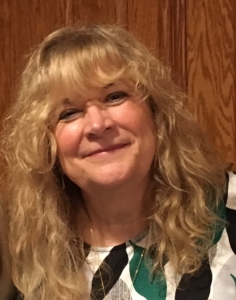
Gail Vannelli retired as an attorney and now writes children’s/YA fiction. She has her MFA in Writing for Children and Young Adults from Vermont College of Fine Arts and her Post-MFA Certificate in the Teaching of Creative Writing from Antioch University Los Angeles. She’s won several Writer’s Digest awards for her fiction. Her recent work has appeared in Cynsations, where she’s a news reporter and writer, and in Lunch Ticket, where she’s been a lead editor, assistant editor, interviewer, and blogger. She’s the founder of Kids Story Studio, a free kids story writing class.