
Litdish: Tami Haaland, Poet
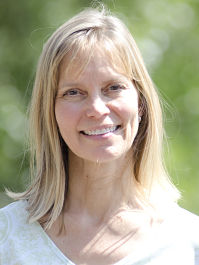
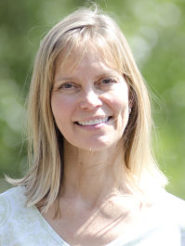 Tami Haaland is the author of three poetry collections, What Does Not Return (2018), When We Wake in the Night (2012), and Breath in Every Room (2001), winner of the Nicholas Roerich First Book Award. She earned a BA and MA in English literature from the University of Montana and a MFA in creative writing and literature from Bennington College. Her work has appeared in many publications, including The Ecopoetry Anthology, Unearthing Paradise: Writers in Defense of the Greater Yellowstone, and has been featured on Verse Daily, Writers’ Almanac, and American Life in Poetry. Haaland has offered creative writing workshops in prisons, schools, and community settings. She was Montana’s Poet Laureate from 2013 to 2015, and she was recently named a recipient of a Governor’s Humanities Award for the state. She is a professor at Montana State University Billings.
10 Questions for Tami Haaland:
1. What’s the most recent thing you’ve written?
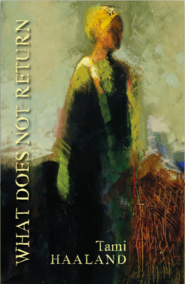
The most recent book is What Does Not Return from Lost Horse Press. It was published this spring, and I’ve been giving readings, teaching workshops, and participating in panels. I always enjoy this process.
In terms of things that aren’t published, my notebooks and computer are full of drafts in various stages. Eventually some of them will find their way into the world.
2. What’s your writing practice like?
The mad desire to escape boredom usually leads to the unexpected.
I write first drafts pretty quickly. I carry a notebook with me almost always, though it contains all kinds of things—notes from lectures I’ve heard, quotations I like, whatever crosses my path, and then drafts of poems. At some point I transfer poems to the computer and begin revising.
My ideal writing situation would include hours of concentrated work revising, figuring out how poems connect to each other, researching, and making notes. Realistically, that happens far less often than I would like.
3. How does your day job inform your writing?
Early in my career, when I was working as an adjunct in various classes and everything seemed new, the sheer exposure to so many essays and my proclivity to enthusiastically show students how to revise had its effect on my own writing. I learned faster because I had so much connection to the writing of others who were engaged in the process. Something similar happened when I worked for publishers or as a journal editor at various stages of my life. Editing academic or literary publications and working as a freelance editor helped me learn quickly because I was involved with so many writers, styles, and audiences.
Full time teaching, especially in various creative genres tends to spark my own ideas. In the past ten years, I’ve been involved in administrative work, overseeing an Honors Programs and an academic department, and I’ve spent time developing intensive graduate programs, primarily for teachers of writing. In many ways this conflicts with the concentrated time necessary for writing. On the other hand, I love the exposure to new ideas and new ways of thinking. Sometimes when I feel the pressure of deadlines in my working life, poems will surface quickly. Or in the swirl of problem solving, I see what to do with a troublesome line or discover what image will work best.
4. What inspires you the most?
I can always count on art, music, and the natural world. I love history and science and the way the imagination can run with the details. Travel, poetry, novels, people’s stories, the mystery of genealogy, and migration are great sources of inspiration. The mad desire to escape boredom usually leads to the unexpected.
5. Was there a specific person or writer who inspired you?
 Yes, at various stages. As a teenager, my English teacher, Laurel Walker, encouraged me. She allowed me to take extra credit, go outside and draft poems. Richard Hugo and Madeline DeFrees were early teachers, and then I turned toward fiction. Later, I met Eleanor Wilner who told me to “continue.” Around the same time, I shyly told Olga Broumas that I couldn’t seem to write a complete poem, that I wrote in fragments. She said, “then write in fragments.” And there have been many others: Maxine Kumin, my teachers at Bennington, and my friends Sandra Alcosser and Melissa Kwasny. The people who gave me a nudge, or a few words, acceptance and a space to write—they’re the ones who inspired and kept me going.
6. What advice would you give to emerging poets and writers?
Play, experiment, put yourself through exercises, explore. Read. Don’t be too hard on yourself and understand that writing is a long journey. Trust that the work will come if you create an opening for it. You never know when something might take hold of you and turn into a poem.
7. What are you reading right now?
Henrietta Goodman, All That Held Us
Anne Fitzgerald, Vacant Possession
Agni, Issue 87
When I travel, I listen to audiobooks, currently Russell Shorto, Amsterdam
I recently finished Sue Miller’s The Arsonist, Amy Liptrot’s The Outrun, and Alice Oswald’s Memorial.
8. What is the most important thing(s) you want to get across in your poems?
That’s not something I think about usually. Instead, I follow the poem where it wants to go and try to find the best images, words, and rhythms to suit the subject. Often I discover more of what the poem “gets across” after it’s written or after someone else points it out. And of course when a book comes together, I have to think about what fits and what doesn’t in order to create some arc and coherence. But in terms of the writing, the poem and I are in this place where we’re just working things out, moment by moment, word by word.
9. What are your non-literary interests?
I’m a really curious person, and I like to be in motion—hiking, traveling, discovering how things work, how processes in the natural world take place, and reading about new scientific discoveries. I love gardening.
10. Why do you write?
I made a conscious decision to write poetry when I was about twelve, or rather, I decided to be a poet. I don’t know why, except that I was very certain, and since then it’s just been a long process of practicing this art.
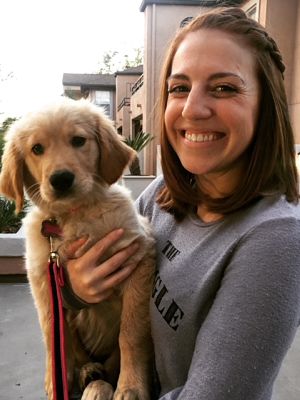 Kristina Ortiz is an elementary school teacher and MFA candidate at Antioch University Los Angeles where she is the associate managing editor and web team manager for the literary journal Lunch Ticket. She lives in Ventura County, California, with her fiancé, golden retriever Bella, and cat Lara.