LitDish: Ten Questions With Isabel Yap
Isabel Yap is a Filipino writer of fiction and poetry. Her debut short story collection, Never Have I Ever (Small Beer Press, 2021), contains thirteen unique and extraordinary stories based on Filipino culture, history, traditions, legends, and mythology. Full of monsters, magic, and miracles, each story has its own touches of fantasy, horror, mystery, and/or hope that will keep readers enthralled.
Never Have I Ever won the 2022 British Fantasy Award for Best Collection and the 2021 Ladies of Horror Fiction Award for Best Collection. It was also a finalist for the 2022 Ignyte Awards for Best Anthology/Collected Works and was on the shortlist for the 2022 Crawford Award.
Isabel’s stories, which have appeared in many publications such as Tor.com, Strange Horizons, and Uncanny Magazine, have received numerous recognitions, such as being a finalist for the 2022 World Fantasy Award and the 2021 Ladies of Horror Fiction Award (for short fiction).
Her poetry can be found in multiple journals. She was a poetry fellow at the 2021 Tin House Summer Workshop and received a residency to the KHN Center for the Arts.
Born and raised in Manila, Isabel has spent the past decade living and working in the U.S. She has a BS in Marketing from Santa Clara University and an MBA from Harvard Business School. A graduate of the Clarion Writers Workshop-San Diego, she serves on the Clarion Foundation board. Besides writing, she works full-time as a product manager in tech. She’s currently working on her first novel.
It was a pleasure chatting with Isabel about her story collection, her thoughts on craft, and her writing process.
Gail Vannelli: It’s said that short stories are more difficult to write than novels. Why did you choose short fiction as your preferred writing medium?
Isabel Yap: I’m firmly in the Kelly Link camp of believing that those who say short stories are more difficult are lying. Though I do admit certain forms come easier to people, and writing short was something I did for many years—especially that long stretch when I was writing fanfiction regularly. It was also the form that I was more likely to find a venue for when I started writing for publication in college. School folios and outside anthologies had open calls for short fiction, but there was no such thing for novels. Publication rewarded my focus and efforts on the form, and my mind was happy to keep coming up with short form ideas.
GV: Over what period of time were the collection’s stories written? How did you decide which stories to include so they each stood on their own merit and also contributed to the collective whole?
IY: The final set of stories in the collection were written between 2011 and 2020, although my entire consideration set spanned from 2008. My approach was to collect what I thought were my strongest stories, plus a few that I had a personal attachment to, then compile them in a manuscript, which I sent to my editors for consideration. All of the stories were previously published, so they requested that I write an original story for the collection. I ended up writing two new stories.
Then my editor asked me for everything else I had, so I sent every finished story that existed in my files. After a few weeks, they sent over a potential Table of Contents, which had swapped out five of the original stories I’d submitted. That was a bit of a shock since they’d removed stories I considered very important. But I could also see what they were trying to do editorially; the new ToC was more cohesive as a collection. We ended up having an easy conversation trading off those five stories, and I’m very happy with where we landed.
GV: How did you decide the order of the stories? What other challenges arose in creating the collection?
IY: My editors and I worked on the story order the same way: I made a recommendation, trying to vary tone, length, and genre. I also tried to put in representative stories at the start and the end; obviously you want every story to deserve its place, but the few at the start and then the closing story do need to have some additional pull. Then my editors reviewed it and made suggestions. Initially, I wasn’t sure how I felt about having three stories written in 2013 clustered together at the start. I was sort of thinking, is it going to show too much, how old these stories are? But they seemed correct where they were. Again, I’m very happy with how the order turned out.
The biggest challenge was making the time to do it (which is generally always true of writing for me). It took me more than a year to put the stories together after the initial conversation with my editors.
GV: Can you share some of your crafting processes? Are you a pantser or a plotter? Are your stories character- or plot-driven? What kind of research do you do?
IY: Historically I’ve been an utter pantser, feeling my way through stories, finding my forward using images and language. In the last few years, I’ve had to plot more to manage tension and keep my stories going, because I’ve spent a lot of time churning in one place. If the story requires it, I do the necessary research prior to writing. For elements based on myths, I tend to consume a lot of reference material, while simultaneously trying on different original ideas for size, until something clicks. Tone is extremely important to me. I’ll often attempt the first section of a story several times until I find the “right way in” that lets me keep going forward.
I once listened to a podcast that discussed one of my stories, and in the end, the hosts concluded that it was “beautifully written,” and that I was a “character writer.” It was extremely flattering to hear because as a reader, I am character and language first; these are the elements that bring me into a story the most, so to be a writer that succeeds at these aspects is definitely a win that I’ll take. The tradeoff is that I’m weaker on plot and setting, which are things that I’m working on improving. There’s value in knowing your own strengths and areas of focus and leaning into them.
GV: Do you workshop your stories with peer or critique groups?
IY: I personally love workshops and benefited greatly from them, especially in a class setting. I’ve tried a few critique groups over the years, but they didn’t persist for long. For the last few years, I’ve had a wonderful writing group, although we primarily write together rather than read each other’s work. We also talk at length once or twice a week, which is lovely because writing is lonely, and publishing is a tough industry. I haven’t finished a story in years at this point, but I do usually try to get at least one other trusted pair of eyes on a story before sending it out, and in that regard, I’m lucky to have a few friends to seek feedback from.
GV: While working full-time, how do you find time to write in a way that is practical, efficient, and sustainable? What does your writing schedule look like?
IY: I wrote a Twitter thread about this recently—people mentioned that it was very helpful for them. To briefly summarize: it’s very difficult, so you have to acknowledge that upfront. Then you have to be flexible and try lots of different things to figure out a workable schedule. I’ve been doing this for a decade and there are times when I’ve had to take a long break. It’s always a balance of being honest with yourself, pushing a bit more when needed, and being kind to yourself when non-writing things take up a lot of your energy.
For years I didn’t write every day—it was too hard for me, and my day job too taxing, so I mostly binge-wrote during the weekend, in long, sustained bursts. In the last three years of working on the novel, however, writing consistently has been more fruitful, although I can only hold my attention for two hours or so, max. These days, I’m writing after dinner 2-4 days a week. I also try to write one weekend afternoon. Writing processes and schedules evolve, so being open to that evolution when it needs to happen is helpful.
GV: As a short-story writer, how difficult was it, starting out, to find publication venues for your stories? Is it easier now?
IY: One of my Clarion instructors gave us a lecture on the speculative fiction magazine landscape. He listed out the pro and the semi-pro markets and recommended that we aim for the best. Spec fic magazines work differently than lit fic journals in that they don’t typically require submission fees. But they don’t usually allow simultaneous subs, so you have to wait to hear back before you send your story elsewhere. I once had a story that got rejected seven times in two years, as I was sending it to different publications and waiting sometimes months for a response.
I started out submitting to slush, to venues my teacher recommended. I got rejections, but also had lucky breaks early on—the first story I submitted after Clarion got rejected once, but the next editor picked it up (Nightmare Magazine, a very strong horror market). My second story sale was to Tor.com, which had a very low acceptance rate and was one of the best-paid markets. I submitted to them via the slush pile and it took them seven months to reply, but it was worth it because that story was very good for my career. Nowadays, the editors who have previously published me do ask that I submit work to them directly. For other publications, I still go through slush, but since I’ve been publishing for 10 years and have solid publication credits for my cover letter, I do think that helps my stories get additional consideration.
GV: What mentors or mentor texts have helped you in your short-story writing journey?
IY: So many! I read gobs of fanfiction growing up that really shaped my prose, character work, and sense of structure. I still reread these stories frequently. The single-author collections that probably influenced me the most were Angela Carter’s The Bloody Chamber and Kelly Link’s Pretty Monsters. Fourteen Philippine Love Stories was an anthology I often reread in high school. The Dust Monster by Gilda Cordero-Fernando still remains aspirational to me, in terms of being the kind of pitch-perfect story I’d love to write. Then honestly some textbooks! There’s a reason certain short stories are taught over and over. I read Shirley Jackson’s The Lottery, Ray Bradbury’s The Fog Horn, and Guy de Maupassant’s The Necklace in short story textbooks—which were eye-opening and instructive.
GV: What advice can you give to aspiring short-story writers?
IY: Read a lot. Try to focus more on reading than on publication. It gives you more: more language, more inspiration, more interesting things to try. Read the work of authors you love and make your own attempts at what they’re doing.
Also, keep what matters to you in a story. There was a certain line in one of my stories that, during workshop, certain readers struck out. Others put question marks near it. It was a bit off-kilter, and one could argue that the story didn’t exactly need it. But I loved that line; it meant something to me to have it there. I found an editor who didn’t mind it at all, and it makes me happy now when I see it in print.
GV: Was there any advice you received that was particularly helpful?
IY: From Andy Duncan: only submit to publications where you’ll be proud to have your name appear. It’s not necessarily who pays the best or has the best reputation; rather, it’s the publication where you’d feel most excited about seeing your name in print. In that sense, it’s better to wait for the right home for your story than to send it someplace you don’t love or respect, just for a publication credit.
And from Mookie Katigbak, which I’ve always carried: stick to your guns and choose who you listen to.
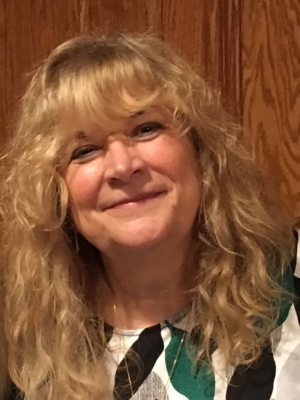
Gail Vannelli retired as an attorney and now writes children’s/YA fiction. She has her MFA in Writing for Children and Young Adults from Vermont College of Fine Arts and her Post-MFA Certificate in the Teaching of Creative Writing from Antioch University Los Angeles. She’s won several Writer’s Digest awards for her fiction. Her recent work has appeared in Cynsations, where she’s a news reporter and writer, and in Lunch Ticket, where she’s been a lead editor, assistant editor, interviewer, and blogger. She’s the founder of Kids Story Studio, a free kids story writing class.