Lunch Ticket
  • Current Issue
  • Archive
    • Issues Archive
      • Issue 29: Summer/Fall 2026
      • Issue 28: Winter/Spring 2026
      • Issue 27: Summer/Fall 2025
      • Issue 26: Winter/Spring 2025
      • Issue 25: Summer/Fall 2024
      • Issue 24: Winter/Spring 2024
      • Issue 23: Summer/Fall 2023
      • Issue 22: Winter/Spring 2023
      • Issue 21: Summer/Fall 2022
      • Issue 20: Winter/Spring 2022
      • Issue 19: Summer/Fall 2021
      • Issue 18: Winter/Spring 2021
      • Issue 17: Summer/Fall 2020
      • Issue 16: Winter/Spring 2020
      • Issue 15: Summer/Fall 2019
      • Issue 14: Winter/Spring 2019
      • Issue 13: Summer/Fall 2018
      • Issue 12: Winter/Spring 2018
      • Issue 11: Summer/Fall 2017
      • Issue 10: Winter/Spring 2017
      • Issue 9: Summer/Fall 2016
      • Issue 8: Winter/Spring 2016
      • Issue 7: Summer/Fall 2015
      • Issue 6: Winter/Spring 2015
      • Issue 5: Summer/Fall 2014
      • Issue 4: Winter/Spring 2014
      • Issue 3: Summer/Fall 2013
      • Issue 2: Winter/Spring 2013
      • Issue 1: Spring 2012
    • Genre Archive
      • Creative Nonfiction
      • Essays
      • Fiction
      • Flash Prose
      • Interviews
      • Lunch Specials
      • Poetry
      • Translation
      • Visual Art
      • Young Adult
  • About
    • Mission Statement
    • Lunch Ticket Staff
      • Issue 29: Summer/Fall 2026
      • Issue 28: Winter/Spring 2026
      • Issue 27: Summer/Fall 2025
      • Issue 26: Winter/Spring 2025
      • Issue 25: Summer/Fall 2024
      • Issue 24: Winter/Spring 2024
      • Issue 23: Summer/Fall 2023
      • Issue 22: Winter/Spring 2023
      • Issue 21: Summer/Fall 2022
      • Issue 20: Winter/Spring 2022
      • Issue 19: Summer/Fall 2021
      • Issue 18: Winter/Spring 2021
      • Issue 17: Summer/Fall 2020
      • Issue 16: Winter/Spring 2020
      • Issue 15: Summer/Fall 2019
      • Issue 14: Winter/Spring 2019
      • Issue 13: Summer/Fall 2018
      • Issue 12: Winter/Spring 2018
      • Issue 11: Summer/Fall 2017
      • Issue 10: Winter/Spring 2017
      • Issue 9: Summer/Fall 2016
      • Issue 8: Winter/Spring 2016
      • Issue 7: Summer/Fall 2015
      • Issue 6: Winter/Spring 2015
      • Issue 5: Summer/Fall 2014
      • Issue 4: Winter/Spring 2014
      • Issue 3: Summer/Fall 2013
      • Issue 2: Winter/Spring 2013
      • Issue 1: Spring 2012
    • Achievements
    • Community
    • Contact
  • Weekly Content
    • Friday Lunch Blog
    • Midnight Snack
    • Amuse-Bouche
    • School Lunch
  • Contests
    • Diana Woods Award in CNF
      • Issue 29: Summer/Fall 2026
      • Issue 29: Summer/Fall 2026
      • Issue 28: Winter/Spring 2026
      • Issue 27: Summer/Fall 2025
      • Issue 26: Winter/Spring 2025
      • Issue 25: Summer/Fall 2024
      • Issue 24: Winter/Spring 2024
      • Issue 23: Summer/Fall 2023
      • Issue 22: Winter/Spring 2023
      • Issue 21: Summer/Fall 2022
      • Issue 20: Winter/Spring 2022
      • Issue 19: Summer/Fall 2021
      • Issue 18: Winter/Spring 2021
      • Issue 17: Summer/Fall 2020
      • Issue 16: Winter/Spring 2020
      • Issue 15: Summer/Fall 2019
      • Issue 14: Winter/Spring 2019
      • Issue 13: Summer/Fall 2018
      • Issue 12: Winter/Spring 2018
      • Issue 11: Summer/Fall 2017
      • Issue 10: Winter/Spring 2017
      • Issue 9: Summer/Fall 2016
      • Issue 8: Winter/Spring 2016
      • Issue 7: Summer/Fall 2015
      • Issue 6: Winter/Spring 2015
      • Issue 5: Summer/Fall 2014
      • Issue 4: Winter/Spring 2014
      • Issue 3: Summer/Fall 2013
    • Gabo Prize in Translation
      • Issue 29: Summer/Fall 2026
      • Issue 28: Winter/Spring 2026
      • Issue 27: Summer/Fall 2025
      • Issue 26: Winter/Spring 2025
      • Issue 25: Summer/Fall 2024
      • Issue 24: Winter/Spring 2024
      • Issue 23: Summer/Fall 2023
      • Issue 22: Winter/Spring 2023
      • Issue 21: Summer/Fall 2022
      • Issue 20: Winter/Spring 2022
      • Issue 19: Summer/Fall 2021
      • Issue 18: Winter/Spring 2021
      • Issue 17: Summer/Fall 2020
      • Issue 16: Winter/Spring 2020
      • Issue 15: Summer/Fall 2019
      • Issue 14: Winter/Spring 2019
      • Issue 13: Summer/Fall 2018
      • Issue 12: Winter/Spring 2018
      • Issue 11: Summer/Fall 2017
      • Issue 10: Winter/Spring 2017
      • Issue 9: Summer/Fall 2016
      • Issue 8: Winter/Spring 2016
      • Issue 7: Summer/Fall 2015
      • Issue 6: Winter/Spring 2015
    • Twitter Poetry Contest
      • 2021 Winners
      • 2020 Winners
      • 2019 Winners
  • Submissions
  • Click to open the search input field Click to open the search input field Search
  • Menu Menu
  • Link to Facebook
  • Link to Instagram
  • Link to X

On Writing About Death

I’ve been thinking about death a lot lately. Not from a macabre fascination, but more because we’ve been confronted with it on a daily basis thanks to the COVID pandemic. Turn on the news and death glares back at you. 190,000 dead. 200,000 dead. And so on. Each tick of the number dial represents another person no longer living. Someone who was here yesterday and the day before, but not today.

And yet, oddly, all of this death doesn’t feel personal in any way. Of those 200 thousand plus, I only personally knew one of those deaths. And even that connection was tenuous. An elderly neighbor down the street from my childhood home, whom I only saw a handful of times in my entire life, yet who always greeted me with a smile and a wave as I walked past his house—he’s one. He was past his eighties. He got COVID from a routine doctor’s appointment and was dead within a few weeks. His wife survived.

That makes the pandemic real—not in-my-house or at-my-doorstep real, but just-down-the-street real. Enough so, I keep my family at home and wear masks wherever I go, which is hardly anywhere. 

The idea of dying consumes me; makes me afraid for myself and my loved ones. Scrolling through social media, reading stories of those that are sick and have passed, I feel the reality of the end of life very acutely, even though I’m isolated in my house, excluded from the rest of the world. But this fear of death didn’t begin with the pandemic, it’s always been present, intensifying each year as I get older, entering the stage of life where life-threatening illnesses go from “highly unfortunate” to “yeah, that can happen by now.” I find myself at times crying at just the thought of losing a loved one, especially those who are older with the “pre-existing conditions” I keep reading about. I become fearful of letting my children out of my sight, of letting myself truly enjoy a car trip without worrying about a catastrophic accident. 

This ever-present fear has forced me to consider my own relationship with death, and that got me thinking about my writing. If I’m spending so much time consumed with dying, will it show up in my stories? 

See, I’m usually one of those people who HATES to read about death. I avoid it like coronavirus. I don’t want to live through losing someone in my real life, so I definitely don’t want to live through it in my imagined life. This aversion means I also hate to write about death. I turn to writing for hope and inspiration, for lives I wish I could live, dreams I wish I could realize, and worlds I wish I could visit. I don’t want to suffer in this life, I want to experience only joy. 

I don’t want to die. I want to live.

Yet…I’m reminded that life cannot exist without death, like how a sentence must eventually come to an end with a period. So should our stories, right? Read most any young adult novel and you’ll be surrounded by death. It seems the best way to raise the stakes is to kill off a character or two. Bonus if it’s a character we’ve come to love. I have to admit, though, that I’ve let go of more than one series due to the untimely demise of a beloved character (looking at you Hunger Games). Since book pain is avoidable, I just have to put down the book and move a safe distance away. And this has happened more than once. 

Little Women would be a favorite re-read, except I can’t bear to experience the loss of Beth more than once. Harry Potter? Too many deaths to mention, and therefore I sadly never read book seven. I’m still the only member of my friend group who didn’t watch Game of Thrones. How can I? Is there anyone in that series that lives?

Why all this drama around death!? Don’t we want to escape it? Or is it not real enough for us that we need to be reminded of just how precarious our situation as a human being really is?

In an effort to answer my questions, I decided to read up on death, specifically as examined by writers in their writing. I landed on this quote by Mark Twain in Letters from the Earth, a collection of essays:

“Life was not a valuable gift, but death was. Life was a fever-dream made up of joys embittered by sorrows, pleasure poisoned by pain; a dream that was a nightmare-confusion of spasmodic and fleeting delights, ecstasies, exultations, happinesses, interspersed with long-drawn miseries, griefs, perils, horrors, disappointments, defeats, humiliations, and despairs — the heaviest curse devisable by divine ingenuity; but death was sweet, death was gentle, death was kind; death healed the bruised spirit and the broken heart, and gave them rest and forgetfulness; death was man’s best friend; when man could endure life no longer, death came and set him free.”

Mark Twain wrote these essays at the darkest moment of his life, when he was in debt and suffering the loss of both his wife and daughter. He would die shortly after writing this, the essays only gathered and published after he was gone.

I found myself pondering this idea that death is the gift, not life. This sentiment hits me squarely in the gut. Just last year, an old college friend was diagnosed with stage 4 cancer. She fought hard, but the cancer was especially aggressive, leaching into her bones and causing intense suffering. My last text with her was about a week before she passed. How utterly unforgiving life can be. Maybe Twain is right. My friend’s pain is over, but those of us that remain continue to suffer. 

If life contains “joys embittered by sorrows,” then death is the ultimate end of that sorrow. But isn’t death also also the end of any future joy? My friend won’t get to experience her next birthday, or the next birthday of her husband and two children. That thought alone sends me into my kids’ bedroom to cradle them while they sleep. How is death “kind” in this scenario? 

What struck me most about Twain’s quote was this dismissal of life. Sure, death frees us from our plight, but it also ends our pleasure, depending on what one believes might be next. I am more inclined to accept a little poison now and then if that means I can remain in this life  to hold those that I love just a little longer. 

Twain knew about pain and pleasure if you read any of his works. In Adventures of Huckleberry Finn, perhaps his most read and discussed work, Huck’s “adventure” started because he had to escape his drunken father. His companion Jim was escaping slavery. The more I read, the more I realized that this story has a very dark core. This period of our history was filled with pain; pain we shouldn’t easily forget. One could argue that’s what makes his stories endure. Without pain, we wouldn’t know we had any pleasure. Life would be one muted march toward an end, every day just like the next, without respite.  

I’m left thinking what, and who, I actually write about. Do I write about the dead? Not usually, unless I’m writing about vampires. Instead, I write about those who remain. Those who endure. Those who keep going despite the hardship. If death ends the struggle, then life is the struggle. And struggle is what moves any main character toward a solution.

As I type this I’m listening to one of my new favorite musicals Hamilton. George Washington has just given some astounding wisdom to young Hamilton: “Dying is easy, living is harder.” So true. Hamilton, as we know, died rather tragically. But man, did he live. The musical takes us through the struggle of his life; the actions he made that had a lasting impact long past his unfortunate duel with Burr.

And if I really think about it, that’s usually what writing portrays: the living. When I see another article bearing more grim news of those lost to the coronavirus, I don’t click to read about death. I click to read about people. Who they were. What they did. Who they loved and are still loved by. If I were to tell the story of my dear friend, I would focus on her life—all of the gains and losses, joys and sorrows, that made her someone to root for. Her death? That’s the tragic end. Her life is the story.

 As I close out my meditation on death, Hamilton is closing in Act 2. See, it gets pretty sad near the end. I can’t listen to it without crying. So I cut out early. Some days, I just don’t want to cry. But I’m still humming in my head: “Who lives, who dies, who tells your story?” 

Well, as a writer, I guess that’s me. 

I write to celebrate life, whether it’s breezy and easy or miserable and hard. I’m here to add some pleasure to the pain, or vice versa. Whether or not I choose to actually write about death? I’m not sure it matters. It’s inevitable. I might choose to have my main character live, along with their friends, family members, and beloved animals, yet I will close out their story. There will be a last page; a last word written. That, in its own way, is a death. It’s a piece of me left on the page as I am set free to write something else. I’ve told my story, and now I send it to the world to live, hopefully, long after I am gone. And if I’m ever able or so lucky, maybe I’ll encounter Twain, so I can ask him if it was all worth it in the end.
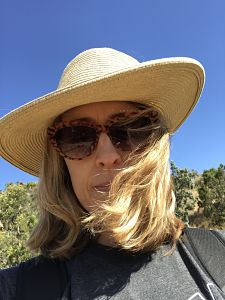
October 9, 2020/ Amy Mills Klipstine

Amy lives in Southern California, where she divides her time between writing and managing the many joys of distance learning. To do this, she relies on an unhealthy amount of chocolate and coffee.

Friday Lunch Archive

  • 2025
  • 2024
  • 2023
  • 2022
  • 2021
  • 2020
  • 2019
  • 2018
  • 2017
  • 2016
  • 2015
  • 2014

Midnight Snack

Take a bite out of these late night obsessions.

Tonight’s bites:

The Lilac and The Housefly: A Tale of Tortured Romanticism

October 24, 2025/in Midnight Snack / Nikki Mae Howard
Read more
https://lunchticket.org/wp-content/uploads/2025/10/Headshot_Nikki-Howard_1770x2000.jpg 2000 1770 Nikki Mae Howard https://lunchticket.org/wp-content/uploads/2021/12/lunch-ticket-logo-white-text-only.png Nikki Mae Howard2025-10-24 23:55:032025-10-20 10:59:03The Lilac and The Housefly: A Tale of Tortured Romanticism

Dig Into Genre

May 23, 2025/in Midnight Snack / Lauren Howard
Read more
https://lunchticket.org/wp-content/uploads/2025/05/Lauren-Howard-credit-Terril-Neely-scaled-773x1030-1.jpg 1030 773 Lauren Howard https://lunchticket.org/wp-content/uploads/2021/12/lunch-ticket-logo-white-text-only.png Lauren Howard2025-05-23 23:59:492025-06-17 18:29:02Dig Into Genre

The dreams in which I’m (not) dying

April 25, 2025/in Midnight Snack / paparouna
Read more
https://lunchticket.org/wp-content/uploads/2025/04/paparouna-photo.jpeg 960 720 paparouna https://lunchticket.org/wp-content/uploads/2021/12/lunch-ticket-logo-white-text-only.png paparouna2025-04-25 23:55:312025-08-14 16:18:41The dreams in which I’m (not) dying

More Midnight Snacks »

Amuse-Bouche

Little bites every third Friday to whet your appetite!

Today’s plate:

Till Death

May 15, 2026/in Amuse-Bouche, Translation / Lorea Canales, translated by Lia Galván
Read more
https://lunchticket.org/wp-content/uploads/2026/04/galvan_headshot_translator-scaled.jpg 2560 1887 Lorea Canales, translated by Lia Galván https://lunchticket.org/wp-content/uploads/2021/12/lunch-ticket-logo-white-text-only.png Lorea Canales, translated by Lia Galván2026-05-15 12:01:552026-04-30 16:34:25Till Death

Making Friends

May 8, 2026/in Amuse-Bouche, Flash Prose / Robert L. Penick
Read more
https://lunchticket.org/wp-content/uploads/2026/04/Bob-Headshot.jpeg 1600 1065 Robert L. Penick https://lunchticket.org/wp-content/uploads/2021/12/lunch-ticket-logo-white-text-only.png Robert L. Penick2026-05-08 12:01:262026-04-30 15:56:02Making Friends

Two Poems

May 1, 2026/in Amuse-Bouche, Poetry / Jessie Raymundo
Read more
https://lunchticket.org/wp-content/uploads/2026/04/Jessie-Raymundo-Headshot.jpeg 2374 2265 Jessie Raymundo https://lunchticket.org/wp-content/uploads/2021/12/lunch-ticket-logo-white-text-only.png Jessie Raymundo2026-05-01 12:01:432026-04-30 15:36:29Two Poems

More Amuse-Bouche »

School Lunch

An occasional Wednesday series dishing up today’s best youth writers.

Today’s slice:

I’ve Stayed in the Front Yard

May 12, 2021/in School Lunch, School Lunch 2021 / Brendan Nurczyk
Read more
https://lunchticket.org/wp-content/uploads/2021/05/SL-Insta-Brendan-Nurczyk-2.png 1500 1500 Brendan Nurczyk https://lunchticket.org/wp-content/uploads/2021/12/lunch-ticket-logo-white-text-only.png Brendan Nurczyk2021-05-12 10:18:392022-02-01 13:24:05I’ve Stayed in the Front Yard

A Communal Announcement

April 28, 2021/in School Lunch, School Lunch 2021 / Isabella Dail
Read more
https://lunchticket.org/wp-content/uploads/2021/04/SL-FB-Isabella-Dail.png 788 940 Isabella Dail https://lunchticket.org/wp-content/uploads/2021/12/lunch-ticket-logo-white-text-only.png Isabella Dail2021-04-28 11:34:132021-04-28 11:34:13A Communal Announcement

Seventeen

April 14, 2021/in School Lunch, School Lunch 2021 / Abigail E. Calimaran
Read more
https://lunchticket.org/wp-content/uploads/2021/04/SL-Insta-Abigail-E.-Calimaran.png 1080 1080 Abigail E. Calimaran https://lunchticket.org/wp-content/uploads/2021/12/lunch-ticket-logo-white-text-only.png Abigail E. Calimaran2021-04-14 11:22:062021-04-14 11:22:06Seventeen

More School Lunch »

Word From the Editor

Editing issue 28, I felt something similar to the way I feel near water: I dove into my own private world. The world above the surface kept roaring, of course. The notifications, deadlines, the constant noise was always there. But inside the work, inside these poems and stories and artwork, there was a quiet that felt entirely mine. A place where I could breathe differently.

More from the current editor »
Current Issue »

Connect With Us

lunchticket on facebooklunchticket on instaX
Submit to Lunch Ticket

A literary and art journal
from the MFA community at
Antioch University Los Angeles.

Get Your Ticket

We’ll keep you fed with great new writing, insightful interviews, and thought-provoking art, and promise with all our hearts never to share your info with anyone else.

Newsletter Signup
Copyright © 2012-2025 LunchTicket.org. All Rights Reserved. Web design and development by GoodWebWorks.
Scroll to top Scroll to top Scroll to top