
Lunch Ticket
  • Current Issue
  • Archive
    • Issues Archive
      • Issue 29: Summer/Fall 2026
      • Issue 28: Winter/Spring 2026
      • Issue 27: Summer/Fall 2025
      • Issue 26: Winter/Spring 2025
      • Issue 25: Summer/Fall 2024
      • Issue 24: Winter/Spring 2024
      • Issue 23: Summer/Fall 2023
      • Issue 22: Winter/Spring 2023
      • Issue 21: Summer/Fall 2022
      • Issue 20: Winter/Spring 2022
      • Issue 19: Summer/Fall 2021
      • Issue 18: Winter/Spring 2021
      • Issue 17: Summer/Fall 2020
      • Issue 16: Winter/Spring 2020
      • Issue 15: Summer/Fall 2019
      • Issue 14: Winter/Spring 2019
      • Issue 13: Summer/Fall 2018
      • Issue 12: Winter/Spring 2018
      • Issue 11: Summer/Fall 2017
      • Issue 10: Winter/Spring 2017
      • Issue 9: Summer/Fall 2016
      • Issue 8: Winter/Spring 2016
      • Issue 7: Summer/Fall 2015
      • Issue 6: Winter/Spring 2015
      • Issue 5: Summer/Fall 2014
      • Issue 4: Winter/Spring 2014
      • Issue 3: Summer/Fall 2013
      • Issue 2: Winter/Spring 2013
      • Issue 1: Spring 2012
    • Genre Archive
      • Creative Nonfiction
      • Essays
      • Fiction
      • Flash Prose
      • Interviews
      • Lunch Specials
      • Poetry
      • Translation
      • Visual Art
      • Young Adult
  • About
    • Mission Statement
    • Lunch Ticket Staff
      • Issue 29: Summer/Fall 2026
      • Issue 28: Winter/Spring 2026
      • Issue 27: Summer/Fall 2025
      • Issue 26: Winter/Spring 2025
      • Issue 25: Summer/Fall 2024
      • Issue 24: Winter/Spring 2024
      • Issue 23: Summer/Fall 2023
      • Issue 22: Winter/Spring 2023
      • Issue 21: Summer/Fall 2022
      • Issue 20: Winter/Spring 2022
      • Issue 19: Summer/Fall 2021
      • Issue 18: Winter/Spring 2021
      • Issue 17: Summer/Fall 2020
      • Issue 16: Winter/Spring 2020
      • Issue 15: Summer/Fall 2019
      • Issue 14: Winter/Spring 2019
      • Issue 13: Summer/Fall 2018
      • Issue 12: Winter/Spring 2018
      • Issue 11: Summer/Fall 2017
      • Issue 10: Winter/Spring 2017
      • Issue 9: Summer/Fall 2016
      • Issue 8: Winter/Spring 2016
      • Issue 7: Summer/Fall 2015
      • Issue 6: Winter/Spring 2015
      • Issue 5: Summer/Fall 2014
      • Issue 4: Winter/Spring 2014
      • Issue 3: Summer/Fall 2013
      • Issue 2: Winter/Spring 2013
      • Issue 1: Spring 2012
    • Achievements
    • Community
    • Contact
  • Weekly Content
    • Friday Lunch Blog
    • Midnight Snack
    • Amuse-Bouche
    • School Lunch
  • Contests
    • Diana Woods Award in CNF
      • Issue 29: Summer/Fall 2026
      • Issue 29: Summer/Fall 2026
      • Issue 28: Winter/Spring 2026
      • Issue 27: Summer/Fall 2025
      • Issue 26: Winter/Spring 2025
      • Issue 25: Summer/Fall 2024
      • Issue 24: Winter/Spring 2024
      • Issue 23: Summer/Fall 2023
      • Issue 22: Winter/Spring 2023
      • Issue 21: Summer/Fall 2022
      • Issue 20: Winter/Spring 2022
      • Issue 19: Summer/Fall 2021
      • Issue 18: Winter/Spring 2021
      • Issue 17: Summer/Fall 2020
      • Issue 16: Winter/Spring 2020
      • Issue 15: Summer/Fall 2019
      • Issue 14: Winter/Spring 2019
      • Issue 13: Summer/Fall 2018
      • Issue 12: Winter/Spring 2018
      • Issue 11: Summer/Fall 2017
      • Issue 10: Winter/Spring 2017
      • Issue 9: Summer/Fall 2016
      • Issue 8: Winter/Spring 2016
      • Issue 7: Summer/Fall 2015
      • Issue 6: Winter/Spring 2015
      • Issue 5: Summer/Fall 2014
      • Issue 4: Winter/Spring 2014
      • Issue 3: Summer/Fall 2013
    • Gabo Prize in Translation
      • Issue 29: Summer/Fall 2026
      • Issue 28: Winter/Spring 2026
      • Issue 27: Summer/Fall 2025
      • Issue 26: Winter/Spring 2025
      • Issue 25: Summer/Fall 2024
      • Issue 24: Winter/Spring 2024
      • Issue 23: Summer/Fall 2023
      • Issue 22: Winter/Spring 2023
      • Issue 21: Summer/Fall 2022
      • Issue 20: Winter/Spring 2022
      • Issue 19: Summer/Fall 2021
      • Issue 18: Winter/Spring 2021
      • Issue 17: Summer/Fall 2020
      • Issue 16: Winter/Spring 2020
      • Issue 15: Summer/Fall 2019
      • Issue 14: Winter/Spring 2019
      • Issue 13: Summer/Fall 2018
      • Issue 12: Winter/Spring 2018
      • Issue 11: Summer/Fall 2017
      • Issue 10: Winter/Spring 2017
      • Issue 9: Summer/Fall 2016
      • Issue 8: Winter/Spring 2016
      • Issue 7: Summer/Fall 2015
      • Issue 6: Winter/Spring 2015
    • Twitter Poetry Contest
      • 2021 Winners
      • 2020 Winners
      • 2019 Winners
  • Submissions
  • Click to open the search input field Click to open the search input field Search
  • Menu Menu
  • Link to Facebook
  • Link to Instagram
  • Link to X

Writers Read: The Faraway Nearby by Rebecca Solnit
March 6, 2016/in Amuse-Bouche, Amuse-Bouche 2016 / Rochelle Newman

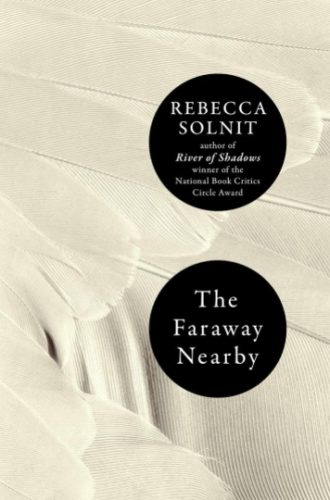
The Faraway Nearby by Rebecca SolnitRebecca Solnit gets the title for her work The Faraway Nearby from Georgia O’Keefe. “From the faraway nearby” was how O’Keefe would sign letters to the people she loved after moving from New York City to rural New Mexico. Says Solnit, “It was a way to measure physical and psychic geography together” (108). It is in this way that the author takes us on a journey through her own life along with the lives of a number of historic figures, literary and otherwise. The Faraway Nearby is memoir meets history lesson meets philosophical musings. It’s as much about Solnit’s relationship with her mother and the impact that Alzheimer’s has on them as it is about the craft of writing and the role storytelling plays in all of our lives. On the surface, this is a book about family dynamics, a trip to Iceland, mental and physical health problems, and the dilemma of dealing with three big boxes of apricots. That said, this is not a book that allows the reader to remain on the surface.

“What’s your story?” asks Solnit. She not only poses the question throughout the book, but also chooses this as the narrative’s opening thought. She quickly establishes that stories “are geography, and empathy is first of all an act of imagination, a storyteller’s art, and then a way of traveling from here to there” (3). She then deepens our understanding of how empathy connects with the book’s overarching theme of searching and journeying by bringing us back to this idea periodically, including toward the book’s concluding pages, in which she states, “Empathy means that you travel out of yourself a little or expand” (194). Solnit allows us to travel and expand in this way as a result of what she has to say and also because of how she has opted to say it. The Faraway Nearby begins and ends with “Apricots,” not only as a story element, but also as a chapter title. In fact, the structure of the book is such that the thirteen chapter titles reverse and repeat after reaching “Wound,” “Knot,” and “Unwound”—the sixth, seventh and eighth.

On the surface, this is a book about family dynamics, a trip to Iceland, mental and physical health problems, and the dilemma of dealing with three big boxes of apricots. That said, this is not a book that allows the reader to remain on the surface.

The book jacket refers to the work as “a marvelous Russian doll of a book in which stories contain stories and chapters mirror themselves,” and this Russian doll analogy is contained within. “I am, we each are, the inmost of a series of Russian dolls,” writes Solnit, adding, “you who read are now encased within a layer I built for you, or perhaps my stories are now inside you.” While this imagery is certainly relevant to the experience of reading Solnit’s work, it is the ways in which the narrator describes a labyrinth that captures this work most powerfully and provocatively. “A maze is a conversation; a labyrinth is an incantation or perhaps a prayer,” says one passage. “It’s not ultimately a journey of immersion but emergence” (188). Additionally, a description that associates labyrinths with “a spool of thread and the words and lines and pages of a book” acts like a mirror used to reflect the book’s own structure and spirit (189). This is not only a product of the previously mentioned repeating and reversing chapter titles, but also the result of a second story line—literally a line—that appears on the bottom of every page. From its enigmatic opening statement, “Moths drink the tears of sleeping birds” to its concluding question, “Who hears your story?,” the spool of thread-like story unfolds page by page and requires a constant emergence from the primary story in order to follow along. That is, of course, unless one were to read the two stories separately, finishing one before starting on the other.
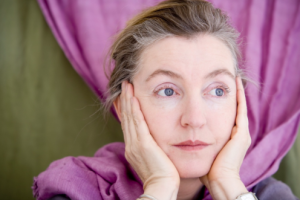
Rebecca Solnit. Photo by Sallie Dean Shatz. Courtesy of Viking Books.

Rebecca Solnit. Photo by Sallie Dean Shatz. Courtesy of Viking Books.

The Faraway Nearby is a compelling example of how simple, seemingly contained personal stories can become expansive and universal. “My own story in its particulars hardly interests me now,” says Solnit, soon after she proclaims that “writing is saying to no one and to everyone the things it is not possible to say to someone” (65, 64). In doing so, the narrator underscores the responsibility of those who travel into creative nonfiction territory, a responsibility that includes having “an intimacy with the faraway and distance from the near at hand” (65).

Solnit, Rebecca. The Faraway Nearby. Viking Adult, 2013. Print.

Rochelle Newman

Born on a small island near Puerto Rico called Manhattan, Rochelle credits her Lower East Side roots with her love of culture, humor, and language. She lives in Los Angeles, has over three decades of U.S.-Hispanic marketing experience, and is a recent Antioch MFA graduate. She holds a BFA in theatre from UC Irvine.

https://lunchticket.org/wp-content/uploads/2016/03/Screen-Shot-2016-03-06-at-9.07.19-AM-330x500-1.jpg 500 330 Rochelle Newman https://lunchticket.org/wp-content/uploads/2021/12/lunch-ticket-logo-white-text-only.png Rochelle Newman2016-03-06 22:28:532019-08-11 17:48:31Writers Read: The Faraway Nearby by Rebecca Solnit

Amuse-Bouche Archive

  • 2026
  • 2025
  • 2024
  • 2023
  • 2022
  • 2021
  • 2020
  • 2019
  • 2018
  • 2017
  • 2016
  • 2015
  • 2014
  • 2013

Friday Lunch Blog

Friday Lunch! A serving of contemporary essays published the second Friday of every month.

Today’s course:

Being A Girl is Hard

November 28, 2025/in Blog / Shawn Elliott
Read more
https://lunchticket.org/wp-content/uploads/2025/11/Headshot_Shawn-Elliott_1500x2000.jpeg 2000 1500 Shawn Elliott https://lunchticket.org/wp-content/uploads/2021/12/lunch-ticket-logo-white-text-only.png Shawn Elliott2025-11-28 11:00:252025-12-11 17:48:50Being A Girl is Hard

Diagnosis: Persisted or Silent Inheritance

November 7, 2025/in Blog / Paula Williamson
Read more
https://lunchticket.org/wp-content/uploads/2025/12/Headshot_Paula-Williamson_1467x2000.jpg 2000 1467 Paula Williamson https://lunchticket.org/wp-content/uploads/2021/12/lunch-ticket-logo-white-text-only.png Paula Williamson2025-11-07 11:00:072025-12-11 17:48:51Diagnosis: Persisted or Silent Inheritance

The Queer Ultimatum Made Me Give My Own Ultimatum

September 26, 2025/in Blog / Lex Garcia
Read more
https://lunchticket.org/wp-content/uploads/2025/09/Garcia_Headshot.jpg 1088 960 Lex Garcia https://lunchticket.org/wp-content/uploads/2021/12/lunch-ticket-logo-white-text-only.png Lex Garcia2025-09-26 11:00:112025-09-24 11:22:02The Queer Ultimatum Made Me Give My Own Ultimatum

More Friday Lunch Blog »

Midnight Snack

Take a bite out of these late night obsessions.

Tonight’s bites:

The Lilac and The Housefly: A Tale of Tortured Romanticism

October 24, 2025/in Midnight Snack / Nikki Mae Howard
Read more
https://lunchticket.org/wp-content/uploads/2025/10/Headshot_Nikki-Howard_1770x2000.jpg 2000 1770 Nikki Mae Howard https://lunchticket.org/wp-content/uploads/2021/12/lunch-ticket-logo-white-text-only.png Nikki Mae Howard2025-10-24 23:55:032025-10-20 10:59:03The Lilac and The Housefly: A Tale of Tortured Romanticism

Dig Into Genre

May 23, 2025/in Midnight Snack / Lauren Howard
Read more
https://lunchticket.org/wp-content/uploads/2025/05/Lauren-Howard-credit-Terril-Neely-scaled-773x1030-1.jpg 1030 773 Lauren Howard https://lunchticket.org/wp-content/uploads/2021/12/lunch-ticket-logo-white-text-only.png Lauren Howard2025-05-23 23:59:492025-06-17 18:29:02Dig Into Genre

The dreams in which I’m (not) dying

April 25, 2025/in Midnight Snack / paparouna
Read more
https://lunchticket.org/wp-content/uploads/2025/04/paparouna-photo.jpeg 960 720 paparouna https://lunchticket.org/wp-content/uploads/2021/12/lunch-ticket-logo-white-text-only.png paparouna2025-04-25 23:55:312025-08-14 16:18:41The dreams in which I’m (not) dying

More Midnight Snacks »

School Lunch

An occasional Wednesday series dishing up today’s best youth writers.

Today’s slice:

I’ve Stayed in the Front Yard

May 12, 2021/in School Lunch, School Lunch 2021 / Brendan Nurczyk
Read more
https://lunchticket.org/wp-content/uploads/2021/05/SL-Insta-Brendan-Nurczyk-2.png 1500 1500 Brendan Nurczyk https://lunchticket.org/wp-content/uploads/2021/12/lunch-ticket-logo-white-text-only.png Brendan Nurczyk2021-05-12 10:18:392022-02-01 13:24:05I’ve Stayed in the Front Yard

A Communal Announcement

April 28, 2021/in School Lunch, School Lunch 2021 / Isabella Dail
Read more
https://lunchticket.org/wp-content/uploads/2021/04/SL-FB-Isabella-Dail.png 788 940 Isabella Dail https://lunchticket.org/wp-content/uploads/2021/12/lunch-ticket-logo-white-text-only.png Isabella Dail2021-04-28 11:34:132021-04-28 11:34:13A Communal Announcement

Seventeen

April 14, 2021/in School Lunch, School Lunch 2021 / Abigail E. Calimaran
Read more
https://lunchticket.org/wp-content/uploads/2021/04/SL-Insta-Abigail-E.-Calimaran.png 1080 1080 Abigail E. Calimaran https://lunchticket.org/wp-content/uploads/2021/12/lunch-ticket-logo-white-text-only.png Abigail E. Calimaran2021-04-14 11:22:062021-04-14 11:22:06Seventeen

More School Lunch »

Word From the Editor

Readers,

On December 23rd, 2024, I lost a dear friend of mine, Valerie Goldstein. She was a fellow teacher and writer, and she spent her young adult life being a voice for change. Valerie had organized protests, and her dream was to get into educational policy. When I heard the news of her death, I was grief-stricken. She was so full of life and happiness, and I thought that the world had lost another good one.

More from the current editor »
Current Issue »

Connect With Us

lunchticket on facebooklunchticket on instaX
Submit to Lunch Ticket

A literary and art journal
from the MFA community at
Antioch University Los Angeles.

Get Your Ticket

We’ll keep you fed with great new writing, insightful interviews, and thought-provoking art, and promise with all our hearts never to share your info with anyone else.

Newsletter Signup

Copyright © 2012-2025 LunchTicket.org. All Rights Reserved. Web design and development by GoodWebWorks.
Scroll to top Scroll to top Scroll to top