Lunch Ticket
  • Current Issue
  • Archive
    • Issues Archive
      • Issue 28: Winter/Spring 2026
      • Issue 27: Summer/Fall 2025
      • Issue 26: Winter/Spring 2025
      • Issue 25: Summer/Fall 2024
      • Issue 24: Winter/Spring 2024
      • Issue 23: Summer/Fall 2023
      • Issue 22: Winter/Spring 2023
      • Issue 21: Summer/Fall 2022
      • Issue 20: Winter/Spring 2022
      • Issue 19: Summer/Fall 2021
      • Issue 18: Winter/Spring 2021
      • Issue 17: Summer/Fall 2020
      • Issue 16: Winter/Spring 2020
      • Issue 15: Summer/Fall 2019
      • Issue 14: Winter/Spring 2019
      • Issue 13: Summer/Fall 2018
      • Issue 12: Winter/Spring 2018
      • Issue 11: Summer/Fall 2017
      • Issue 10: Winter/Spring 2017
      • Issue 9: Summer/Fall 2016
      • Issue 8: Winter/Spring 2016
      • Issue 7: Summer/Fall 2015
      • Issue 6: Winter/Spring 2015
      • Issue 5: Summer/Fall 2014
      • Issue 4: Winter/Spring 2014
      • Issue 3: Summer/Fall 2013
      • Issue 2: Winter/Spring 2013
      • Issue 1: Spring 2012
    • Genre Archive
      • Creative Nonfiction
      • Essays
      • Fiction
      • Flash Prose
      • Interviews
      • Lunch Specials
      • Poetry
      • Translation
      • Visual Art
      • Young Adult
  • About
    • Mission Statement
    • Lunch Ticket Staff
      • Issue 28: Winter/Spring 2026
      • Issue 27: Summer/Fall 2025
      • Issue 26: Winter/Spring 2025
      • Issue 25: Summer/Fall 2024
      • Issue 24: Winter/Spring 2024
      • Issue 23: Summer/Fall 2023
      • Issue 22: Winter/Spring 2023
      • Issue 21: Summer/Fall 2022
      • Issue 20: Winter/Spring 2022
      • Issue 19: Summer/Fall 2021
      • Issue 18: Winter/Spring 2021
      • Issue 17: Summer/Fall 2020
      • Issue 16: Winter/Spring 2020
      • Issue 15: Summer/Fall 2019
      • Issue 14: Winter/Spring 2019
      • Issue 13: Summer/Fall 2018
      • Issue 12: Winter/Spring 2018
      • Issue 11: Summer/Fall 2017
      • Issue 10: Winter/Spring 2017
      • Issue 9: Summer/Fall 2016
      • Issue 8: Winter/Spring 2016
      • Issue 7: Summer/Fall 2015
      • Issue 6: Winter/Spring 2015
      • Issue 5: Summer/Fall 2014
      • Issue 4: Winter/Spring 2014
      • Issue 3: Summer/Fall 2013
      • Issue 2: Winter/Spring 2013
      • Issue 1: Spring 2012
    • Achievements
    • Community
    • Contact
  • Weekly Content
    • Friday Lunch Blog
    • Midnight Snack
    • Amuse-Bouche
    • School Lunch
  • Contests
    • Diana Woods Award in CNF
      • Issue 28: Winter/Spring 2026
      • Issue 27: Summer/Fall 2025
      • Issue 26: Winter/Spring 2025
      • Issue 25: Summer/Fall 2024
      • Issue 24: Winter/Spring 2024
      • Issue 23: Summer/Fall 2023
      • Issue 22: Winter/Spring 2023
      • Issue 21: Summer/Fall 2022
      • Issue 20: Winter/Spring 2022
      • Issue 19: Summer/Fall 2021
      • Issue 18: Winter/Spring 2021
      • Issue 17: Summer/Fall 2020
      • Issue 16: Winter/Spring 2020
      • Issue 15: Summer/Fall 2019
      • Issue 14: Winter/Spring 2019
      • Issue 13: Summer/Fall 2018
      • Issue 12: Winter/Spring 2018
      • Issue 11: Summer/Fall 2017
      • Issue 10: Winter/Spring 2017
      • Issue 9: Summer/Fall 2016
      • Issue 8: Winter/Spring 2016
      • Issue 7: Summer/Fall 2015
      • Issue 6: Winter/Spring 2015
      • Issue 5: Summer/Fall 2014
      • Issue 4: Winter/Spring 2014
      • Issue 3: Summer/Fall 2013
    • Gabo Prize in Translation
      • Issue 28: Winter/Spring 2026
      • Issue 27: Summer/Fall 2025
      • Issue 26: Winter/Spring 2025
      • Issue 25: Summer/Fall 2024
      • Issue 24: Winter/Spring 2024
      • Issue 23: Summer/Fall 2023
      • Issue 22: Winter/Spring 2023
      • Issue 21: Summer/Fall 2022
      • Issue 20: Winter/Spring 2022
      • Issue 19: Summer/Fall 2021
      • Issue 18: Winter/Spring 2021
      • Issue 17: Summer/Fall 2020
      • Issue 16: Winter/Spring 2020
      • Issue 15: Summer/Fall 2019
      • Issue 14: Winter/Spring 2019
      • Issue 13: Summer/Fall 2018
      • Issue 12: Winter/Spring 2018
      • Issue 11: Summer/Fall 2017
      • Issue 10: Winter/Spring 2017
      • Issue 9: Summer/Fall 2016
      • Issue 8: Winter/Spring 2016
      • Issue 7: Summer/Fall 2015
      • Issue 6: Winter/Spring 2015
    • Twitter Poetry Contest
      • 2021 Winners
      • 2020 Winners
      • 2019 Winners
  • Submissions
  • Click to open the search input field Click to open the search input field Search
  • Menu Menu
  • Link to Facebook
  • Link to Instagram
  • Link to X

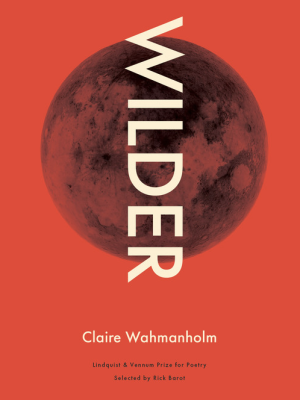
Writers Read: Wilder by Claire Wahmanholm
November 28, 2018/in Amuse-Bouche, Amuse-Bouche 2018 / Jordan Nakamura

Claire Wahmanholm’s debut poetry collection Wilder at times feels like a bedtime story, full of ghostlike beings, ash-blanketed landscapes, corpse-flowers, and Cassandran prophecies echoing through it all. That might sound enchanting and more than a little spooky, but quickly things feel uncomfortably familiar. Isn’t this our world? Are those our voices? Or worse, those of the children we claim to love? In other words, Wilder is the kind of story that will keep you up at night, with the creeping notion that it isn’t just a story.

Wilder takes its title from the archaic root word of bewilderment (pronounced as it sounds at the end of “bewilder”) and Walhmanholm opens the book with the word’s definition: “1. To cause to lose one’s way, as in a wild or unknown place; to lead or
drive astray; 2. To render, or become, wild or uncivilized.”

Despite the title, the reader is set up to be quite oriented. The stage is set by introducing us to the speakers, who are described first in an epigraph by Auden: “children afraid of the night” who’ve become “lost in a haunted wood.” Wahmanholm continues: “whose eyes have never really opened” and “whose sockets grow tall bitter stalks/ that sprout small bitter buds/ that crawl with aphids.” (1).

These “children” retell the saga of the world’s end. In “Advent” some lines appear on page seven that already feel uncomfortably close to home:

“When our ears began to ache from the pressure,
we sent out our augurs.
 
A great fire, they said,
is blowing from the east.”

I read those lines in the abnormal light of Sun choking through wildfire smoke: a curtain thrown across California by the most destructive fire in the state’s history (this due primarily to uncharacteristically severe temperatures and drought.) The fact is, whether literally or metaphorically, every reader of this book will do so in the light of the fires of climate change. “Advent” turns its attention away from the “we” and toward other beings affected, such as plants and animals:

“We were out of songs to hum. Our throats were boxes
            Of soot. In our orchards, no more insect thrum,
            no swallow quaver.” (8)

The children here sound a bit like the voices the artist Anohni inhabits in her song “4 Degrees,” where she begs through an eerily bombastic stadium-ready anthem, to burn the earth and see its animals die. Only, the children’s reflections in Wilder take place long after those consequences have struck. They regret. They are stunned by their own selfishness. And they confess to a common theme in the book—Denial:

“How did we dare have children we couldn’t save?

If we closed our eyes, the falling apples
            sounded like heavy rain.” (8)

The forms Wahmanholm employs throughout the book are expressive and differ greatly from each other. In one of several prose poems titled “Relaxation Tape” the children recount their attempts to ward off the disaster they helped to wreak upon their world.

“We listened to relaxation tapes to help us sleep. The purple sky was too bright…”

“We would not panic. Clench your fists, said the voice. I clenched my fists. Focus on where it hurts. I did. Then I relaxed and let the tension float away like smoke on the wind.” (61)

On one hand, the story recounts life on the planet as it decays, but interspersed throughout the book are unnamed poems which look like drifting murmurs: words strewn widely across pages of mostly blank space in near disarray after pyrrhic return from the grave or disaster. These poems vaguely recall M. NourbeSe Philip’s radical scattering and tearing of the found text in her brilliant project Zong! Wahmanholm’s language foregoes the disintegration of words, instead they float like pieces of space debris.

Many of the poems address outer space and planets directly. One ends with the words, “brave sailors in/ an/ unexplored/ sky.// we/ strayed from home// and/ failed utterly/ on/ the shores of space.” This is a recurring theme which flies in the face of how space exploration gets fetishized as some salvation for humanity.

This indictment seems to continue in more subtle forms. “Red Rover,” one in a number of poems named after popular children’s games, recounts with a stark coldness the proceedings of the game mechanics:

“We are placed in a field

We are told to wield our bodies
                                                       against each other
like wrecking balls or rockets,
                                                   to target the weakest links
in the chain
                    of other children’s bodies—” (35)

Claire Wahmanholm

The earthly damage of a wrecking ball proceeds to rockets, almost a direct progression from destruction to fleeing the scene of the crime. We know marginalized and poorer communities will be the first and most severely affected by ecological harm, and it’s all but sure only the very rich will be able to board any kind of escape pod from Earth, but the poem stays rooted in the language of the game, as if it was all once just a harmless bit of (slightly violent) fun. The title itself suggests a planetary Rover.

But the whole scene, heartbreakingly, begins in a field—a landscape all too easily assumed to be eternally green, with air blowing above it. But on a second reading, the reader may see this poem not as narrative at all, but an elliptical journal, detailing another listless activity for ghosts above a lifeless plain.

In another series of prose poems, each titled a single letter of the alphabet and serving as a kind of hyper-alliterative microcosm
of the book’s narrative, “B” starts with a lush pastoral scene:

“B is for Brown Bear, for berries and beehives, buds and blossoms,/ a babbling brook.” (37)

Yet, things quickly turn slightly harsh:

“Brown Bear lumbering through the balsam firs/ toward the baton and bludgeon.”

Eventually the surroundings deteriorate to an emerging hellscape:

“B for the blood and badge and bullet. B as in behave, beware. As in bereft… B is for barren and the burning den. For how bulletins are bursting with the bodies of brown bears and the alphabet is just beginning.”

Even more than a dystopic vision like Blake Butler’s Scorch Atlas, which at least still finds Earth alive (albeit beneath pustulating and charred plagues), Wilder feels hopeless at times. But this serves as solidarity with those who rightly know their pessimism is informed by reality.

In any case, Wahmonholm’s chorus here exists in a tradition of environmentalist art that is completely varied. When the urgent deployment of every strategy and timbre of warning over years by every expert and lay-witness feels at last entirely futile, here is a vision of internalized terror turned lyric, doom become song.

But making itself is an act of faith. Perhaps in the hope that, like music, the poem of all things can break past defenses to turn the ear and the mind toward meaningful change. In Fanny Howe’s famous essay, “Bewilderment,” she practices the ethics of obliquity detailed in her earlier paragraphs by ending the piece with this confounding statement:

“After all, the point of art is to show people that life is worth living by showing that it isn’t.”

Wilder’s many registers can’t boil down to a single point, but perhaps a central one is this: to show people that the Earth is worth living on, by showing when it isn’t.
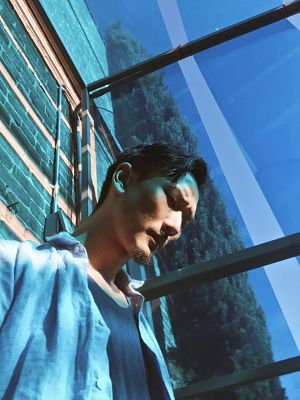
 

Jordan Nakamura is a poet and serves as the graphic design lead as well as co-lead editor for poetry and visual art for Lunch Ticket. He was born and raised in Hawaii and lives in Los Angeles.

https://lunchticket.org/wp-content/uploads/2018/11/wilder-cover.png 400 300 Jordan Nakamura https://lunchticket.org/wp-content/uploads/2021/12/lunch-ticket-logo-white-text-only.png Jordan Nakamura2018-11-28 10:00:552019-06-28 19:23:34Writers Read: Wilder by Claire Wahmanholm

Amuse-Bouche Archive

  • 2026
  • 2025
  • 2024
  • 2023
  • 2022
  • 2021
  • 2020
  • 2019
  • 2018
  • 2017
  • 2016
  • 2015
  • 2014
  • 2013

Friday Lunch Blog

Friday Lunch! A serving of contemporary essays published the second Friday of every month.

Today’s course:

Being A Girl is Hard

November 28, 2025/in Blog / Shawn Elliott
Read more
https://lunchticket.org/wp-content/uploads/2025/11/Headshot_Shawn-Elliott_1500x2000.jpeg 2000 1500 Shawn Elliott https://lunchticket.org/wp-content/uploads/2021/12/lunch-ticket-logo-white-text-only.png Shawn Elliott2025-11-28 11:00:252025-12-11 17:48:50Being A Girl is Hard

Diagnosis: Persisted or Silent Inheritance

November 7, 2025/in Blog / Paula Williamson
Read more
https://lunchticket.org/wp-content/uploads/2025/12/Headshot_Paula-Williamson_1467x2000.jpg 2000 1467 Paula Williamson https://lunchticket.org/wp-content/uploads/2021/12/lunch-ticket-logo-white-text-only.png Paula Williamson2025-11-07 11:00:072025-12-11 17:48:51Diagnosis: Persisted or Silent Inheritance

The Queer Ultimatum Made Me Give My Own Ultimatum

September 26, 2025/in Blog / Lex Garcia
Read more
https://lunchticket.org/wp-content/uploads/2025/09/Garcia_Headshot.jpg 1088 960 Lex Garcia https://lunchticket.org/wp-content/uploads/2021/12/lunch-ticket-logo-white-text-only.png Lex Garcia2025-09-26 11:00:112025-09-24 11:22:02The Queer Ultimatum Made Me Give My Own Ultimatum

More Friday Lunch Blog »

Midnight Snack

Take a bite out of these late night obsessions.

Tonight’s bites:

The Lilac and The Housefly: A Tale of Tortured Romanticism

October 24, 2025/in Midnight Snack / Nikki Mae Howard
Read more
https://lunchticket.org/wp-content/uploads/2025/10/Headshot_Nikki-Howard_1770x2000.jpg 2000 1770 Nikki Mae Howard https://lunchticket.org/wp-content/uploads/2021/12/lunch-ticket-logo-white-text-only.png Nikki Mae Howard2025-10-24 23:55:032025-10-20 10:59:03The Lilac and The Housefly: A Tale of Tortured Romanticism

Dig Into Genre

May 23, 2025/in Midnight Snack / Lauren Howard
Read more
https://lunchticket.org/wp-content/uploads/2025/05/Lauren-Howard-credit-Terril-Neely-scaled-773x1030-1.jpg 1030 773 Lauren Howard https://lunchticket.org/wp-content/uploads/2021/12/lunch-ticket-logo-white-text-only.png Lauren Howard2025-05-23 23:59:492025-06-17 18:29:02Dig Into Genre

The dreams in which I’m (not) dying

April 25, 2025/in Midnight Snack / paparouna
Read more
https://lunchticket.org/wp-content/uploads/2025/04/paparouna-photo.jpeg 960 720 paparouna https://lunchticket.org/wp-content/uploads/2021/12/lunch-ticket-logo-white-text-only.png paparouna2025-04-25 23:55:312025-08-14 16:18:41The dreams in which I’m (not) dying

More Midnight Snacks »

School Lunch

An occasional Wednesday series dishing up today’s best youth writers.

Today’s slice:

I’ve Stayed in the Front Yard

May 12, 2021/in School Lunch, School Lunch 2021 / Brendan Nurczyk
Read more
https://lunchticket.org/wp-content/uploads/2021/05/SL-Insta-Brendan-Nurczyk-2.png 1500 1500 Brendan Nurczyk https://lunchticket.org/wp-content/uploads/2021/12/lunch-ticket-logo-white-text-only.png Brendan Nurczyk2021-05-12 10:18:392022-02-01 13:24:05I’ve Stayed in the Front Yard

A Communal Announcement

April 28, 2021/in School Lunch, School Lunch 2021 / Isabella Dail
Read more
https://lunchticket.org/wp-content/uploads/2021/04/SL-FB-Isabella-Dail.png 788 940 Isabella Dail https://lunchticket.org/wp-content/uploads/2021/12/lunch-ticket-logo-white-text-only.png Isabella Dail2021-04-28 11:34:132021-04-28 11:34:13A Communal Announcement

Seventeen

April 14, 2021/in School Lunch, School Lunch 2021 / Abigail E. Calimaran
Read more
https://lunchticket.org/wp-content/uploads/2021/04/SL-Insta-Abigail-E.-Calimaran.png 1080 1080 Abigail E. Calimaran https://lunchticket.org/wp-content/uploads/2021/12/lunch-ticket-logo-white-text-only.png Abigail E. Calimaran2021-04-14 11:22:062021-04-14 11:22:06Seventeen

More School Lunch »

Word From the Editor

Editing issue 28, I felt something similar to the way I feel near water: I dove into my own private world. The world above the surface kept roaring, of course. The notifications, deadlines, the constant noise was always there. But inside the work, inside these poems and stories and artwork, there was a quiet that felt entirely mine. A place where I could breathe differently.

More from the current editor »
Current Issue »

Connect With Us

lunchticket on facebooklunchticket on instaX
Submit to Lunch Ticket

A literary and art journal
from the MFA community at
Antioch University Los Angeles.

Get Your Ticket

We’ll keep you fed with great new writing, insightful interviews, and thought-provoking art, and promise with all our hearts never to share your info with anyone else.

Newsletter Signup
Copyright © 2012-2025 LunchTicket.org. All Rights Reserved. Web design and development by GoodWebWorks.
Scroll to top Scroll to top Scroll to top