
Lunch Ticket
  • Current Issue
  • Archive
    • Issues Archive
      • Issue 29: Summer/Fall 2026
      • Issue 28: Winter/Spring 2026
      • Issue 27: Summer/Fall 2025
      • Issue 26: Winter/Spring 2025
      • Issue 25: Summer/Fall 2024
      • Issue 24: Winter/Spring 2024
      • Issue 23: Summer/Fall 2023
      • Issue 22: Winter/Spring 2023
      • Issue 21: Summer/Fall 2022
      • Issue 20: Winter/Spring 2022
      • Issue 19: Summer/Fall 2021
      • Issue 18: Winter/Spring 2021
      • Issue 17: Summer/Fall 2020
      • Issue 16: Winter/Spring 2020
      • Issue 15: Summer/Fall 2019
      • Issue 14: Winter/Spring 2019
      • Issue 13: Summer/Fall 2018
      • Issue 12: Winter/Spring 2018
      • Issue 11: Summer/Fall 2017
      • Issue 10: Winter/Spring 2017
      • Issue 9: Summer/Fall 2016
      • Issue 8: Winter/Spring 2016
      • Issue 7: Summer/Fall 2015
      • Issue 6: Winter/Spring 2015
      • Issue 5: Summer/Fall 2014
      • Issue 4: Winter/Spring 2014
      • Issue 3: Summer/Fall 2013
      • Issue 2: Winter/Spring 2013
      • Issue 1: Spring 2012
    • Genre Archive
      • Creative Nonfiction
      • Essays
      • Fiction
      • Flash Prose
      • Interviews
      • Lunch Specials
      • Poetry
      • Translation
      • Visual Art
      • Young Adult
  • About
    • Mission Statement
    • Lunch Ticket Staff
      • Issue 29: Summer/Fall 2026
      • Issue 28: Winter/Spring 2026
      • Issue 27: Summer/Fall 2025
      • Issue 26: Winter/Spring 2025
      • Issue 25: Summer/Fall 2024
      • Issue 24: Winter/Spring 2024
      • Issue 23: Summer/Fall 2023
      • Issue 22: Winter/Spring 2023
      • Issue 21: Summer/Fall 2022
      • Issue 20: Winter/Spring 2022
      • Issue 19: Summer/Fall 2021
      • Issue 18: Winter/Spring 2021
      • Issue 17: Summer/Fall 2020
      • Issue 16: Winter/Spring 2020
      • Issue 15: Summer/Fall 2019
      • Issue 14: Winter/Spring 2019
      • Issue 13: Summer/Fall 2018
      • Issue 12: Winter/Spring 2018
      • Issue 11: Summer/Fall 2017
      • Issue 10: Winter/Spring 2017
      • Issue 9: Summer/Fall 2016
      • Issue 8: Winter/Spring 2016
      • Issue 7: Summer/Fall 2015
      • Issue 6: Winter/Spring 2015
      • Issue 5: Summer/Fall 2014
      • Issue 4: Winter/Spring 2014
      • Issue 3: Summer/Fall 2013
      • Issue 2: Winter/Spring 2013
      • Issue 1: Spring 2012
    • Achievements
    • Community
    • Contact
  • Weekly Content
    • Friday Lunch Blog
    • Midnight Snack
    • Amuse-Bouche
    • School Lunch
  • Contests
    • Diana Woods Award in CNF
      • Issue 29: Summer/Fall 2026
      • Issue 29: Summer/Fall 2026
      • Issue 28: Winter/Spring 2026
      • Issue 27: Summer/Fall 2025
      • Issue 26: Winter/Spring 2025
      • Issue 25: Summer/Fall 2024
      • Issue 24: Winter/Spring 2024
      • Issue 23: Summer/Fall 2023
      • Issue 22: Winter/Spring 2023
      • Issue 21: Summer/Fall 2022
      • Issue 20: Winter/Spring 2022
      • Issue 19: Summer/Fall 2021
      • Issue 18: Winter/Spring 2021
      • Issue 17: Summer/Fall 2020
      • Issue 16: Winter/Spring 2020
      • Issue 15: Summer/Fall 2019
      • Issue 14: Winter/Spring 2019
      • Issue 13: Summer/Fall 2018
      • Issue 12: Winter/Spring 2018
      • Issue 11: Summer/Fall 2017
      • Issue 10: Winter/Spring 2017
      • Issue 9: Summer/Fall 2016
      • Issue 8: Winter/Spring 2016
      • Issue 7: Summer/Fall 2015
      • Issue 6: Winter/Spring 2015
      • Issue 5: Summer/Fall 2014
      • Issue 4: Winter/Spring 2014
      • Issue 3: Summer/Fall 2013
    • Gabo Prize in Translation
      • Issue 29: Summer/Fall 2026
      • Issue 28: Winter/Spring 2026
      • Issue 27: Summer/Fall 2025
      • Issue 26: Winter/Spring 2025
      • Issue 25: Summer/Fall 2024
      • Issue 24: Winter/Spring 2024
      • Issue 23: Summer/Fall 2023
      • Issue 22: Winter/Spring 2023
      • Issue 21: Summer/Fall 2022
      • Issue 20: Winter/Spring 2022
      • Issue 19: Summer/Fall 2021
      • Issue 18: Winter/Spring 2021
      • Issue 17: Summer/Fall 2020
      • Issue 16: Winter/Spring 2020
      • Issue 15: Summer/Fall 2019
      • Issue 14: Winter/Spring 2019
      • Issue 13: Summer/Fall 2018
      • Issue 12: Winter/Spring 2018
      • Issue 11: Summer/Fall 2017
      • Issue 10: Winter/Spring 2017
      • Issue 9: Summer/Fall 2016
      • Issue 8: Winter/Spring 2016
      • Issue 7: Summer/Fall 2015
      • Issue 6: Winter/Spring 2015
    • Twitter Poetry Contest
      • 2021 Winners
      • 2020 Winners
      • 2019 Winners
  • Submissions
  • Click to open the search input field Click to open the search input field Search
  • Menu Menu
  • Link to Facebook
  • Link to Instagram
  • Link to X

Before and Beyond the Moon
November 8, 2019/ Janet Rodriguez

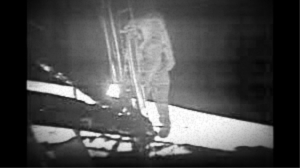
NASA picture: Neil Armstrong descends the ladder of the lunar module.

The Gateway Science Museum in Chico is two hours north of our house in Sacramento. It’s one-part hands-on exhibits, one part mad-scientist’s workshop. I love it because Harmony, Alannah, and Scarlett, my granddaughters, discover the secrets of science there as only a child can.
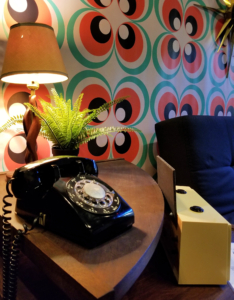
The museum currently has an exhibition called Before and Beyond the Moon, to commemorate the 50th anniversary of the Apollo 11 landing. The exhibition entrance is set up like a 1969 living-room, with a black-and-white television showing a video loop of the lunar module landing. The mid-century sofa and starburst clock on the wall make me feel like I’ve stepped back in time. I remember watching the event when I was six years old, sitting cross-legged on the carpet, a child who had to be told to back away from the television.

The girls run to the sofa and sit down. They pick up laminated magazines from the coffee table in front of them. I sit in an adjacent chair, and we start watching the grainy NASA feed together.

“What’s that?” Harmony asks. When I look at her, she’s pointing to a disconnected black rotary phone on the table next to me.

“That’s a telephone,” I say, smiling. I remember a similar conversation I once had with her mother about a record album. “That’s the kind of phone we used to call each other.”

All three girls stand up and gather around it.

“How does it work?” Alannah asks.

I pick up the receiver and demonstrate dialing. They watch the slow movement of the dial to and from the finger-stop. I challenge them to try for themselves.

“Why not try dialing your Mom’s number?” I say, handing the receiver to Harmony. She tries, then gives Alannah and Scarlett a turn. It takes patience. I explain how 911 became a shortcut for emergency calls.

“Now you,” Harmony says, handing me the receiver. “Pretend it’s 1969. Who would you call?”

I don’t have to think hard: “My Grandma.”
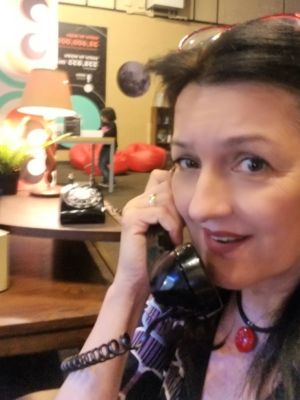
The girls seem satisfied with my answer. They run to build a lunar landing site with a docent at the Lego station around the corner. They leave me with the phone receiver in my hand, thinking of my Grandma: a small, Mexican-American woman whose distinct voice still echoes in my heart. Her words are so deeply embedded in my marrow, she’s part of me.

***

My current writing project, a family memoir, has challenged every preconceived idea I’ve had about writing. It requires the same rigorous discipline and commitment as any project, but carries the added weight of accurately and honorably representing family. I’ve recently transcribed Grandma’s voice, telling the story of her childhood in Mexico and the life she and Grandpa built here. Hearing her voice only makes me miss her more. So many times, I wish I could talk to her again.

I still remember her phone number, even though she’s been gone for twenty-seven years. I dial it and wait for her to answer. It doesn’t seem so impossible.

In my mind’s eye, I can see her walk from her kitchen to the living room, wiping her hands on her apron. She lifts the receiver to her ear and speaks: Hello?

“Hi, Grandma! It’s me, Janet.”

Hi, mija! How are you? How is Mario?

“I miss you so much,” I say. Then, I start crying. In the middle of the exhibit, with the sounds of Apollo 11 pinging steadily in the background, I can’t stop. I put my hand to my mouth and sob.

***
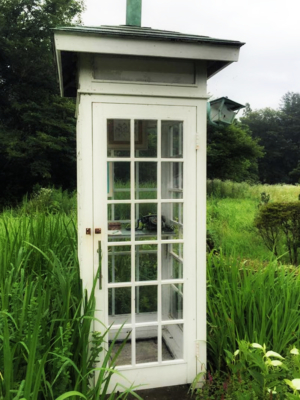
   kaze no denwa

The phone reminds me of the Japanese kaze no denwa, or “wind phone,” an otherworldly creation of 72-year-old garden designer, Itaru Sasaki. After his cousin died in 2010, Sasaki set up a glass-paneled phone booth in his hilltop garden, near Otsuchset, Japan, which overlooked the bay. He put an old, disconnected, black rotary phone inside. Every time Sasaki missed his deceased cousin, he went to the phone booth and called him.

A year later, Japan suffered three disasters in a row: a 9.0 earthquake, a tsunami, and the meltdown at the Fukushima Nuclear Power Plant. Sasaki opened his “wind phone” to his fellow citizens. People arrived from all over, lining up to call family and friends who had died suddenly. Sasaki eventually set up a wooden bench for the people who waited to use it. Even in the dead of winter, with snow on the ground, it’s estimated that 10,000 people used his hilltop phone booth that year.

Beyond the realms of science, a disconnected rotary phone can help someone with the complicated process of grieving.

***

I eventually calm down and talk to Grandma about everything. She encourages me to continue doing my best with writing the book; she assures me that everything will work out. I tell her about the museum, my beautiful granddaughters, the lunar landing and the phone which made me call her in the first place. Somehow, I know it’s almost time to hang up.

“Grandma,” I say, inhaling deeply. “I’m pretty happy.”

That’s good, Mija.

“Mom had a stroke, though.” I start crying again.

I know, mija. She’s going to be okay.

“I love you, Grandma.”

I love you, too, mija. Everything will work out. Don’t worry, okay?

I hang up the phone. Behind me, Alannah asks me if I’m alright.

“I’m okay, honey,” I say. I start looking for a tissue in my messy purse. I find a folded-up napkin and blow my nose. “I didn’t know you were standing there.”

“Were you pretend-talking with your Grandma?”

I try to smile. “Yes.”

Alannah and Harmony put their arms around me. Scarlett watches from the coffee table, looking a little confused. Behind her, Neil Armstrong descends the ladder in his Apollo spacesuit.

“Watch this!” I whisper, pointing to the television. “Listen to what he is going to say.”

Together, we watch the grainy screen. Walter Cronkite takes off his glasses, overwhelmed with emotion. Wally Schirra wipes his eyes. Neil Armstrong says his legendary line. Both commentators try to figure out exactly what he said.

“That’s one small step for man; one giant leap for mankind,” I say aloud. The girls look at me.

“Is that what he said?” Alannah asks.“What the heck does that mean?”

We laugh.

***
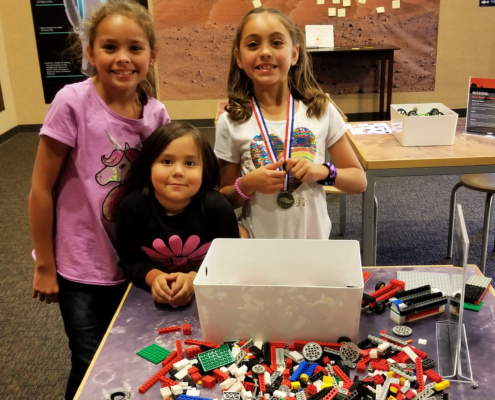
Harmony, Scarlett, and Alannah build a landing site.

One day, I might pick up a disconnected rotary phone to call my parents. For now, they’re with me, but I’m always surprised at how often the subject of mortality makes its way into our conversations. I don’t like being reminded that our lives are finite, an annoying little detail that’s always hovering in the background like a cabbage moth. One day, my own (adult) children will face the reality of life without parents.

One day my granddaughters may want to use a kaze no denwa to call me, or as Alannah says, “pretend talk” to me. If they do, I hope they are comforted by what I say: I love you too,mija. Everything will work out. Don’t worry, okay? It won’t be too hard for them to hear me. My voice will already be running through their veins, so deeply embedded in their tender marrow that my words are already a part of them.
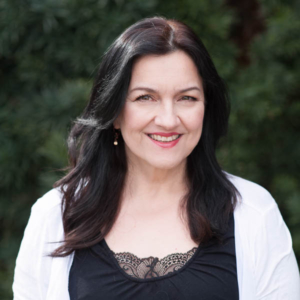
Janet Rodriguez is an author, teacher, and editor living in Northern California. Her recent work has appeared in Eclectica Magazine, The Rumpus, Cloud Women’s Quarterly, Salon.com, American River Review, and Calaveras Station.  Rodriguez has also co-authored two biographies in South Africa. Her short stories, essays, and poetry usually deal with themes of morality in faith communities and the mixed-race experience in a culturally binary world.  Currently she is a Cardinal MFA candidate at Antioch University, Los Angeles. Follow her on Twitter @brazenprincess, Instagram @janetmario or check out her personal blog at www.brazenprincess.com

Friday Lunch Archive

  • 2025
  • 2024
  • 2023
  • 2022
  • 2021
  • 2020
  • 2019
  • 2018
  • 2017
  • 2016
  • 2015
  • 2014

Midnight Snack

Take a bite out of these late night obsessions.

Tonight’s bites:

The Lilac and The Housefly: A Tale of Tortured Romanticism

October 24, 2025/in Midnight Snack / Nikki Mae Howard
Read more
https://lunchticket.org/wp-content/uploads/2025/10/Headshot_Nikki-Howard_1770x2000.jpg 2000 1770 Nikki Mae Howard https://lunchticket.org/wp-content/uploads/2021/12/lunch-ticket-logo-white-text-only.png Nikki Mae Howard2025-10-24 23:55:032025-10-20 10:59:03The Lilac and The Housefly: A Tale of Tortured Romanticism

Dig Into Genre

May 23, 2025/in Midnight Snack / Lauren Howard
Read more
https://lunchticket.org/wp-content/uploads/2025/05/Lauren-Howard-credit-Terril-Neely-scaled-773x1030-1.jpg 1030 773 Lauren Howard https://lunchticket.org/wp-content/uploads/2021/12/lunch-ticket-logo-white-text-only.png Lauren Howard2025-05-23 23:59:492025-06-17 18:29:02Dig Into Genre

The dreams in which I’m (not) dying

April 25, 2025/in Midnight Snack / paparouna
Read more
https://lunchticket.org/wp-content/uploads/2025/04/paparouna-photo.jpeg 960 720 paparouna https://lunchticket.org/wp-content/uploads/2021/12/lunch-ticket-logo-white-text-only.png paparouna2025-04-25 23:55:312025-08-14 16:18:41The dreams in which I’m (not) dying

More Midnight Snacks »

Amuse-Bouche

Little bites every third Friday to whet your appetite!

Today’s plate:

Till Death

May 15, 2026/in Amuse-Bouche, Translation / Lorea Canales, translated by Lia Galván
Read more
https://lunchticket.org/wp-content/uploads/2026/04/galvan_headshot_translator-scaled.jpg 2560 1887 Lorea Canales, translated by Lia Galván https://lunchticket.org/wp-content/uploads/2021/12/lunch-ticket-logo-white-text-only.png Lorea Canales, translated by Lia Galván2026-05-15 12:01:552026-04-30 16:34:25Till Death

Making Friends

May 8, 2026/in Amuse-Bouche, Flash Prose / Robert L. Penick
Read more
https://lunchticket.org/wp-content/uploads/2026/04/Bob-Headshot.jpeg 1600 1065 Robert L. Penick https://lunchticket.org/wp-content/uploads/2021/12/lunch-ticket-logo-white-text-only.png Robert L. Penick2026-05-08 12:01:262026-04-30 15:56:02Making Friends

Two Poems

May 1, 2026/in Amuse-Bouche, Poetry / Jessie Raymundo
Read more
https://lunchticket.org/wp-content/uploads/2026/04/Jessie-Raymundo-Headshot.jpeg 2374 2265 Jessie Raymundo https://lunchticket.org/wp-content/uploads/2021/12/lunch-ticket-logo-white-text-only.png Jessie Raymundo2026-05-01 12:01:432026-04-30 15:36:29Two Poems

More Amuse-Bouche »

School Lunch

An occasional Wednesday series dishing up today’s best youth writers.

Today’s slice:

I’ve Stayed in the Front Yard

May 12, 2021/in School Lunch, School Lunch 2021 / Brendan Nurczyk
Read more
https://lunchticket.org/wp-content/uploads/2021/05/SL-Insta-Brendan-Nurczyk-2.png 1500 1500 Brendan Nurczyk https://lunchticket.org/wp-content/uploads/2021/12/lunch-ticket-logo-white-text-only.png Brendan Nurczyk2021-05-12 10:18:392022-02-01 13:24:05I’ve Stayed in the Front Yard

A Communal Announcement

April 28, 2021/in School Lunch, School Lunch 2021 / Isabella Dail
Read more
https://lunchticket.org/wp-content/uploads/2021/04/SL-FB-Isabella-Dail.png 788 940 Isabella Dail https://lunchticket.org/wp-content/uploads/2021/12/lunch-ticket-logo-white-text-only.png Isabella Dail2021-04-28 11:34:132021-04-28 11:34:13A Communal Announcement

Seventeen

April 14, 2021/in School Lunch, School Lunch 2021 / Abigail E. Calimaran
Read more
https://lunchticket.org/wp-content/uploads/2021/04/SL-Insta-Abigail-E.-Calimaran.png 1080 1080 Abigail E. Calimaran https://lunchticket.org/wp-content/uploads/2021/12/lunch-ticket-logo-white-text-only.png Abigail E. Calimaran2021-04-14 11:22:062021-04-14 11:22:06Seventeen

More School Lunch »

Word From the Editor

Readers,

On December 23rd, 2024, I lost a dear friend of mine, Valerie Goldstein. She was a fellow teacher and writer, and she spent her young adult life being a voice for change. Valerie had organized protests, and her dream was to get into educational policy. When I heard the news of her death, I was grief-stricken. She was so full of life and happiness, and I thought that the world had lost another good one.

More from the current editor »
Current Issue »

Connect With Us

lunchticket on facebooklunchticket on instaX
Submit to Lunch Ticket

A literary and art journal
from the MFA community at
Antioch University Los Angeles.

Get Your Ticket

We’ll keep you fed with great new writing, insightful interviews, and thought-provoking art, and promise with all our hearts never to share your info with anyone else.

Newsletter Signup

Copyright © 2012-2025 LunchTicket.org. All Rights Reserved. Web design and development by GoodWebWorks.
Scroll to top Scroll to top Scroll to top