Lunch Ticket
  • Current Issue
  • Archive
    • Issues Archive
      • Issue 28: Winter/Spring 2026
      • Issue 27: Summer/Fall 2025
      • Issue 26: Winter/Spring 2025
      • Issue 25: Summer/Fall 2024
      • Issue 24: Winter/Spring 2024
      • Issue 23: Summer/Fall 2023
      • Issue 22: Winter/Spring 2023
      • Issue 21: Summer/Fall 2022
      • Issue 20: Winter/Spring 2022
      • Issue 19: Summer/Fall 2021
      • Issue 18: Winter/Spring 2021
      • Issue 17: Summer/Fall 2020
      • Issue 16: Winter/Spring 2020
      • Issue 15: Summer/Fall 2019
      • Issue 14: Winter/Spring 2019
      • Issue 13: Summer/Fall 2018
      • Issue 12: Winter/Spring 2018
      • Issue 11: Summer/Fall 2017
      • Issue 10: Winter/Spring 2017
      • Issue 9: Summer/Fall 2016
      • Issue 8: Winter/Spring 2016
      • Issue 7: Summer/Fall 2015
      • Issue 6: Winter/Spring 2015
      • Issue 5: Summer/Fall 2014
      • Issue 4: Winter/Spring 2014
      • Issue 3: Summer/Fall 2013
      • Issue 2: Winter/Spring 2013
      • Issue 1: Spring 2012
    • Genre Archive
      • Creative Nonfiction
      • Essays
      • Fiction
      • Flash Prose
      • Interviews
      • Lunch Specials
      • Poetry
      • Translation
      • Visual Art
      • Young Adult
  • About
    • Mission Statement
    • Lunch Ticket Staff
      • Issue 28: Winter/Spring 2026
      • Issue 27: Summer/Fall 2025
      • Issue 26: Winter/Spring 2025
      • Issue 25: Summer/Fall 2024
      • Issue 24: Winter/Spring 2024
      • Issue 23: Summer/Fall 2023
      • Issue 22: Winter/Spring 2023
      • Issue 21: Summer/Fall 2022
      • Issue 20: Winter/Spring 2022
      • Issue 19: Summer/Fall 2021
      • Issue 18: Winter/Spring 2021
      • Issue 17: Summer/Fall 2020
      • Issue 16: Winter/Spring 2020
      • Issue 15: Summer/Fall 2019
      • Issue 14: Winter/Spring 2019
      • Issue 13: Summer/Fall 2018
      • Issue 12: Winter/Spring 2018
      • Issue 11: Summer/Fall 2017
      • Issue 10: Winter/Spring 2017
      • Issue 9: Summer/Fall 2016
      • Issue 8: Winter/Spring 2016
      • Issue 7: Summer/Fall 2015
      • Issue 6: Winter/Spring 2015
      • Issue 5: Summer/Fall 2014
      • Issue 4: Winter/Spring 2014
      • Issue 3: Summer/Fall 2013
      • Issue 2: Winter/Spring 2013
      • Issue 1: Spring 2012
    • Achievements
    • Community
    • Contact
  • Weekly Content
    • Friday Lunch Blog
    • Midnight Snack
    • Amuse-Bouche
    • School Lunch
  • Contests
    • Diana Woods Award in CNF
      • Issue 28: Winter/Spring 2026
      • Issue 27: Summer/Fall 2025
      • Issue 26: Winter/Spring 2025
      • Issue 25: Summer/Fall 2024
      • Issue 24: Winter/Spring 2024
      • Issue 23: Summer/Fall 2023
      • Issue 22: Winter/Spring 2023
      • Issue 21: Summer/Fall 2022
      • Issue 20: Winter/Spring 2022
      • Issue 19: Summer/Fall 2021
      • Issue 18: Winter/Spring 2021
      • Issue 17: Summer/Fall 2020
      • Issue 16: Winter/Spring 2020
      • Issue 15: Summer/Fall 2019
      • Issue 14: Winter/Spring 2019
      • Issue 13: Summer/Fall 2018
      • Issue 12: Winter/Spring 2018
      • Issue 11: Summer/Fall 2017
      • Issue 10: Winter/Spring 2017
      • Issue 9: Summer/Fall 2016
      • Issue 8: Winter/Spring 2016
      • Issue 7: Summer/Fall 2015
      • Issue 6: Winter/Spring 2015
      • Issue 5: Summer/Fall 2014
      • Issue 4: Winter/Spring 2014
      • Issue 3: Summer/Fall 2013
    • Gabo Prize in Translation
      • Issue 28: Winter/Spring 2026
      • Issue 27: Summer/Fall 2025
      • Issue 26: Winter/Spring 2025
      • Issue 25: Summer/Fall 2024
      • Issue 24: Winter/Spring 2024
      • Issue 23: Summer/Fall 2023
      • Issue 22: Winter/Spring 2023
      • Issue 21: Summer/Fall 2022
      • Issue 20: Winter/Spring 2022
      • Issue 19: Summer/Fall 2021
      • Issue 18: Winter/Spring 2021
      • Issue 17: Summer/Fall 2020
      • Issue 16: Winter/Spring 2020
      • Issue 15: Summer/Fall 2019
      • Issue 14: Winter/Spring 2019
      • Issue 13: Summer/Fall 2018
      • Issue 12: Winter/Spring 2018
      • Issue 11: Summer/Fall 2017
      • Issue 10: Winter/Spring 2017
      • Issue 9: Summer/Fall 2016
      • Issue 8: Winter/Spring 2016
      • Issue 7: Summer/Fall 2015
      • Issue 6: Winter/Spring 2015
    • Twitter Poetry Contest
      • 2021 Winners
      • 2020 Winners
      • 2019 Winners
  • Submissions
  • Click to open the search input field Click to open the search input field Search
  • Menu Menu
  • Link to Facebook
  • Link to Instagram
  • Link to X

Can There Be Justice?: An Interview with Casandra López
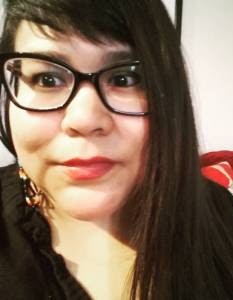
December 2, 2020/ Interviewed by RaeJeana Brooks

Casandra López is a California Indian (Cahuilla/Tongva/Luiseño) and Chicana writer. She is the author of the chapbook, Where Bullet Breaks, and the poetry collection, Brother Bullet (University of Arizona Press, 2019). Her memoir-in-progress, A Few Notes on Grief, was granted a 2019 James W. Ray Venture Project Award. López has been selected for residencies with the School of Advanced Research, Storyknife Writer’s Retreat, Hedgebrook, and Headlands Center for the Arts, and she has received support from CantoMundo, Bread Loaf, and Tin House. She’s a founding editor of As/ Us and teaches at Northwest Indian College.

*     *     *

Following her brother’s murder, López has tasked herself with understanding her responsibilities to the world, to her family, to the living, to the dead, to herself. She sits with grief and grief sits with her, its interminable face always meeting her gaze. She writes about the exchange. Antioch University’s MFA program was fortunate to receive López via Zoom and her lecture about the ethics of writing trauma. I was fortunate to converse further with her on humanity, patience, accountability, compassion, and honesty, and how they all exist together.

RaeJeana Brooks: Is there a question that you’re trying to answer for yourself right now?

Casandra López: In writing—and this goes for any genre—there’s always a question that you’re looking [to answer]. If you start off thinking you know the answer, it’s not going to turn out. I think you have to allow yourself to be open to the discovery process. In the first book [I wrote], I think the question was: How do I live with this loss of my brother, or how does my family live with this loss of my brother?

In this memoir, the question is: what does justice look like? What can justice look like for my community? Especially in my brother’s case, which is unsolved. I don’t think we’re going to get justice in the court system, whatever that may mean. Can there be justice? One of the leading questions in this book is “how does one brown man kill another brown man? How does someone from the community kill someone else from the community?” That question led to exploring the present situation in my community, but also how we got there—a historical perspective on colonization. Colonization, which strips the humanity from someone. The book I’m working on looks at that.

RB: Is it true Brother Bullet took nine years to create?

CL: Yeah! I started writing it almost immediately after my brother passed away in 2010, and it was published in 2019. There were definitely breaks. The bulk of it was probably written in 3 or 4 years. I sent it out, got rejected, took a break, went back, tried to revise it again, sent it out, got rejected, and then the publishing took maybe two years. It took some time. A part of me is glad that it did.

I wanted it to be [reflective] of that time, those first years, when I was processing that grief versus where I am now with it. I wanted to really honor and respect that. That’s why I went in with a lighter touch rather than taking it completely apart. And if I’d decided to do that, it might’ve taken another ten years!

RB: What was it like to write your current project, A Few Notes on Grief?

CL: What happened was that I wrote a poem and realized its voice sounded very different from the voice of other poems I’d written. I saw myself moving.

I don’t know if people talk about this… I’m definitely proud of [A Few Notes on Grief], and I’m happy to have something I can give to my family, that I can give to my niece and nephews, something of my memories—but my brother’s still not alive. It’s not magic. To me, it was celebratory, but it was still just a book.

Something I did not expect—I’ve felt very connected with other people who’ve experienced their own close loss, especially to gun violence. I’ve been able to speak with them and I really feel a sense of kinship. I’m glad they could appreciate my words in a way that others might not be able to. I know that, for me, poetry and literature have been an escape, a way for me to process things, so to be a part of another person’s processing is really cool.

RB: During your lecture, you said something I love: “Undress my pain on the page.” How are you able to undress your pain while simultaneously working through it? Do you struggle with it?  

CL: A lot of what I’m working through right now is my own shame. That’s layered. When you have shame about something, it’s from society or family. You have to break through all of that. I can maybe do that in one essay or section or poem. You have to work through that continuously.

Years ago, my family house was raided because of the war on drugs. False information led to the raid and I had shame about it for a long time. But over the years, I realized it could’ve been way worse. There have been people killed, people who’ve been disfigured by these often violent police raids. Right now, I feel very compelled to write about it because I feel [these events are] in conversation with what happened to Breonna Taylor and others. It’s pushing me to get over my shame about it.

I think I need to write about it in a sociopolitical context, where it’s not just my pain and the shame of what happened to my family that we’ve tried to put aside and move on from. My family was severely affected by this, so I feel this is something I want to write about instead of burying. We are not the only family to experience this type of thing.

As painful as it is to dig inside these memories, there’s something larger that I’m trying to explore.  I want to examine it because my family is not the only one who has experienced it. Just like my brother’s death didn’t just happen to my family. There’s a lot of people who have lost someone to gun violence. I think it can be helpful to think about it in a larger context, even when you’re writing about something very personal like your body or a personal shame. What would it mean for other people who might share in your experience?

RB: I am so grateful that you touched on shame.

CL: After this book, I started thinking, “a lot of this is about shame!” It hadn’t occurred to me. I think it was so buried inside me that it hadn’t occurred to me.

RB: Writing about the body is very literally intimate and a lot of people find shame in writing about it. Then there are other people who won’t write about their family traumas for fear of damaging their relationship with their family or the family as a whole. Is there anything you personally would never publish work about?

CL: I would never write about another person’s abuse in my family in nonfiction. That’s theirs. I think that should be respected. I’m writing about myself, but my life teaches. I’m trying to tell a story about myself, but also the community. At the same time, I’m not willing to get someone in trouble, have them lose their job, or to put my family in any sort of harm because my brother’s case is still open. Writing is not worth putting people in harm’s way.

I think it’s good to have some boundaries. Different genres have different boundaries. With fiction, you can take a little from here and take a little from there and make it your own. I think that’s why it’s great to write in multiple genres. Certain projects may require those elements. In poetry, you can focus on the lyricism and the imagery and leave out other stuff.

RB: I read your essay in World Literature Today about “Native Nonfiction in the Classroom and Beyond,” and I remember you saying that something you really dislike is when people read work by Native authors and instead of allowing them to settle into the elements of craft, people look at it as an entry point to their culture. Can you speak more about changes you hope to see as it relates to reception of Native authors in the world of literature? 

CL: David Treuer wrote the book Native American Fiction, and in it, he examines the work of Native author [Louise] Erdrich. She’s Ojibwe and he is, too. People thought her writing was all [Native] culture. But she studied at Dartmouth. She studied Shakespeare. She’s studied all these things. Are you not seeing how she actually crafts these books? There was some cultural element, but her work was seen as this cultural artifact.

I think our minds want to categorize things. Simon Ortiz wrote this article that I teach to my students. He says Native writers are dealing with the creative response to colonization. That’s the connective tissue.

I think the problem is, in the literary world, they’re looking for what is authentic. Even though Tommy Orange has been published, I know there’s other people who are writing about urban experiences who’ve been told that they should set it on a reservation.

RB: You’ve been writing about family for a long time. I know you feel a duty to be fair with their feelings and boundaries, as you just expressed, but I wonder if your idea of allegiance has changed and with whom your allegiance lies.

CL: That word: “allegiance.”

I’m writing about my grandfather who was abusive to his kids, to my mother. I don’t think your allegiance should blind you. Yes, there are good things. I have good memories about my grandfather, but I’m not going to let that blind me or prevent me from telling the whole story. It’s not like I’m bringing these truths up just for gossip. I see direct connections.

People are complicated and that is their humanity. I want to be able to render him in his full humanity, and abuse is part of that. It’s made me think about things I haven’t really thought about before: how did he grow up? This is who he was and how he felt that he had to be. What led to that? Not to let him off the hook for the abuse, but to better understand him and this lineage. When I think about privacy and protecting, I think that’s part of allegiance, but I also think it shouldn’t stop a person from rendering the complexity or the complicit-ness that all people have.
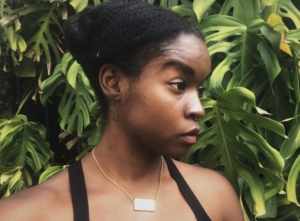
RaeJeana Brooks is a Florida-born, Mexico City-living writer archiving pleasure and connectedness. She is an MFA candidate at Antioch University Los Angeles and always has extra fruit in her bag for you.

Issue Archive

  • Issue 28: Winter/Spring 2026
  • Issue 27: Summer/Fall 2025
  • Issue 26: Winter/Spring 2025
  • Issue 25: Summer/Fall 2024
  • Issue 24: Winter/Spring 2024
  • Issue 23: Summer/Fall 2023
  • Issue 22: Winter/Spring 2023
  • Issue 21: Summer/Fall 2022
  • Issue 20: Winter/Spring 2022
  • Issue 19: Summer/Fall 2021
  • Issue 18: Winter/Spring 2021
  • Issue 17: Summer/Fall 2020
  • Issue 16: Winter/Spring 2020
  • Issue 15: Summer/Fall 2019
  • Issue 14: Winter/Spring 2019
  • Issue 13: Summer/Fall 2018
  • Issue 12: Winter/Spring 2018
  • Issue 11: Summer/Fall 2017
  • Issue 10: Winter/Spring 2017
  • Issue 9: Summer/Fall 2016
  • Issue 8: Winter/Spring 2016
  • Issue 7: Summer/Fall 2015
  • Issue 6: Winter/Spring 2015
  • Issue 5: Summer/Fall 2014
  • Issue 4: Winter/Spring 2014
  • Issue 3: Summer/Fall 2013
  • Issue 2: Winter/Spring 2013
  • Issue 1: Spring 2012

Genre Archive

  • Creative Nonfiction
  • Essays
  • Fiction
  • Flash Prose
  • Lunch Specials
  • Poetry
  • Interviews
  • Translation
  • Visual Art
  • Young Adult

Friday Lunch Blog

Friday Lunch! A serving of contemporary essays published the second Friday of every month.

Today’s course:

Being A Girl is Hard

November 28, 2025/in Blog / Shawn Elliott
Read more
https://lunchticket.org/wp-content/uploads/2025/11/Headshot_Shawn-Elliott_1500x2000.jpeg 2000 1500 Shawn Elliott https://lunchticket.org/wp-content/uploads/2021/12/lunch-ticket-logo-white-text-only.png Shawn Elliott2025-11-28 11:00:252025-12-11 17:48:50Being A Girl is Hard

Diagnosis: Persisted or Silent Inheritance

November 7, 2025/in Blog / Paula Williamson
Read more
https://lunchticket.org/wp-content/uploads/2025/12/Headshot_Paula-Williamson_1467x2000.jpg 2000 1467 Paula Williamson https://lunchticket.org/wp-content/uploads/2021/12/lunch-ticket-logo-white-text-only.png Paula Williamson2025-11-07 11:00:072025-12-11 17:48:51Diagnosis: Persisted or Silent Inheritance

The Queer Ultimatum Made Me Give My Own Ultimatum

September 26, 2025/in Blog / Lex Garcia
Read more
https://lunchticket.org/wp-content/uploads/2025/09/Garcia_Headshot.jpg 1088 960 Lex Garcia https://lunchticket.org/wp-content/uploads/2021/12/lunch-ticket-logo-white-text-only.png Lex Garcia2025-09-26 11:00:112025-09-24 11:22:02The Queer Ultimatum Made Me Give My Own Ultimatum

More Friday Lunch Blog »

Midnight Snack

Take a bite out of these late night obsessions.

Tonight’s bites:

The Lilac and The Housefly: A Tale of Tortured Romanticism

October 24, 2025/in Midnight Snack / Nikki Mae Howard
Read more
https://lunchticket.org/wp-content/uploads/2025/10/Headshot_Nikki-Howard_1770x2000.jpg 2000 1770 Nikki Mae Howard https://lunchticket.org/wp-content/uploads/2021/12/lunch-ticket-logo-white-text-only.png Nikki Mae Howard2025-10-24 23:55:032025-10-20 10:59:03The Lilac and The Housefly: A Tale of Tortured Romanticism

Dig Into Genre

May 23, 2025/in Midnight Snack / Lauren Howard
Read more
https://lunchticket.org/wp-content/uploads/2025/05/Lauren-Howard-credit-Terril-Neely-scaled-773x1030-1.jpg 1030 773 Lauren Howard https://lunchticket.org/wp-content/uploads/2021/12/lunch-ticket-logo-white-text-only.png Lauren Howard2025-05-23 23:59:492025-06-17 18:29:02Dig Into Genre

The dreams in which I’m (not) dying

April 25, 2025/in Midnight Snack / paparouna
Read more
https://lunchticket.org/wp-content/uploads/2025/04/paparouna-photo.jpeg 960 720 paparouna https://lunchticket.org/wp-content/uploads/2021/12/lunch-ticket-logo-white-text-only.png paparouna2025-04-25 23:55:312025-08-14 16:18:41The dreams in which I’m (not) dying

More Midnight Snacks »

Amuse-Bouche

Little bites every third Friday to whet your appetite!

Today’s plate:

I Try So Hard Not to Bite Off His Tongue & One Poem

November 21, 2025/in Amuse-Bouche / Sheree La Puma
Read more
https://lunchticket.org/wp-content/uploads/2025/11/La-Puma_headshot.jpg 1599 881 Sheree La Puma https://lunchticket.org/wp-content/uploads/2021/12/lunch-ticket-logo-white-text-only.png Sheree La Puma2025-11-21 11:00:222025-12-11 17:48:51I Try So Hard Not to Bite Off His Tongue & One Poem

Those from sadness – Found Poem

November 14, 2025/in Amuse-Bouche / Yirui Pan
Read more
https://lunchticket.org/wp-content/uploads/2025/10/Pan_headshot.jpg 1707 1280 Yirui Pan https://lunchticket.org/wp-content/uploads/2021/12/lunch-ticket-logo-white-text-only.png Yirui Pan2025-11-14 11:00:102025-12-11 17:48:51Those from sadness – Found Poem

My Town

October 31, 2025/in Amuse-Bouche / Shoshauna Shy
Read more
https://lunchticket.org/wp-content/uploads/2025/10/Shy_headshot-2.jpg 1091 862 Shoshauna Shy https://lunchticket.org/wp-content/uploads/2021/12/lunch-ticket-logo-white-text-only.png Shoshauna Shy2025-10-31 11:00:372025-12-11 17:48:51My Town

More Amuse-Bouche »

School Lunch

An occasional Wednesday series dishing up today’s best youth writers.

Today’s slice:

I’ve Stayed in the Front Yard

May 12, 2021/in School Lunch, School Lunch 2021 / Brendan Nurczyk
Read more
https://lunchticket.org/wp-content/uploads/2021/05/SL-Insta-Brendan-Nurczyk-2.png 1500 1500 Brendan Nurczyk https://lunchticket.org/wp-content/uploads/2021/12/lunch-ticket-logo-white-text-only.png Brendan Nurczyk2021-05-12 10:18:392022-02-01 13:24:05I’ve Stayed in the Front Yard

A Communal Announcement

April 28, 2021/in School Lunch, School Lunch 2021 / Isabella Dail
Read more
https://lunchticket.org/wp-content/uploads/2021/04/SL-FB-Isabella-Dail.png 788 940 Isabella Dail https://lunchticket.org/wp-content/uploads/2021/12/lunch-ticket-logo-white-text-only.png Isabella Dail2021-04-28 11:34:132021-04-28 11:34:13A Communal Announcement

Seventeen

April 14, 2021/in School Lunch, School Lunch 2021 / Abigail E. Calimaran
Read more
https://lunchticket.org/wp-content/uploads/2021/04/SL-Insta-Abigail-E.-Calimaran.png 1080 1080 Abigail E. Calimaran https://lunchticket.org/wp-content/uploads/2021/12/lunch-ticket-logo-white-text-only.png Abigail E. Calimaran2021-04-14 11:22:062021-04-14 11:22:06Seventeen

More School Lunch »

Word From the Editor

Editing issue 28, I felt something similar to the way I feel near water: I dove into my own private world. The world above the surface kept roaring, of course. The notifications, deadlines, the constant noise was always there. But inside the work, inside these poems and stories and artwork, there was a quiet that felt entirely mine. A place where I could breathe differently.

More from the current editor »
Current Issue »

Connect With Us

lunchticket on facebooklunchticket on instaX
Submit to Lunch Ticket

A literary and art journal
from the MFA community at
Antioch University Los Angeles.

Get Your Ticket

We’ll keep you fed with great new writing, insightful interviews, and thought-provoking art, and promise with all our hearts never to share your info with anyone else.

Newsletter Signup
Copyright © 2012-2025 LunchTicket.org. All Rights Reserved. Web design and development by GoodWebWorks.
Scroll to top Scroll to top Scroll to top