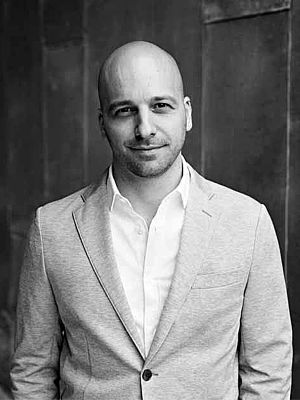
Christoper Castellani, Author
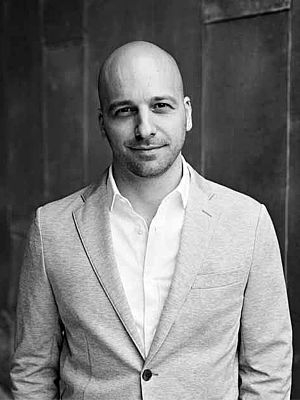
Photo Credit: Michael Joseph
Christopher Castellani, the son of Italian-American immigrants, is best known for his critically-acclaimed trilogy of novels about an Italian-American family: A Kiss from Maddalena (Algonquin Books, 2003), The Saint of Lost Things (Algonquin, 2005), and All This Talk of Love (Algonquin, 2013). Filled with real and complex characters living in turbulent times, the Grasso family’s story reminded me of my own, even though my father’s family comes from Ireland, and my mother’s family from Mexico. Like many readers, I found familiarity in the issues and challenges that the Grasso family faced, since most immigrant parents are continually carving out a new identity in their new home, while simultaneously shouldering responsibility to traditions and values that they’ve left behind. Castellani’s novels proved to be delicious historical fiction that I found hard to put down.
And yet, it was Castellani’s craft book, The Art of Perspective (Greywolf Press, 2016) that I brought to the winter residency for Chris to sign—a craft book that I read before the Grasso family trilogy. It’s the one Castellani book that remains my favorite, for its unique voice that imparted level-headed wisdom. As I continue to labor over my own novel—seven years in the making— The Art of Perspective continues to be my go-to craft book as I discover the right narrative strategy for the whole story.
Castellani’s newest novel, Leading Men, is described on his website as “an expansive yet intimate story of desire, artistic ambition, and fidelity, set in the glamorous literary and film circles of 1950s Italy.” It’s a story that takes place over a span of years, beginning when Tennessee Williams and his lover, Frank Merlo, meet a gorgeous, aspiring Swedish actress, Anja Blomgren, at a party in Portofino, thrown by a mutual friend, Truman Capote. Frank remembers the events of that summer as he lies dying in Manhattan, ten years later, waiting for one last visit from Tennessee. Anja is now legendary film icon Anja Bloom, who lives as a recluse until she is forced back into the spotlight after it is discovered that she possesses the only copy of Tennessee Williams’s unpublished, final play—written especially for her.
Castellani now lives and works in Boston, serving as Artistic Director for GrubStreet, a non-profit agency that runs a renowned creative writing program, where writers help other writers in the community. Chris and I connected via Skype at the beginning of February, just as he finished a busy day at the GrubStreet offices. There, he found a quiet room and we started talking about his upcoming book tour.
If I have too many options when I’m writing, if everything is open, in terms of narrative, I get paralyzed and my imagination shuts down.
Janet Rodriguez: Congratulations on Leading Men. I saw your book tour schedule and I counted forty stops. What are you thinking? Are you going to sleep?
Christopher Castellani: (laughs) Yeah, it’s crazy, I know. Probably not. I’m so flattered and honored that so many places want to have me. I get a lot out of the experience of presenting and talking to people and all that, which is fulfilling for me, which is nice.
JR: I know, when you read at Antioch, you were wonderful. This new book is a bit of a departure for you, isn’t it?
CC: In the sense that it doesn’t have any basis in family stories, yes, it’s a departure, but it also has the historical or alternative fiction elements to it. In a way, it is actually quite similar to what I did with my family story. If you think of my family story as a family history, what I was doing was taking pieces of that real history and transforming it into fiction. It’s not so different taking the history of people I don’t know and transforming that into fiction. In some ways, it’s not a departure, it’s just a different cast of characters.
JR: So, what’s it like, fictionalizing “history”?
CC: (laughs at my air quotes) I found it strangely freeing. People think that’s counterintuitive, but I loved having the constraints. If I have too many options when I’m writing, if everything is open, in terms of narrative, I get paralyzed and my imagination shuts down. In the case of this book, there was a missing week in the journals that Tennessee Williams was keeping. I decided to write the book inside of that missing week, so I had the constraints of time, the constraints of geography, and, of course, the constraints of a few known characters. Within those constraints I felt like I was fully playing. I could really use my imagination and go crazy but within a certain set of limits. To me, that was the ideal circumstance to write this book.
JR: I like how you say you feel free within those constraints—you’re free to play and use your imagination.
CC: Exactly. I get paralyzed when I’m relying on one-hundred percent of what comes into my mind. I think I would be a really good color-by-numbers painter, rather than a blank canvas. [laughs] I would change the numbers, of course, but I like having the lines around them.
JR: The first book of yours that I ever read was The Art of Perspective. I loved the entire series by Grey Wolf Press, but I thought your book had one of the best beginnings of any craft book I have ever read. You illustrate how important it is to get connection with the reader, pull them into the story, and then—boom! —they’re off with you. I think it has the most wonderful beginning of any book—let alone a craft book—and I really enjoyed it.
CC: Thank you. Thank you so much.
JR: Why is it so important for writers to get the right perspective?
CC: Well, like I tried to illustrate with that example [at the beginning of The Art of Perspective], it changes everything. Ultimately, every story is about the narrator, whether they realize it or not. So, it really makes a huge difference who you have controlling the narrative because, ultimately, it’s going to reflect on that character. It’s the same if you have an omniscient, or an amorphous narrator, it still has that sensibility defining the whole narrative. You’ll have main characters and minor characters, but who’s pulling the strings of characterizing them in one way or another? That’s the author or the narrator, and ultimately, the book and the story is a reflection of them. So, it really comes down to who tells the story.
This is true of anyone who tells you any story, even someone you meet in person on the street. Let’s say you meet an old friend for coffee and she’s telling you about her marriage, her children, or whatever. What she’s saying is only true based on her own perception; it’s only one side of the story. If the novel that’s written about that family is told by her, it’s going to be a very different book than if it’s told by the son, her husband, her sister, or the neighbor. It’s going to be a different story if it’s told by all of them, from multiple different points of view. Each of those options carries a different effect on the overall project of the book. The truth really doesn’t matter; it’s all kind of relative.
JR: Do you believe that a story gets written when you can’t write it any other way?
CC: I think there’s a truth to that. I don’t know if you have to actually write from every point of view [laughs], but I do think you have to consider the narrative from a bunch of different angles and consider what would happen to the narrative if you told it another way. Finally, you’ll hit upon the one that feels the most true to you.
The way into the story is not necessarily the way out. So, if you start a story from the mother’s point of view, and you think, “Well, because I started it that way—that’s what I was organically led to—then that’s the way the story has to stay.” That’s completely not true. The mother’s point of view is often just the onramp to the story, but the story might be told by a different character or using a completely different process or a different strategy once you know what you want the story to be about.
We often go into the story thinking that we know what we want it to be about, and we think we have the right way of getting there, but once we’re in the middle of it, we realize it’s actually about something else. Once we realize that, it’s probably unlikely that the same person can still tell it. So, we have to constantly be open to reorganizing or reassessing our strategy.
JR: Is there a strategy to finding the right narrator? A shortcut?
CC: I wouldn’t say there are shortcuts, but what I do recommend that people do—and I’ve done with every book—is write a lot outside the story or the novel. I write journal entries of characters that I know won’t end up in the book, but it’s just a way of getting to know them better. So, I write in their voices. I’ll write letters from one character to another, just to see what they would say to each other, even though I know it’s not going to end up in the book. I’m getting to know them on that intimate level, in a way that will not necessarily be a part of the book. When you do this, it’s so important to tell yourself, “None of what I’m writing is going to end up in this book.” Because then, you can unlock a part of yourself that isn’t trying to impress anybody; you’re just trying to get to know these people.
From the beginning, if you know you’re gay from early on, which I did, or if you know you’re different, at least, early on, which I did, you knew exactly what that meant. It forces you to watch people’s behavior because you have to figure out a way to operate and get through it.
Once you start to amass this material, you do start to see, “Oh, this is where the energy is! This is whose voice that I want to tell the story.” Or, “These are the multiple voices that I need to tell the story.” Or, “Okay, it’s actually about this time of their lives, but I’m going to tell it from thirty years later, for whatever reason.” Only when you amass a lot of material can you make a decision in an informed way, but as I said, that material doesn’t have to end up in the story.
It can be anything: notes, pictures, almost anything that would be like making a scrapbook of a character’s life, whether you’re jotting down notes from them, whatever. This is just a way of gathering material. Only when you gather a lot—it’s almost like [laughs]—have you been watching the Marie Kondo show on Netflix?
JR: Yes! Oh, my word, I’m addicted to that show!
CC: You know how she gets them to throw everything into a pile? You have to do that so you can see what you’ve got before you know what you really want to keep. And that’s really what I’m talking about. I guess it’s just like the Marie Kondo guide to writing a story.
JR: [laughs] Did you do all this with Leading Men?
CC: I did. I did a lot of this with Leading Men. I wrote a lot outside the story. I wrote many versions of various scenes from different perspectives. I had a whole other structure of the book for a while, that I only realized wasn’t working because I had so much of it and I could see I knew too much. I had an idea that added up too neatly. I had two characters who were telling the story, and they were like perfect contrasts to each other. In a way, it was too perfect. It was too obvious, and I needed something—like an X factor—to shake up the narrative. Only when I introduced a new character, who was completely fictional, was I able to really see the book for what it really was.
JR: Anja Bloom—is she completely fictional?
CC: [smiles] Yup. She’s the character I was talking about.
JR: You know, I thought so. I searched online and in library resources: Who did Tennessee Williams and Frank know before she became famous? Who is Anja Bloom? And so, now you tell me she’s made up?
CC: [laughing] Yeah. She’s inspired by someone like Liv Ullman or, in a way, Greta Garbo, but she’s completely fictional. She came from a line from a letter that Truman Capote wrote at the time.
I always identified with my mother’s story, her sense of dislocation as a very reluctant immigrant. She never really had the life she really wanted and yet felt too powerless to change it.
JR: I’ve always been a fan of Tennessee Williams. I think the way he wrote women is incredible—especially the way he was able to get inside the psyche of his female characters—and here he is, a man. Do you think he has influenced your writing?
CC: That’s an interesting question. This is not in any way to say that I am as talented a writer as he is—but I feel like I gravitated towards him because he and I have a similar sensibility when it comes to women in particular. The types of women characters that he is drawn to are the same kind of women characters I am drawn to. So, it’s not like he taught me, but it’s like we found each other, or I found him, and I recognize him. He’s a better version of what I want to be. He’s doing what I am doing, or what I want to do.
JR: The way you researched and wrote the trilogy was amazing, but even more amazing was how you wrote the women. Like you knew each one. You seem very sympathetic with a woman’s perspective… Do you want to say anything about that?
CC: I’m a total mama’s boy [laughs]. That might have had something to do with it. I always identified with my mother’s story, her sense of dislocation as a very reluctant immigrant. She never really had the life she really wanted and yet felt too powerless to change it. And that tug between being traditional and breaking free of tradition, I feel like I really identify with that, and so many women are in that position. They feel they want to be or they’re raised to be the traditional type, or they have feelings of loyalty or responsibility to that traditional model. At the same time, they have feelings, I guess like we all do, to break out and burn it all down. [laughs] I think that men are… kind of given more permission to do that kind of thing, and forgiven for that, and women aren’t. And as a gay man, I think I can really identify with that in that regard.
JR: I was just going to ask you that, and I’m really glad that you went there. Because I’m kind of old school, and among me and my friends in our generation, we used to say that you need a gay friend—a gay man friend—to really talk to. But if I say that out loud in the community I’m in now? [around my young friends/university with a focus on social justice] I’m kind of out there. So, do you want to address that?
CC: Just call me, call me! [we laugh]
Well, I’ll address it this way: I’ll say that being gay, [and] being a woman, what they share is similar. From the beginning, if you know you’re gay from early on, which I did, or if you know you’re different, at least, early on, which I did, you knew exactly what that meant. It forces you to watch people’s behavior because you have to figure out a way to operate and get through it. To navigate the world in a way that you’re undetected. So, you’re watching people’s behavior all the time. You’re saying, “If I want to be a real man or a real boy, I have to act this way.” So, you’re imitating and you’re watching, and you’re studying human behavior and the way people interact with each other. I think that’s why so many gay people are artists, because we’ve been forced to analyze human behavior. And women have to do that as well, mostly in terms of self-protection, as a way of keeping safe, keeping watch over your bodies, over your everything. We’re both in similar positions because we both have to be constantly aware. We both have to be conscious of the way we behave in that dynamic.
JR: Before we end, can you tell me a little bit about your craft? How you’ve honed it?
CC: Are you asking about my process?
JR: Yes, if you can talk about process, please do—especially, how would you direct someone who was beginning?
CC: Well, first of all, quickly, I should say that my process is not very different than most writers. I’m writing a little bit every day, treating it like a part-time job, showing up for work even when you think you don’t have anything to say or want to say, and then just accumulating pages, and then stepping back, seeing what you have, going back through it, and just repeat, repeat, repeat that process over and over again.
I do think if you’re writing a novel, you owe it to yourself to try to immerse yourself in that novel, for at least a period of days, if not weeks, if you can afford it, to really see that novel. Because you really have to see it all at once and immerse yourself in that world, once you have maybe 300 or 400 pages to just really immerse yourself in it.
JR: What are the most effective tools to get good?
CC: I know it sounds like the most boring, cliché answer, but the absolute, best way to become a better writer is to read more. As they say, read like a writer, but read in a way that opens things up.
Think about pure imitation: “This is how this writer is doing it and I’m going to do it the same way,” and then try to do it in the exact same way. Chances are, you’re going to do it your way, even if you think that you’re imitating them. You’re letting what they’ve done open up possibilities for your own work.
And, again, don’t think you have to write like every successful writer. If you write more like Raymond Carver, then try to be the best version of a Raymond-Carver-like writer you can be. You’re always going to bring your own sensibility to it. Don’t worry about ripping him off. But you can’t be Raymond Carver and Virginia Woolf and David Foster Wallace all at the same time—you’re going to be a total mish-mash! Gravitate toward what speaks to you and what moves you, and try to learn from that. Don’t try to copy whoever is hitting it big that year.
I do think we recognize our kindred spirits when we look for our writing models. They can’t be foisted on us. I’m never going to write like Raymond Carver, as much as I admire him. I’m never going to write like David Foster Wallace, but there are people who I gravitate towards, and I can make myself a better version of myself if I look to them as an example.
I guess it’s about finding your literary kindred spirits and trying to be the most like them that you can. I guess I’ve always done that, whether I’ve meant to or not.
JR: Chris, thank you for taking time out of your busy schedule to talk to me.
CC: It really was a pleasure, so thank you.
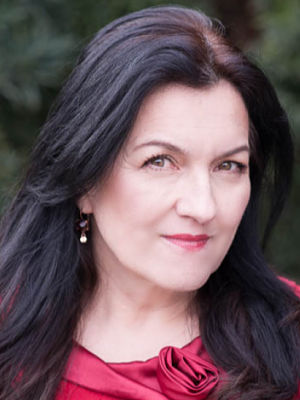 Janet Rodriguez is an author, blogger, teacher, and editor who lives in Sacramento with her husband, extended family, three dogs, and one cat. In the United States, her work has appeared in Cloud Women’s Quarterly Journal, Salon, American River Review, and Calaveras Station. Rodriguez has also published essays, stories, and two biographies in South Africa.