
Genevieve Hudson, Author
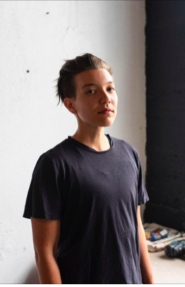 Genevieve Hudson is, both, grounded and a force of nature. She is wise beyond her years, genuine, insightful, and fierce, with a hint of ineffable magic. This special alchemy infuses her teaching, enabling her to engage students on a technical and emotional level simultaneously, meeting everyone exactly where they are while encouraging expansion and elevation. Studying with Hudson is a dynamic, immersive experience, as is reading her work. A Little in Love with Everyone (Fiction Advocate, 2018)—a hybrid memoir in which she views her life through the lens of the graphic memoir Fun Home by Alison Bechdel—glitters with beautiful, hard-won moments of self-discovery. Her debut short story collection, Pretend We Live Here (Future Tense Books, 2018), vibrates with a quiet menace reminiscent of Flannery O’Connor (I am not the first—nor will I be the last—to make that comparison), rooted in the everyday while ascending to epic heights. Her highly anticipated debut novel Boys of Alabama (W.W. Norton/Liveright, 2020), due out in May, has already been selected by Oprah Magazine as one of the year’s recommended reads.
Hudson lives in Portland, OR, and holds an MFA in fiction from Portland State University. She is currently teaching at Antioch University Los Angeles’s MFA program, where I was fortunate enough to be a student in her workshop. I caught up with Hudson on the phone in early January.
Louise Rozett: One of the mentors at Antioch, Alistair McCartney, gave this great lecture recently called “The Inaugural Scene: The Birthplace of Writing,” in which he talked about the notion that there’s a scene in the life of every writer that marks the beginning of their writing. It isn’t necessarily what led to their first piece of writing, but more what created the need for them to write. Does this resonate with you at all?
Genevieve Hudson: It’s interesting to think about what made us start to perceive our lives in terms of story, and what made us want to start writing. My inaugural scene as a writer probably happened in college. It’s a pivotal moment in terms of leaving home, forming your identity, and reflecting on fundamental parts of your life. That’s when it starts to seem like there’s a story or a narrative happening, and that’s when you become curious about what makes people do certain things, and what’s making you do certain things as well. Although maybe that’s more when I started writing seriously. Maybe my inaugural scene comes earlier, when I was younger. I was always immersed in books, and from the moment I started reading and seeing people giving voice to their experiences, I wanted to do that too.
LR: It seems like for some people, there’s a specific moment or encounter of some kind. For others, it’s a shift—their attention shifts to story, and they can’t necessarily tell you why, but they remember the moment it happened.
GH: College was definitely when I started seeing my life in terms of story. I think that has everything to do with being introduced to literature that moved me on a deep level. It reoriented me, making me see what was happening around me as worth noticing and writing about. Then I began looking for those moments all the time.
LR: Speaking of literature that moves readers deeply, let’s talk about your book, A Little in Love with Everyone. Did you learn anything surprising about yourself when you were writing about your life through the lens of the graphic memoir Fun Home?
GH: I learned a lot about how I think of and reckon with memory. What’s interesting about writing something grounded in memoir is that you talk to people in your life about memories, which can call things into question. I talked to my mom about my childhood, and her memories expanded my own, which led to me thinking about how my memory is constructed, and how much of memory is a construction in general. For example, sometimes there isn’t an objective reality that two people can come to about something that happened. In that way, I think a lot of nonfiction is actually fiction to some degree.
LR: There’s an essay in the book about the way you’d been treated by some of the girls in school, and how that led in part to you playing football and skateboarding with boys. I’m curious to know what the boys you played with were like, and if you had to do any work to be accepted by them.
GH: The boys accepted me for who I was, in all of my tomboyish-ness. They just saw me as one of them—a fun kid to hang out with and play with, and I really didn’t feel the otherness from them that I’d felt from the group of young girls that I was friends with. My adult brain can look back at that and recognize that we were the age at which kids start to develop crushes, and I think there might have been envy that I was accepted into the boys’ circle. But at the time, I didn’t have that perspective. I was drawn to boy culture—I loved skating and football, and that’s what those boys loved too. There was just a natural affinity and connection through play.
What’s interesting about writing something grounded in memoir is that you talk to people in your life about memories, which can call things into question.
LR: It’s a beautiful, powerful book, as is your short story collection Pretend We Live Here. One of the many things I love about Pretend We Live Here is the pacing—you take your time with the narratives, revealing rich details about setting and character. What is the relationship between details and pacing, and how do they inform each other?
GH: There’s absolutely a connection between details and pacing. When you slow down and zoom in on the minutiae, the reader is going to follow your gaze and you’re going to slow the pace down. But it depends on how you list those details—you can do it in a way that drags it out, or you can do in a punchy, directive way. I think a lot about the details that I select when I’m writing, because I want to include only the strangest, most meaningful details. If you’re looking at a crowded room—a bar, for instance—you could spend forever describing everything about it, but the reader’s mind actually fills in a lot of details. When I say to you that I’m going to describe a bar, a million things about what a bar looks like pop up in your head. You’re there, you see it—as a reader, you bring that in. Since I know that you’re bringing that in, I’m free to focus on a few meaningful or strange, singular details that tell you, “not any bar, this bar.” If I give too many details that feel familiar, maybe I’m slowing down the pace in a way that doesn’t serve the piece.
LR: When you’re writing a first draft, do you just let it fly and then find that great, unique detail in revision? Or do you take the time to search for that detail in the first draft?
GH: I wish I could just let it fly—I do. There are a lot of great writers who talk about the editorial brain versus the creative brain—how the creative brain can go into this deep state of playing, and then later, at a more helpful time so as not to stop your momentum, you bring in your editorial brain to craft things. For whatever reason, I haven’t gotten there yet. My editorial brain won’t turn off. Obviously, I edit many, many times later, too, but because I’m a slow writer, I think pretty carefully about details on the first round. Otherwise, for me, if I write too much without editing, I get overwhelmed. But that’s just my process—other people do it differently.
LR: At what point in your process do your characters reveal to you what it is they want or need?
GH: I think it’s a give-and-take process. When I start writing, I have an idea of who the characters are, and a lot of times that initial core idea is right, but it’s small. I find out more about them as I write. A problem I had early on in writing that I still think about is differentiating my characters. I think hard about how my characters are different from each other, and by thinking about what they want, the differences start to—actually, I hesitate to use the language of revealing because I don’t think this information comes magically. Even though I’m writing in uncertainty—I don’t do a lot of outlining in the beginning, I don’t know where my plot is going often until I’m writing it—I still do more work than what the word “reveal” suggests. I worked with Alexander Chee years ago, and he gave me this character card that Émile Zola wrote when he was writing his novel Nana. Zola used to write out in-depth character cards for every character, and they would have details that never made it into the book—information about what the characters want, where they come from, what their parents were like, what was in their childhood bedrooms. That kind of sketching is really helpful for me.
LR: You had us do an incredible exercise in workshop where we reverse-engineered the backstory for a Flannery O’Connor character, and it was pretty illuminating. We all got so much out of it. Does taking your students through an exercise like that help you in any way? What do you get out of teaching?
GH: Teaching is an interesting experience when you’re doing creative work. You’re constantly engaging with your practice, with the questions of your practice, and with the art that you’re making. It’s enriching for me because I get to engage in a discourse of literature. What a privileged thing to sit with inquisitive, curious people and talk about story, literature, and craft as well as emotional resonance, the hard parts, the beautiful parts—I feel grateful to be part of that process. Engaging with students, the questions that you all ask, the level of attention that you bring to your work—it inspires me, it allows me to reckon with those questions myself, and it makes me want to stay on top of certain craft readings even more than normal because I’m excited to share and talk about them. I revisit things, like the Gary Lutz piece that I brought to our workshop, and got to think about those concepts all over again. Teaching brings a lot to my life and my writing in that way. Also, in writing my seminars, I get the chance to dive deep into a topic that I’m interested in in a generative way, and that isn’t something that I would just do on my own.
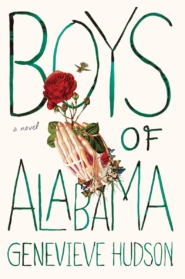
LR: One last question before I let you go. I’m excited about your debut novel Boys from Alabama—it feels like it’s about to explode onto the scene. The blurbs are rapturous, and it has the distinction of having already been named a book-to-read in 2020 by Oprah Magazine. What are you most excited about in anticipation of the release?
GH: I’m excited about my tour, and going out into the community to do readings and interact with writers and readers in bookstores. I might be a rare writer who’s an extrovert. I love writing, but you spend years alone with yourself in a room, reckoning with the things in your mind. I’ve centered my life around that process, and it’s meaningful to me, but I love the opportunity to talk to people who have read my book, and who are interested in similar subjects or in writing in general. I find that part of it special. It’s mortifying to some writers, or just not appealing to others, but some are really into it, and I’m one of them.
LR: Well, I’m so happy for you, and I can’t wait to read the book.
GH: Maybe we can do another interview when it comes out.
LR: Yes! I would love that. So would Lunch Ticket. Thanks, Genevieve.

Louise Rozett is the author of the Confessions series (Confessions of an Angry Girl, Confessions of an Almost-Girlfriend) published by HarlequinTEEN, and a pilot based on the series that won best half-hour original script at the Austin Film Festival. Her play Break, about the effects of the 9/11 recovery effort on the recovery workers and their families, was a finalist for the Stanley Drama Award, was workshopped at New York Stage & Film, and will be published by Broadway Play Publishing in 2020. She is a graduate of Vassar College and the MFA acting program at The Theatre School at DePaul University. Visit Louiserozett.com for more.