
Here’s to the Breed of Flying Hens!
 When my toddler son says the word “mum,” it is not me he looks at. While his voice enunciates the first letter with a clipped edge, he points instead at a trumpet-shaped hibiscus we always pluck from the flower tree tipping across the fence delineating his older brother’s school. It feels magnificent that he says this word, but it is also shocking that he cannot fit me into it. “Mum” for him might mean a gaggle of colors, the hint of soft yellow and purple that is difficult to name. Or the smooth swirl of the flower’s funneling mouth. I wonder if he knows that “mum” can also mean to leave.
I am learning a new language. Of gauging the slow limp of time and trapping it. I am learning the temporariness of moments. I memorize the feel of my two sons’ bodies and the warmth spreading through my shoulders when my husband tickles them. I hold my sons’ laughter—the deep crackle that emanates from them while they play and their eyes twinkling in delight as they give each other a chase. When my toddler says “mum,” each sound sung the same, I answer even though the space held out is not for me.
The notification of my fellowship award trickled into my email on a Good Friday, where I lolled about on my bed for most of its hours. My whole body ignited into a scream. My sons screamed because I was screaming. My husband smiled, nodded, a small patch of sadness building around his eyes. We both knew that the mail held other meanings. It was the beginning of dislocations, the tectonic plates beneath the small tribe we have built repositioning themselves.
“Three years is a long time! You are going with your children, right?” everyone asks, expectant.
“Yes, yes. Of course,” I say, because where else are children expected to belong, if not with their mother? It is a mother who should understand the crazy language of crying. It is a mother who takes one glance at a playing child and sees a budding fever. An old Igbo adage scribbles a mother’s place into the common language: “okuko chi umu adighi efe elu,” loosely translated as “a hen with chicks does not fly high.” In the house where I was a child, I encountered some hens with chicks who soared alongside other birds, stirring the dust in their wake. Most elders often cussed such birds, called them wayward. Yet I found that rare choice intriguing. I have always wanted to be those birds who shrugged off the burdens of childcare without looking down at their offspring. Yet I did not know how much a chick’s cackling hurt, especially when the hen no longer has to perch on a wall across from them but must fling herself halfway across the world to find her place.
I have always been about leaving. My sprightly walk, the itch in my heels that I am unable to nip when I poke at it—these elucidate my restiveness. My name “Oga mba” is a blatant disregard for folds of territory. It means to exist elsewhere that is not home. But leaving comes at a price. The pain needling my chest when I look at my sons. The desiccated pathway that has been drilled into my body as if I was hung out on a line to dry. Now, instead of scolding or spanking my sons for a naughty act, I gather them to my chest. I am afraid that scolding will germinate a loss of the time we do not have. My four-year old is hyperactive, a little distant like a shadow. He wriggles away from my hold when I try to hug him. I wish I could thread the shiftiness of time into his mind and teach him to guard it. I wish I could teach him what to expect in my absence. I hope that my sons both fill each other’s moments enough to speak about me in their toddler languages, and that when one cries for me, the other would understand.
I know women who left. I know a Nigerian writer, Ukamaka Olisakwe, who is aching for her children whom she hasn’t seen in two years. I know my best friend, Kasimma, who almost botched her visa interview because she was afraid to pull away from her children and from everything she knew. I know my mother. My grief sometimes stems from years of smothered emotions, of being torn from her because she had to enroll for a tertiary education. I remember her exiting back, growing into a thin line after each visit that often lasted for as long as one weekend. I always imagined I was seeing her for the last time. I think of my temporal flight as a craving linked to my mother’s. I wonder if our thirst would drain into a genetic possibility for survival. Would it be inked into our whole genealogy? But we must experience a dislocation to survive. My mother’s survival helped me survive.
*
“Mummy, is that a yummy in your bag?” my 4-year-old asks. The toddler follows me with his eyes instead, preparing himself to throw a tantrum if indeed I have a snack. They often detect what I am about to eat. Their incessant needs make me want to sneak away from it all. I still hoard my snacks. I still run into the kitchen to throw some cold beverage down my throat. Then I remember that I would not have to share with anyone in the coming year or in the next four years, and the sugary taste in my mouth turns bland.
It is not our first separation since they were born. I have traveled for writing workshops, literary festivals, and interviews in both their toddler years. On my return, what always greeted me was an empty wonder. Each son stared at me like someone he’d seen before but can no longer place, as if he asked why I should show up at such a time. I recognized that lapse. It was the memory working hard to reconnect—a rusty string striving to oil itself. I always knelt before the lapse and the rust, hugging and pecking each boy, oiling strings, filling gaps with my affection. At each kiss, I often got an embarrassed laughter which did not strike quite deep. I was no different from the nice strangers who called them fine babies and ruffled their hair. They laughed because I was playing nice and not because I was their mum.
*
I know my grandparents through stories. My family especially tells me about my paternal grandmother who adored me, and, as reward, my small feet padded after her everywhere she went. They said she died before I turned three. My brother’s eyes misted up each time he relived her final moments: the plate of yam porridge she’d been eating, the water she’d gulped, which still rippled in her cup after her eyes fell shut. But what made my brother sadder was that I did not remember.
“But you never ate from any other hand except Grandma’s. How can you forget?” He always berated me, his face gloomy from the betrayal. I felt guilty and muscled my memory to recall. Surely, such closeness could not be forgotten. It had to be curled up somewhere in my subconscious. But remembering the chubby, bow-legged women standing in a monochrome large picture frame in our living room was like trapping a catfish with bare hands. Memories of her had slipped away. The human memory, porous as sand, condenses remarkable humans into unremarkable beings. I worry that I would share the same fate. My toddler could begin to forget who I am even with daily video calls. What if he condenses my face into every other face of the cartoonish characters he sees on the screen? What if I become mama shark doodle doodle?
I look at my departure date as a figure nestling in infinity. Unreachable. I fill my time with my sons’ needs, with their reaching for me, asking to be taken to the toilet, to be given water, to be held. I fill my thoughts with their “Daddy” chant when our compound gate drums open and a car drives in. Will they wait up for me in the same manner? Will they peep unending through our netted railing until they realize that there is no point to keep going there? I ingrain into my memory the white-ceilinged apartment we live in, with small black ropes of swinging cobwebs. There is the couch and its faded brown leather and its hollow seam that swallows toys. There is the partitioned pecan brown shelf holding books and shoes—sand dunes in one part, scraps of paper in the other. There is the weather. The sun’s smite that become raindrops in a blink. Rain crashing into the dust, drenching our hair and clothes and my sons’ laughter as we run and run.
I will miss out on thousands of their growing moments. There won’t even be stories of those moments, because they will not seem remarkable enough. My sons will transcend to higher rungs on the ladder of speech, and I would keep running into the new phase but not the process of getting there. Would I return to fallen milk teeth and the gaps their absence spawned? Or would there be new teeth already sprouted in the spaces, filled up as if gaps were not made at all? My mother tells me how my growth shocked her each year she visited. How she never got used to my new pairs of breasts needing bras and my hips that seemed to widen on a weekly basis.
In every story of women, we are passageways. We are also rooms for growing things: babies, breast milk. In every story of women, we do not leave, should not leave. Okuko chi umu adighi efe elu. A hen with chicks does not fly so high. But I come from the breed of flying hens. I have watched too many hens fly to not know how to patter my feet in preparation before lifting my body into the air. I suckled from the teats of flying women: my mother, my aunties: a sprinkle of women who were my mother’s friends, my aunties: women who were from my father’s family. If Ukamaka Olisakwe already blazes trails in the sky, if Kasimma’s wings now arc mid-air, unburdened, what would staggering about in the mud make my feet? What then have I learned?
The world is always the most beautiful at sunrise or sunset, in the short-lived lax moments between light and dark. My sons always marvel at all those large streaks of amber splashed into the sky, like an artist’s feverish strokes. My four-year-old points at it, childlike surprise spreading on his face like a yawn as he shows me this rare hue of the sky that he’d retrieved from a place no one else can reach. But their likes would dwindle in the coming years. When next we see, I’d be pushed farther in my toddler’s language bank, where ‘mum’ means other things. When he gets enrolled into a daycare for the first time, it would not be me who’d tie his shoes like I did his older brother. I would miss this important day when he walks into the world for the first time without me or his dad playing guard.
Our throats are jammed full when my husband and I try to discuss it. Too many threads to saunter through. Wooly cloaks clogging our speech tracks. Instead we cling to each other’s smiles and service. We do not know what lies on the new strange shore towards which we are rowing. We only know of now, where one needs a massage and the other reaches for a cream.
“No need to worry. They would join you after two or three months,” my friends reassure me. Yes, yes, I say, my fears stewed into the fervent words. Yes, yes, even though our bank accounts scream otherwise. I imagine how the real moment of separation would feel, how we’d all go to the airport as one family and then minutes or hours later, I find myself in a metal bird, crossing seas and deserts without the very humans who supply the air in my lungs.
Do we know the statistics of Nigerian women living away from their children? How many women were banned by their children’s paternal relatives from seeing their children? How many women sneak to gates of schools to catch a glimpse of the child that grew in their wombs, the same child they hadn’t been allowed to see in years? How many women find their babies years later in the bodies of strange-looking young adults who tell them, hi, nice to meet you? For these there is an endless scroll of women—capsized lives laughing or singing by day, and in quiet moments clutching their emptied wombs where the babies hatched. Aren’t we are all flying hens? Women leaving to survive. Women forced to leave and having to survive. Women leaving because women can leave to survive. Aren’t our paths all the same?
My family and I will have constant video calls. I will reach through time differences and a million miles to capture only the present moments, where my sons would not break things or throw the bed in disarray. For all those months, I’d keep seeing the calm, reserved versions of them prepped for the screen. I will not see the whole beam of a new idea sprouting in the eyes of my 4-year-old or my toddler’s wobbly dance as he leaps towards a plate of food. Their attention span for phone calls are brief. I wonder how long they’d be able to sit and hold a conversation. What happened to the chicks after the mother hen was airborne? Did they turn to new sources of warmth? My memory does not cross into this aftermath. I am the new outsider, the one who is away, the one who risks being shut out.
Children under five are likely to forget unmemorable events of their childhood. What if my sons condense me into an event not so memorable? What if we no longer recognize one another when next we see? But I come from a breed of flying hens. We deserve not the tiny puffs of air stealing in through the nostrils, but a whole ocean of it. Look at us nudging into galaxies. Look at the trajectories we pencil into the skies, underlining passable routes.
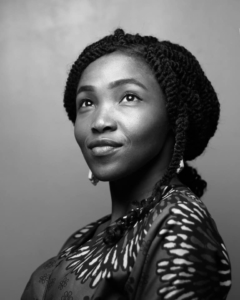
Frances Ogamba is a 2022 CLA fellow at the University of Minnesota, Twin Cities. A winner of the 2020 Kalahari Short Story Competition and the 2019 Koffi Addo Prize for Creative Nonfiction, she is also a finalist for the 2019 Writivism Short Story Prize and 2019 Brittle Paper Awards for short fiction. Her fiction appears or is forthcoming on Ambit, Ninth Letter, Chestnut Review, CRAFT, New Orleans Review, Vestal Review, The Dark Magazine, Uncharted Magazine, midnight & indigo, Jalada Africa, in The Best of World SF and elsewhere. She is a 2022 Pushcart Prize Nominee, and her stories have been recommended on must-read lists by Tor Magazine. She is an alumna of the Purple Hibiscus Creative Writing Workshop taught by Chimamanda Adichie.