
Lunch Ticket
  • Current Issue
  • Archive
    • Issues Archive
      • Issue 29: Summer/Fall 2026
      • Issue 28: Winter/Spring 2026
      • Issue 27: Summer/Fall 2025
      • Issue 26: Winter/Spring 2025
      • Issue 25: Summer/Fall 2024
      • Issue 24: Winter/Spring 2024
      • Issue 23: Summer/Fall 2023
      • Issue 22: Winter/Spring 2023
      • Issue 21: Summer/Fall 2022
      • Issue 20: Winter/Spring 2022
      • Issue 19: Summer/Fall 2021
      • Issue 18: Winter/Spring 2021
      • Issue 17: Summer/Fall 2020
      • Issue 16: Winter/Spring 2020
      • Issue 15: Summer/Fall 2019
      • Issue 14: Winter/Spring 2019
      • Issue 13: Summer/Fall 2018
      • Issue 12: Winter/Spring 2018
      • Issue 11: Summer/Fall 2017
      • Issue 10: Winter/Spring 2017
      • Issue 9: Summer/Fall 2016
      • Issue 8: Winter/Spring 2016
      • Issue 7: Summer/Fall 2015
      • Issue 6: Winter/Spring 2015
      • Issue 5: Summer/Fall 2014
      • Issue 4: Winter/Spring 2014
      • Issue 3: Summer/Fall 2013
      • Issue 2: Winter/Spring 2013
      • Issue 1: Spring 2012
    • Genre Archive
      • Creative Nonfiction
      • Essays
      • Fiction
      • Flash Prose
      • Interviews
      • Lunch Specials
      • Poetry
      • Translation
      • Visual Art
      • Young Adult
  • About
    • Mission Statement
    • Lunch Ticket Staff
      • Issue 29: Summer/Fall 2026
      • Issue 28: Winter/Spring 2026
      • Issue 27: Summer/Fall 2025
      • Issue 26: Winter/Spring 2025
      • Issue 25: Summer/Fall 2024
      • Issue 24: Winter/Spring 2024
      • Issue 23: Summer/Fall 2023
      • Issue 22: Winter/Spring 2023
      • Issue 21: Summer/Fall 2022
      • Issue 20: Winter/Spring 2022
      • Issue 19: Summer/Fall 2021
      • Issue 18: Winter/Spring 2021
      • Issue 17: Summer/Fall 2020
      • Issue 16: Winter/Spring 2020
      • Issue 15: Summer/Fall 2019
      • Issue 14: Winter/Spring 2019
      • Issue 13: Summer/Fall 2018
      • Issue 12: Winter/Spring 2018
      • Issue 11: Summer/Fall 2017
      • Issue 10: Winter/Spring 2017
      • Issue 9: Summer/Fall 2016
      • Issue 8: Winter/Spring 2016
      • Issue 7: Summer/Fall 2015
      • Issue 6: Winter/Spring 2015
      • Issue 5: Summer/Fall 2014
      • Issue 4: Winter/Spring 2014
      • Issue 3: Summer/Fall 2013
      • Issue 2: Winter/Spring 2013
      • Issue 1: Spring 2012
    • Achievements
    • Community
    • Contact
  • Weekly Content
    • Friday Lunch Blog
    • Midnight Snack
    • Amuse-Bouche
    • School Lunch
  • Contests
    • Diana Woods Award in CNF
      • Issue 29: Summer/Fall 2026
      • Issue 29: Summer/Fall 2026
      • Issue 28: Winter/Spring 2026
      • Issue 27: Summer/Fall 2025
      • Issue 26: Winter/Spring 2025
      • Issue 25: Summer/Fall 2024
      • Issue 24: Winter/Spring 2024
      • Issue 23: Summer/Fall 2023
      • Issue 22: Winter/Spring 2023
      • Issue 21: Summer/Fall 2022
      • Issue 20: Winter/Spring 2022
      • Issue 19: Summer/Fall 2021
      • Issue 18: Winter/Spring 2021
      • Issue 17: Summer/Fall 2020
      • Issue 16: Winter/Spring 2020
      • Issue 15: Summer/Fall 2019
      • Issue 14: Winter/Spring 2019
      • Issue 13: Summer/Fall 2018
      • Issue 12: Winter/Spring 2018
      • Issue 11: Summer/Fall 2017
      • Issue 10: Winter/Spring 2017
      • Issue 9: Summer/Fall 2016
      • Issue 8: Winter/Spring 2016
      • Issue 7: Summer/Fall 2015
      • Issue 6: Winter/Spring 2015
      • Issue 5: Summer/Fall 2014
      • Issue 4: Winter/Spring 2014
      • Issue 3: Summer/Fall 2013
    • Gabo Prize in Translation
      • Issue 29: Summer/Fall 2026
      • Issue 28: Winter/Spring 2026
      • Issue 27: Summer/Fall 2025
      • Issue 26: Winter/Spring 2025
      • Issue 25: Summer/Fall 2024
      • Issue 24: Winter/Spring 2024
      • Issue 23: Summer/Fall 2023
      • Issue 22: Winter/Spring 2023
      • Issue 21: Summer/Fall 2022
      • Issue 20: Winter/Spring 2022
      • Issue 19: Summer/Fall 2021
      • Issue 18: Winter/Spring 2021
      • Issue 17: Summer/Fall 2020
      • Issue 16: Winter/Spring 2020
      • Issue 15: Summer/Fall 2019
      • Issue 14: Winter/Spring 2019
      • Issue 13: Summer/Fall 2018
      • Issue 12: Winter/Spring 2018
      • Issue 11: Summer/Fall 2017
      • Issue 10: Winter/Spring 2017
      • Issue 9: Summer/Fall 2016
      • Issue 8: Winter/Spring 2016
      • Issue 7: Summer/Fall 2015
      • Issue 6: Winter/Spring 2015
    • Twitter Poetry Contest
      • 2021 Winners
      • 2020 Winners
      • 2019 Winners
  • Submissions
  • Click to open the search input field Click to open the search input field Search
  • Menu Menu
  • Link to Facebook
  • Link to Instagram
  • Link to X

Representation of Systemic Racism

May 6, 2019/ by Arianna Hayes

As Kendrick Lamar filled notebooks up with his rhymes, the young people of color in his neighborhood filled up toxic gangs that contributed to street violence and abuse. Kendrick found his escape, but many others could not avoid the magnetic pull of inner-city gang culture. Through illustrative lyrics and transcendent instrumentals, Lamar’s 12-minute song, “Sing About me, I’m Dying of Thirst,” is a groundbreaking anthem that serves as evidence of systemic racism in America.

Many people seem to believe that inner-city poverty and activity is due to people not valuing work enough. However, it is proven that America built cities that deprived people of color the same opportunities and wealth that a typical white family receives today. MSNBC reporter, Ned Resnikoff wrote a piece called “Race is the elephant in the room when it comes to inequality on the income and wealth differences between black people and white people.” He states, “Disparities in homeownership are a major driver of the racial wealth gap, according to a recent study from Brandeis University.”

When severe alienation happens, oppressed groups often begin to feel that they don’t owe anything to the society that created their conditions.

According to the authors of the report, redlining is a form of discrimination in banking or insurance practices and discriminatory money lending practices, lack of access to credit, and lower incomes have blocked the homeownership path for African-Americans while creating, as well as reinforcing, communities segregated by race. Housing policies that America’s government created have shaped inner-city ghettos. This caused African Americans to migrate to one side of a town as they had no other options for places to reside.

Tactics like denying home loans and insurance or increasing the costs for residents in a defined geographical area were used as a tool to force minorities into certain sections of a city. This began when the National Housing Act of 1934 established the Federal Housing Administration and the Federal Home Loan Bank Board. The agency created “residential security maps” to determine the safety of real estate investments in selected areas. These neighborhoods were deemed unsafe, and ineligible for financing.

Conditions in American ghettos are the same, as many minorities earlier on were denied ways to gain wealth through the housing. When severe alienation happens, oppressed groups often begin to feel that they don’t owe anything to the society that created their conditions. Minority populations who do not see normal politics as a route to solving the problems of their lives often resort to demanding change by other means, like an urban uprising, or most often—protesting the way they are being treated. Because of this, minorities who reside in these neighborhoods turn to selling drugs or prostitution as a means of making money. This leads to gangs and gangs lead to violence, making crime rates go up and putting minorities in an endless spiral that the American government put them in.

In “Sing About Me, I’m Dying of Thirst,” following two skits, two beats and four verses, the song’s chorus is presented: “When the lights shut off and it’s my turn to settle down, my main concern promise that you will sing about me.” It’s sung in a high-pitched tone that contrasts with the rest of the song. This voice represents death due to violence and crime. In an interview, Lamar states, “First verse is speaking from my partner talkin’ to me, speakin’ on a story of how I was there when his brother passed and I got to watch him take his last breath.” Before being killed, Lamar’s friend’s only request to the emerging rapper was that if he were to die that Lamar dedicate a song to him and his brother. And so he did.

“Sing About Me, I’m Dying of Thirst” recognizes the hardships that minorities are put through every day and the segregation-like tactics that are still placed on them even today.

He raps from the perspective of the victim’s brother sometime after the victim’s death. The brother believes that it’s Kendrick’s fault because they retaliated due to an incident that happened to Kendrick. However, he appreciated Kendrick for being there for his brother and holding his arms while he was dying. The victim’s brother talks about the pain he feels from his brother’s murder and living in Compton. He wonders if Kendrick will ever make it out of the ghetto. He then describes his wanting revenge as being a demon inside him. He questions the fighting between bloods and crips but can’t escape it because it is all he grew up with, all he knows. The victim’s brother wonders if he will ever be as passionate about something as Kendrick is about music and explains that people like him never succeed. He wishes Kendrick the best and hopes that when he becomes famous Kendrick keeps his name alive so children can learn from his mistakes. The verse ends with the victim’s brother getting shot while saying, “and if I die before your album drop.”

The second verse is from the perspective of Keisha’s sister. Keisha was a molestation victim, prostitute, and homicide victim, who Kendrick previously rapped about in his album, “Section 80.” She is angry at Kendrick for “putting her sister on blast,” without knowing her that well. She proudly claims to be continuing in her sister’s path of prostitution in order to make it in the neighborhood. She questions Kendrick’s judgments, arguing that Kendrick doesn’t know what it’s like to be her and doesn’t have the right to criticize her decisions. She tells him that she thinks the system, her childhood, and her abusive parents who believed that children should be beaten, ruined her. However, Keisha’s sister does not want to be mentioned in the song. She claims she doesn’t need a doctor to know that she is healthy and believes that she will most likely live longer than Kendrick. Her verse ends with her saying that she will always work hard for her money.

Kendrick mirrors these different perspectives by responding to them in verse three.

The song ends with an old woman looking at them in shock at the gun in their hands. She asks them, “Why are you so angry?” She tells them that they are dying of thirst and are in need of holy water and baptism in the spirit of the lord. The song concludes with a prayer symbolizing the start of Kendrick and his friends’ new “real” life centered on God.

“Sing About Me, I’m Dying of Thirst” recognizes the hardships that minorities are put through every day and the segregation-like tactics that are still placed on them even today. This song is a cry for help from other people trapped in the “system.” This system was created by the simple fact of redlining. Many people might be comfortable with it, but only because it’s been helping them survive for so long, they don’t know any different. “Sing About Me, I’m Dying of Thirst” documents minority struggle in America that has been looked over for centuries.
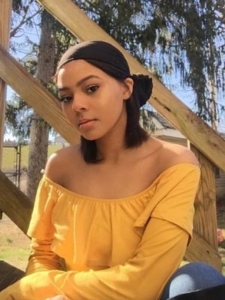
Arianna Hayes is a recently graduated high school student from Stivers School for the Arts. She attended and participated in the creative writing magnet and has spent the last six years practicing her writing skills in order to become a trained writer. Arianna is a recipient of the Scholastics 2016 Silver Key Award for her poem titled “The Textbook Romance of Today,” as well as a Scholastics honorable mention for her portfolio titled “Through the Years.”

Issue Archive

  • Issue 29: Summer/Fall 2026
  • Issue 28: Winter/Spring 2026
  • Issue 27: Summer/Fall 2025
  • Issue 26: Winter/Spring 2025
  • Issue 25: Summer/Fall 2024
  • Issue 24: Winter/Spring 2024
  • Issue 23: Summer/Fall 2023
  • Issue 22: Winter/Spring 2023
  • Issue 21: Summer/Fall 2022
  • Issue 20: Winter/Spring 2022
  • Issue 19: Summer/Fall 2021
  • Issue 18: Winter/Spring 2021
  • Issue 17: Summer/Fall 2020
  • Issue 16: Winter/Spring 2020
  • Issue 15: Summer/Fall 2019
  • Issue 14: Winter/Spring 2019
  • Issue 13: Summer/Fall 2018
  • Issue 12: Winter/Spring 2018
  • Issue 11: Summer/Fall 2017
  • Issue 10: Winter/Spring 2017
  • Issue 9: Summer/Fall 2016
  • Issue 8: Winter/Spring 2016
  • Issue 7: Summer/Fall 2015
  • Issue 6: Winter/Spring 2015
  • Issue 5: Summer/Fall 2014
  • Issue 4: Winter/Spring 2014
  • Issue 3: Summer/Fall 2013
  • Issue 2: Winter/Spring 2013
  • Issue 1: Spring 2012

Genre Archive

  • Creative Nonfiction
  • Essays
  • Fiction
  • Flash Prose
  • Lunch Specials
  • Poetry
  • Interviews
  • Translation
  • Visual Art
  • Young Adult

Friday Lunch Blog

Friday Lunch! A serving of contemporary essays published the second Friday of every month.

Today’s course:

Being A Girl is Hard

November 28, 2025/in Blog / Shawn Elliott
Read more
https://lunchticket.org/wp-content/uploads/2025/11/Headshot_Shawn-Elliott_1500x2000.jpeg 2000 1500 Shawn Elliott https://lunchticket.org/wp-content/uploads/2021/12/lunch-ticket-logo-white-text-only.png Shawn Elliott2025-11-28 11:00:252025-12-11 17:48:50Being A Girl is Hard

Diagnosis: Persisted or Silent Inheritance

November 7, 2025/in Blog / Paula Williamson
Read more
https://lunchticket.org/wp-content/uploads/2025/12/Headshot_Paula-Williamson_1467x2000.jpg 2000 1467 Paula Williamson https://lunchticket.org/wp-content/uploads/2021/12/lunch-ticket-logo-white-text-only.png Paula Williamson2025-11-07 11:00:072025-12-11 17:48:51Diagnosis: Persisted or Silent Inheritance

The Queer Ultimatum Made Me Give My Own Ultimatum

September 26, 2025/in Blog / Lex Garcia
Read more
https://lunchticket.org/wp-content/uploads/2025/09/Garcia_Headshot.jpg 1088 960 Lex Garcia https://lunchticket.org/wp-content/uploads/2021/12/lunch-ticket-logo-white-text-only.png Lex Garcia2025-09-26 11:00:112025-09-24 11:22:02The Queer Ultimatum Made Me Give My Own Ultimatum

More Friday Lunch Blog »

Midnight Snack

Take a bite out of these late night obsessions.

Tonight’s bites:

The Lilac and The Housefly: A Tale of Tortured Romanticism

October 24, 2025/in Midnight Snack / Nikki Mae Howard
Read more
https://lunchticket.org/wp-content/uploads/2025/10/Headshot_Nikki-Howard_1770x2000.jpg 2000 1770 Nikki Mae Howard https://lunchticket.org/wp-content/uploads/2021/12/lunch-ticket-logo-white-text-only.png Nikki Mae Howard2025-10-24 23:55:032025-10-20 10:59:03The Lilac and The Housefly: A Tale of Tortured Romanticism

Dig Into Genre

May 23, 2025/in Midnight Snack / Lauren Howard
Read more
https://lunchticket.org/wp-content/uploads/2025/05/Lauren-Howard-credit-Terril-Neely-scaled-773x1030-1.jpg 1030 773 Lauren Howard https://lunchticket.org/wp-content/uploads/2021/12/lunch-ticket-logo-white-text-only.png Lauren Howard2025-05-23 23:59:492025-06-17 18:29:02Dig Into Genre

The dreams in which I’m (not) dying

April 25, 2025/in Midnight Snack / paparouna
Read more
https://lunchticket.org/wp-content/uploads/2025/04/paparouna-photo.jpeg 960 720 paparouna https://lunchticket.org/wp-content/uploads/2021/12/lunch-ticket-logo-white-text-only.png paparouna2025-04-25 23:55:312025-08-14 16:18:41The dreams in which I’m (not) dying

More Midnight Snacks »

Amuse-Bouche

Little bites every third Friday to whet your appetite!

Today’s plate:

Till Death

May 15, 2026/in Amuse-Bouche, Translation / Lorea Canales, translated by Lia Galván
Read more
https://lunchticket.org/wp-content/uploads/2026/04/galvan_headshot_translator-scaled.jpg 2560 1887 Lorea Canales, translated by Lia Galván https://lunchticket.org/wp-content/uploads/2021/12/lunch-ticket-logo-white-text-only.png Lorea Canales, translated by Lia Galván2026-05-15 12:01:552026-04-30 16:34:25Till Death

Making Friends

May 8, 2026/in Amuse-Bouche, Flash Prose / Robert L. Penick
Read more
https://lunchticket.org/wp-content/uploads/2026/04/Bob-Headshot.jpeg 1600 1065 Robert L. Penick https://lunchticket.org/wp-content/uploads/2021/12/lunch-ticket-logo-white-text-only.png Robert L. Penick2026-05-08 12:01:262026-04-30 15:56:02Making Friends

Two Poems

May 1, 2026/in Amuse-Bouche, Poetry / Jessie Raymundo
Read more
https://lunchticket.org/wp-content/uploads/2026/04/Jessie-Raymundo-Headshot.jpeg 2374 2265 Jessie Raymundo https://lunchticket.org/wp-content/uploads/2021/12/lunch-ticket-logo-white-text-only.png Jessie Raymundo2026-05-01 12:01:432026-04-30 15:36:29Two Poems

More Amuse-Bouche »

School Lunch

An occasional Wednesday series dishing up today’s best youth writers.

Today’s slice:

I’ve Stayed in the Front Yard

May 12, 2021/in School Lunch, School Lunch 2021 / Brendan Nurczyk
Read more
https://lunchticket.org/wp-content/uploads/2021/05/SL-Insta-Brendan-Nurczyk-2.png 1500 1500 Brendan Nurczyk https://lunchticket.org/wp-content/uploads/2021/12/lunch-ticket-logo-white-text-only.png Brendan Nurczyk2021-05-12 10:18:392022-02-01 13:24:05I’ve Stayed in the Front Yard

A Communal Announcement

April 28, 2021/in School Lunch, School Lunch 2021 / Isabella Dail
Read more
https://lunchticket.org/wp-content/uploads/2021/04/SL-FB-Isabella-Dail.png 788 940 Isabella Dail https://lunchticket.org/wp-content/uploads/2021/12/lunch-ticket-logo-white-text-only.png Isabella Dail2021-04-28 11:34:132021-04-28 11:34:13A Communal Announcement

Seventeen

April 14, 2021/in School Lunch, School Lunch 2021 / Abigail E. Calimaran
Read more
https://lunchticket.org/wp-content/uploads/2021/04/SL-Insta-Abigail-E.-Calimaran.png 1080 1080 Abigail E. Calimaran https://lunchticket.org/wp-content/uploads/2021/12/lunch-ticket-logo-white-text-only.png Abigail E. Calimaran2021-04-14 11:22:062021-04-14 11:22:06Seventeen

More School Lunch »

Word From the Editor

Readers,

On December 23rd, 2024, I lost a dear friend of mine, Valerie Goldstein. She was a fellow teacher and writer, and she spent her young adult life being a voice for change. Valerie had organized protests, and her dream was to get into educational policy. When I heard the news of her death, I was grief-stricken. She was so full of life and happiness, and I thought that the world had lost another good one.

More from the current editor »
Current Issue »

Connect With Us

lunchticket on facebooklunchticket on instaX
Submit to Lunch Ticket

A literary and art journal
from the MFA community at
Antioch University Los Angeles.

Get Your Ticket

We’ll keep you fed with great new writing, insightful interviews, and thought-provoking art, and promise with all our hearts never to share your info with anyone else.

Newsletter Signup

Copyright © 2012-2025 LunchTicket.org. All Rights Reserved. Web design and development by GoodWebWorks.
Scroll to top Scroll to top Scroll to top