
Susan Orlean, Author
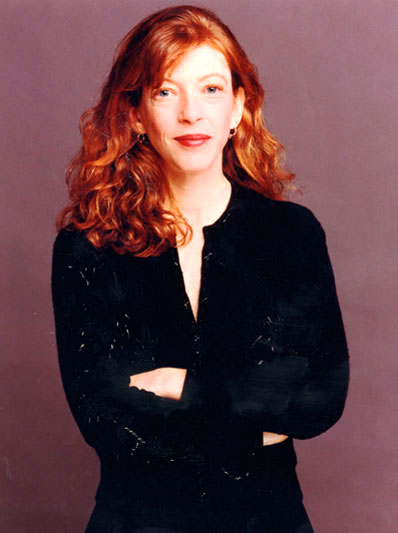
Photo: Gaspar Tringale
Susan Orlean was born in Cleveland, Ohio, and graduated from the University of Michigan. Since then, she has lived in Portland, Boston, New York, and Los Angeles, and worked as a staff writer for the Willamette Week, The Boston Phoenix, The Boston Globe, and The New Yorker, where she has been since 1992. Her articles have also appeared in Rolling Stone, Esquire, and Vogue.
Orlean is the author of the collections The Bullfighter Checks Her Makeup: Encounters with Extraordinary People, My Kind of Place, and Saturday Night. Her most well-known work is The Orchid Thief, published in 1998, which formed the base of the Nicholas Cage film Adaptation. Orlean was portrayed by Meryl Streep, in an Academy Award-nominated performance.
In 2003, Orlean was a Neiman Fellow at Harvard University, and in 2012, she received an honorary doctorate from her alma mater.
Orlean spoke with Rachael Warecki.
Rachael Warecki: I’m going to begin with a question you’ve probably been asked thousands of times: How did you decide to become a writer? What series of events or realizations led you down this path?
Susan Orlean: I always wanted to be a writer, so there was never a moment when it dawned on me, as opposed to doing something else. It was almost as if from the time I was very, very, very young, I loved the magic of writing and reading, and I wanted to do it, and I never really seriously wanted to do anything else.
RW: Although you’re categorized as a nonfiction writer, the art of storytelling is clearly very important to you, and it shines through in your pieces. What essays, collections, or novels have influenced your style? What books or pieces would you recommend to aspiring writers?
The more you read, the more you learn, so to being with, I would say anything you read is great for learning. But I look at the masters of the form, and you get a free education by reading their work.
SO: To begin with, I am a big reader of fiction, and I think it has always inspired me stylistically and emotionally. I think for any nonfiction writer, reading great fiction is a very important tool. I was always a huge fan of Faulkner, Fitzgerald, Hemingway—the greats of American fiction writing. They were really extremely influential as I fantasized about writing. And then I began reading great literary nonfiction—John McPhee, Joseph Mitchell, Tom Wolfe, Joan Didion—and realized that you could do what I dreamed of doing, which was to bring the emotion and style of fiction writing to the telling of nonfiction stories. The more you read, the more you learn, so to being with, I would say anything you read is great for learning. But I look at the masters of the form, and you get a free education by reading their work. Just being able to look at it and think how they did it and how does it work and what is it about this piece that makes it so special. You could sit down and read the past eighty years of the New Yorker and do pretty well in terms of reading great nonfiction.
RW: Have you read any craft books that have struck a particular chord with you?
SO: I’ve read only a few. Lee Gutdkind has a book called Creative Nonfiction that just came out that’s really good. I don’t read those books a whole lot, but I think they can be really valuable. I thought Lee’s book was really interesting and very practical and helpful. Everybody should read Elements of Style at least once in their life. I think you learn a lot by just reading great work, but I think finding craft books that are really excellent, you can certainly learn a lot from those.
RW: In My Kind of Place, you profile locations in which the setting is as important as the subject itself. What effect does geography have on your writing? What effect has it had on the subjects you’ve profiled?
SO: I tend to feel that you can’t absolutely separate people from places from stories from narrative, so when I say something is a profile, I feel like that it makes it feel very singular, about one person, or you say a piece is a travel piece, that makes it sound like it’s just about a place. I think all pieces are multifaceted, or should be. I think evoking place is one of the great pleasures of writing. It’s a great challenge using nothing but words to make people feel like they’re in another place. I didn’t set out to live in a great number of places, but I have ended up living in a lot of places, and that may be helpful; I’ve learned to look at new places more than once, so I’m pretty attuned to where I am. When I write about people, their environment feels very important to me as a way of figuring out who they are. Even in a piece that’s a profile, place ends up factoring in many of those.
RW: Saturday Night, which chronicles the different ways in which different communities indulge in their weekends, is thematically different from your other books. What drew you to that topic? When you followed up with your subjects twenty years later, what was the most surprising change you discovered?
SO: Saturday Night, in one sense, is not that different from some of the things that typically attract me. I’m often really curious to see what people have in common—especially people who seem to have nothing in common. Saturday Night was that thing that occurred to me as being a common ground for a huge array of people. It is a very different book, though, because it’s kind of episodic; I took a single idea and tried to look at it in many different ways, which is a really different way of structuring a book than what I’ve done since then. I didn’t follow up on everybody because of the limited time I had to do those follow-ups. I could only do a few, and I had to do them quickly. I did wonder whether all the technology that’s entered our lives in those twenty years would have completely removed the distinction of Saturday Night, but I don’t think that’s true. I think there still remains something specific about Saturday Night, even though some of the things that used to be limited by time and calendar are no longer. It used to be you had to get to the bank before Friday afternoon because they were closed on Saturday, but now, who thinks about that? It’s also shocking to realize that the people I wrote about are twenty years older now. That’s always a surprise.
RW: Speaking of surprising changes, you did a piece on actor Mark Wahlberg, which was included in The Bullfighter Checks Her Makeup. At the time, Wahlberg was still Marky Mark, performing with the Funky Bunch. That collection also included a piece on then-high school basketball phenom Felipe Lopez, who went on to have an NBA career. What’s it been like to watch their career trajectories? What made you choose them as subjects?
SO: In the case of Felipe Lopez, I decided I wanted to write a profile of the best high school basketball player in the country. I thought it would make an interesting subject, so that was Felipe, according to the scouts I interviewed. I loved him and I loved seeing him succeed, because when you write about sports, there’s always a chance the greatest high school athlete of a particular sport is not going to make it in a professional way. I felt a kind of ownership—ownership’s the wrong word. I felt a special connection, so when I saw that Felipe had ended up in the NBA, I felt a special pride that Felipe had made it.
With Mark Wahlberg, similarly, he was a kid, he was an underwear model. I didn’t choose to do that story; it was assigned to me. It wasn’t my idea, but at the time, my editor said, “He’s gonna be hot for like fifteen minutes, so you gotta do this story now.”
With Mark Wahlberg, similarly, he was a kid, he was an underwear model. I didn’t choose to do that story; it was assigned to me. It wasn’t my idea, but at the time, my editor said, “He’s gonna be hot for like fifteen minutes, so you gotta do this story now.” I take some satisfaction that [the editor] was selling him short, because he’s certainly gone on to much greater successes since then. You end up feeling a special connection. There’s a special pleasure you have in looking at them and feeling that, for a moment, you had a relationship with them. It’s always pleasing to see when things have gone well.
RW: When speaking about The Orchid Thief and its resulting film, Adaptation, you said, “The notion that objectivity exists is, in and of itself, a flimsy construct. The kind of reporting I do is affected by the fact that it’s being reported. And you do develop a connection with people that you write about.” Talk to me about how this observer effect has impacted your work.
SO: I think it’s impacted everybody’s work. You can strive to be fair and honest. Depending on the format, you go to great lengths to be objective, but it simply is a platonic and unattainable ideal that any observation made by a person could be anything other than subjective. I feel comfortable embracing that and acknowledging it. It doesn’t mean it’s not factually accurate, it just means that it’s being seen through my eyes. I try to be as open and nonjudgmental as I can be, but I also am very comfortable embracing the idea that I’m the storyteller; I’m shaping your experience of the story. It’s very comfortable for me to understand that rather than thinking that objectivity is the goal. Fairness is the goal, honesty is the goal, but not objectivity. People aren’t objective. It’s not human to be objective. That’s why there are twelve people on a jury and not one.
RW: There are some writers who’ve infamously decried social media, but you’re very active on Twitter. What drew you to this form of communication? Do you find that it’s a useful platform, in terms of your career, connecting with your fans, etc.? Do you think that writers in this day and age need to be active on social media platforms?
SO: I don’t think writers need to be active on social media. If you’re comfortable with it and enjoy it and see value in it, that’s great. If you’re really not comfortable with it after you’ve given it a fair shake or you understand how it works, then don’t do it. I really enjoy it. I think of it as an ongoing book tour to some degree—that is, me connecting with readers. Or some of the people following me may not be readers; they may be people who, for some reason or another, just enjoy following me on Twitter. I find it very friendly. I enjoy making observations. Somehow it just clicks: it’s fun, it’s an extension of what I do as a writer, I like to tell little stories, so now I tell them all day long. I ask questions, answer questions, interact with people—which, personally, I enjoy. It’s a very regular part of my life. It’s become a news source for me, a place to drop in and see friends and hear people chatting and learn what’s going on with the world.
RW: Writing is a notoriously solitary profession, and you travel a lot for work. How do these two things affect your relationships? How do you maintain your writing/life balance?
SO: I won’t say that I’ve attained the balance. It’s an ongoing project. It’s a solitary profession; you don’t punch in at 9 and out at 5. The demands are often very incompatible with having a family life or social life, both the reporting and the writing part of it. When you’re writing, you get sort of crabby, you need uninterrupted time; you’re stressed out and ornery and nobody can really help you. I’m making it sound monstrous, but it’s not like you go to work at 9 a.m., working as a sales person, and at the end of the day you leave and you’re done. When I’m writing, at the end of the day, the end of the day only means that I really have to stop because I need to cook dinner and interact with my family, but part of my mind is still thinking about what I need to do with that next paragraph.
The travel part is very challenging, not so much with my husband and friends, but it’s more of an issue with my son and feeling like it’s not ideal to have a job with lots of travel when you’re a parent. The only good thing is that it’s what he’s always known. While I won’t say he’s used to it, it has been true since he was conscious, so maybe he’s better equipped to manage it than a kid who rarely has his parents travel and then suddenly out of the blue they’re gone.
It’s a tricky job and it’s a very a demanding job. It demands your time and attention and emotion in a very holistic way, and you can’t just tune it out. But the rewards are enormous, and there are plenty of reasons to do it, the ease and convenience not being one of them. It’s not easy. The tradeoff is that I’m not somewhere 9 to 5, so when my son does a presentation at school, I can go. The freedom is enormous; I’ve gotten to travel to a million wonderful places. Like a lot of things in life, the negative and the positive are so perfectly co-joined, you can’t talk about one without talking about the other. The travel can be a headache if you have a family life, but the tradeoff is you get to go to a lot of interesting places. There’s always that back and forth, and I guess that’s where you find the balance: accepting it’s impossible to not experience both of those things, the negative and the positive. I have to say, it’s the only job I’ve ever had, so I don’t know what it would be like to go in in the morning and work and leave and be done. But I don’t think you have a job to write; you are a writer. That’s the kind of life it is. I’ve probably managed it fairly well, but it’s always a challenge.