

The Language of Community

Once I gave up alcohol, sugar and flour, there were only a few splurges left in the culinary world for me to enjoy—one of them was good coffee. I didn’t mind standing in line to get it—even the time some jerk interrupted my order.
“I ordered extra whip,” a voice boomed, behind me. “This doesn’t have any.”
I turned. A tall, skinny man with a full beard showed the clerk his cup, filled with nothing but café au lait, and then shoved it toward her.
“Sorry,” she said, and passed it to the baristas at the espresso machine. As she explained the terrible disaster of his missing whipped cream, the guy looked down at me and shook his head.
“I come in here every day,” he said, in a low voice. “You’d think they’d know me by now.” He went to the pick-up counter, but not before he looked back at me. “Sorry for interrupting your order. I’m in a hurry.”
He grabbed the cup, ignoring the barista’s apology. As quickly as he appeared, he was gone, running across the street before the light changed to green.
* * *
The language of this story informs the narrative, as language has the power to do. I never mention how the coffeehouse was across the street from a research hospital, or describe what the jerk was wearing (wrinkled doctor’s scrubs). He looked exhausted, like an overworked intern fueled by coffee—close to seeing visions. Because this is my story, I can dress him like a red devil, with a pointed tail and cloven hooves if I want to. I could also make a case about those baristas, too; they kept checking their phones while they made espresso. I almost blew the conch shell (Twitter) to complain how the baristas were all distracted and moving in slow-motion.
I think about everyone in this story now—the intern in wrinkled scrubs, me, the distracted baristas trying to keep up with the line—and I see how we’re all connected. Hurried, distracted, self-contained people, we interacted as little as possible with each other, pretending we weren’t part of the same community.
* * *

I always loved the way that Charles Olson described projective verse: “from the heart, by way of the breath, to the line.” It shows how words are more than words—they’re the essence of what we value, the souvenirs of our experience, and the trembling tokens of our fears. We’re warned to choose them carefully.
In 2011, Google released its database of 5.2 million books, published between the years of 1500 and 2008. It measured the frequency of words used in these books, and it showed how our language has changed: “Words and phrases like ‘personalized,’ ‘self,’ ‘standout,’ ‘unique,’ ‘I come first’ and ‘I can do it myself’ are used more frequently in today’s language. Communal words and phrases like, ‘community,’ ‘collective,’ ‘tribe,’ ‘share,’ ‘united,’ and ‘common good’ have receded… significantly.” American English has changed because we are an isolating people—our communities are shrinking.
Gallup’s latest polls reflect that Americans are engaging in community exercise less and less. Charitable clubs, like Elks, Moose, Rotary, have a decrease in new membership. Church memberships are experiencing a steady decline: 38% of adults attended weekly in 2016, compared to the 42% in 2008. Rushing from one activity to another, we’re less likely to engage and invest in communities outside of our immediate families.
Social media platforms are taking the place of social gatherings. Cell phones are the preferred method of communication. Even when squished together in public places, we look at our phone screens as much as we do one another.

My husband, Mario, and I lived in Africa for seven years, north of the mile-high city of Johannesburg, on an agricultural holding where our neighbors rode horses on the dirt roads. It was eight miles away from the township of Diepsloot, where we worked (and played). We’d come home to our small cottage to hear our neighbor’s geese and peacocks calling to each other, green dragonflies, the size of pencils, resting on bushes. Sunsets painted the sky a violet-red-orange, and Sacred Ibis filled the willow tree that bordered our dirt road. There was epic lightning and rain. Our dusty Toyota Hilux took us to nineteen different countries on the continent, including a forty-seven day trip to the Sudan.
The language of my story informs its narrative, as all language has the power to do. What I haven’t said is that we were part of a Christian ministry team, serving existing churches on the continent. We loved this work, believing we could help. I usually withhold this part of my story unless I know I’m safe. It’s the equivalent of getting naked and showing how the years have taken their toll on my body. My friends who fight for social justice tell me how they detest churches and the hypocrites who populate them. I never know what to say, other than my knee-jerk reaction of, “I’m not a hypocrite!” I want to prove this, but I can’t. I withdraw. The absence of language betrays me. There are cracks in the sentences, an insincerity of voice. But when I drop the veil and tell you that I was lonely when I was in Africa, and drank wine and martinis just to silence my heartache, you just might empathize.
* * *

Sherry Turkle, author of Reclaiming Conversation: The Power of Talk in a Digital Age, studies empathy—our human connection—in the age of digital distraction.
“Quite frankly,” she says, “empathy is in trouble. Too often we find ways around conversation and get our phones. We lose touch with what each other are thinking and feeling.” Empathy is how we’re wired to respond to one another, especially when we see that someone is hurting. Cell phones have accelerated this loss of empathy toward our communities, for the most part.
Last week, I had a rare visit with my sister that led us to a place of some soul sharing.
“Who are you texting?” I asked her, as she picked up her phone while I was talking.
“No one,” she said, putting it down. “I just got a call. My phone is on vibrate, so I shut it off.”
I felt my shoulders relax and unexpected emotions filled me: Relief. Acceptance. Love.
* * *
Our travel schedule for ministry was rigorous, but nothing compared to the demands of keeping my mouth shut. Our team scheduled a trip to Mozambique, a group of villages near the Shire River, where pastor-friends had been asking for Bibles and mosquito nets. The trip was organized for the winter, when the Anopheles mosquitoes—the ones that carry the malaria protozoa like sick junkies —aren’t as numerous.
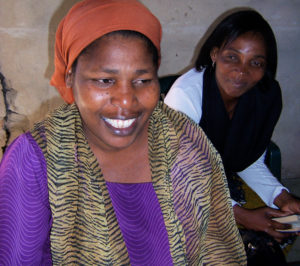
The village leaders had rented a local community hall, with enough space to camp next door. They arranged meetings, welcomed us warmly, shared fresh fruits, water, and bread. The team guys met in the hall with local pastors; the village women invited the wives to sit down on the logs outside our camp. After a few minutes of socializing, the team wives retreated to start cooking. I stayed with the village women, who taught me songs and greetings in their Shangaan language. Children—wide-eyed and shy—clung to their mothers, which made me miss our new grandchildren. The women seemed to understand, and I felt more connected with them than any of the wives on the team.
Near the end of our trip, our team leader approached Mario and asked to speak to him privately. “Your wife should be sitting with you in meetings—not with the village women. She laughs too loud, and talks too much.”
At first, Mario tried to explain how cultural differences might color this man’s view of me, but Mario could tell our leader had made up his mind. That night, as we went to bed in our tent, Mario told me what was said; I knew he was leaving a lot out.
“I told him to back off,” Mario whispered in the cold darkness. “I assured him that he was wrong. You’re not just an important part of our team, you’re wonderful. It’s sad he can’t see that.” We were still and quiet, holding each other. From the neighboring tent, I could hear snoring. Mario’s neck felt warm against my fingers, chapped from washing dishes, one of the jobs I was allowed to do. Sleep came eventually. In the morning, I decided to do what the team leader said, and sat next to Mario in the meeting, while the village women talked outside.
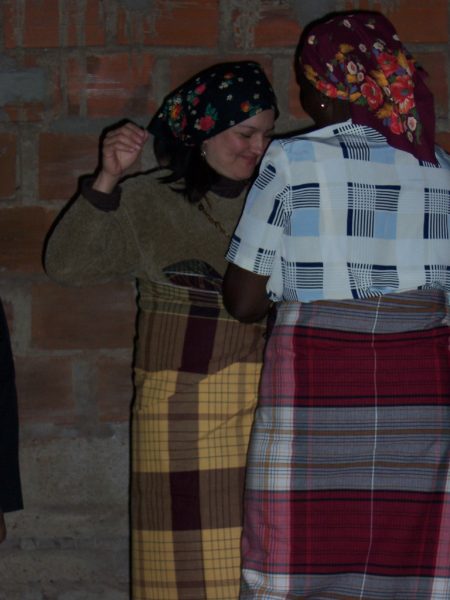
The last day at camp, we met with the village pastors one last time in the conference hall. There was a feast of music and worship. Children sang and danced. Then, as a surprise: the village women approached the team wives, singing and carrying woven textiles to tie around our waists.
One by one, the women unfolded pieces of bright fabric to tie around our waists—the four team-wives and me. For a moment, the wives were standing there, in the front of the church, wrapped in colorful textiles and thanking our hosts. Soon, more women came up to me and tied fabric around me—one cloth after another—until I had at least ten cloths around me, compared to the other wives, who only had one.
The Shangaan women, none of whom spoke English, bestowed a blessing of sisterly acceptance, as if they could see the pain and rejection I was trying not to feel. They first allowed the other team-wives to feel their blessing of fabric, and then, unapologetically, gave me more. Wrapped in the multi-colored layers of blessing, in the presence of my accusers, my cup overflowed. My language is clumsy as I tell this story, reaching for the words that I know I’ll never find.
* * *
In 2013, after seven years, we returned to Sacramento. I was exhausted, convinced I’d failed our friends we left behind, and abandoned our calling. I collapsed into the arms of my family and friends—the ones we left behind—and relaxed to the point of vegetation. For about a year.
Sometimes, I’d look around and wonder why I’d ever left my homeland; other times I was furious with the rampant selfishness in my country. I drank more, just to tolerate everybody’s bullshit. I took delight in feasting with cultural foods, pushing back the rumbling volcano of feelings, adding daily to my weight. Eventually, I admitted that this homeland of mine had the same DNA that I did, and we both were in desperate need of grace.
I joined a community of people who, like me, needed to find their way back to a place of peace. I found my bearings—and faith—again. I started eating organic foods and drinking good water. I got my first smartphone, a computer, and then completed my first college degree, in English. After that, I decided to get an MFA in Creative Writing.
Once I gave up alcohol, sugar and flour, there were only a few splurges left in the culinary world for me to enjoy—one of them was good coffee. At the beginning of my story, this sentence gets carried away by other stories, but in the end, it’s that first sentence that holds all the beauty of my world.
I love how Rumi simplifies it:
“Christ is the population of the world,
and every object as well.
There is no room for hypocrisy.
Why use bitter soup for healing when sweet water is everywhere?”
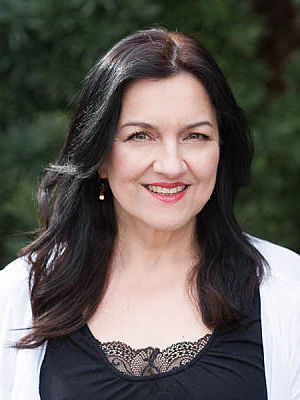 Janet Rodriguez is an author, blogger, teacher, and editor who lives in Sacramento with her husband, extended family, three dogs, and one cat. In the United States, her work has appeared in Cloud Women’s Quarterly, Salon.com, American River Review, and Calaveras Station. Rodriguez has also published essays, stories and two biographies in South Africa.
Her writing examines themes of identity and morality in faith communities, and the mestiza experience in a culturally binary world. Currently she is a Cardinal cohort at Antioch University Los Angeles, serving on the magazine, Lunch Ticket, where a bunch of younger nerds keep her on her toes. Follow her on Twitter @brazenprincess or her personal blog at www.brazenprincess.com.