
Lunch Ticket
  • Current Issue
  • Archive
    • Issues Archive
      • Issue 28: Winter/Spring 2026
      • Issue 27: Summer/Fall 2025
      • Issue 26: Winter/Spring 2025
      • Issue 25: Summer/Fall 2024
      • Issue 24: Winter/Spring 2024
      • Issue 23: Summer/Fall 2023
      • Issue 22: Winter/Spring 2023
      • Issue 21: Summer/Fall 2022
      • Issue 20: Winter/Spring 2022
      • Issue 19: Summer/Fall 2021
      • Issue 18: Winter/Spring 2021
      • Issue 17: Summer/Fall 2020
      • Issue 16: Winter/Spring 2020
      • Issue 15: Summer/Fall 2019
      • Issue 14: Winter/Spring 2019
      • Issue 13: Summer/Fall 2018
      • Issue 12: Winter/Spring 2018
      • Issue 11: Summer/Fall 2017
      • Issue 10: Winter/Spring 2017
      • Issue 9: Summer/Fall 2016
      • Issue 8: Winter/Spring 2016
      • Issue 7: Summer/Fall 2015
      • Issue 6: Winter/Spring 2015
      • Issue 5: Summer/Fall 2014
      • Issue 4: Winter/Spring 2014
      • Issue 3: Summer/Fall 2013
      • Issue 2: Winter/Spring 2013
      • Issue 1: Spring 2012
    • Genre Archive
      • Creative Nonfiction
      • Essays
      • Fiction
      • Flash Prose
      • Interviews
      • Lunch Specials
      • Poetry
      • Translation
      • Visual Art
      • Young Adult
  • About
    • Mission Statement
    • Lunch Ticket Staff
      • Issue 28: Winter/Spring 2026
      • Issue 27: Summer/Fall 2025
      • Issue 26: Winter/Spring 2025
      • Issue 25: Summer/Fall 2024
      • Issue 24: Winter/Spring 2024
      • Issue 23: Summer/Fall 2023
      • Issue 22: Winter/Spring 2023
      • Issue 21: Summer/Fall 2022
      • Issue 20: Winter/Spring 2022
      • Issue 19: Summer/Fall 2021
      • Issue 18: Winter/Spring 2021
      • Issue 17: Summer/Fall 2020
      • Issue 16: Winter/Spring 2020
      • Issue 15: Summer/Fall 2019
      • Issue 14: Winter/Spring 2019
      • Issue 13: Summer/Fall 2018
      • Issue 12: Winter/Spring 2018
      • Issue 11: Summer/Fall 2017
      • Issue 10: Winter/Spring 2017
      • Issue 9: Summer/Fall 2016
      • Issue 8: Winter/Spring 2016
      • Issue 7: Summer/Fall 2015
      • Issue 6: Winter/Spring 2015
      • Issue 5: Summer/Fall 2014
      • Issue 4: Winter/Spring 2014
      • Issue 3: Summer/Fall 2013
      • Issue 2: Winter/Spring 2013
      • Issue 1: Spring 2012
    • Achievements
    • Community
    • Contact
  • Weekly Content
    • Friday Lunch Blog
    • Midnight Snack
    • Amuse-Bouche
    • School Lunch
  • Contests
    • Diana Woods Award in CNF
      • Issue 28: Winter/Spring 2026
      • Issue 27: Summer/Fall 2025
      • Issue 26: Winter/Spring 2025
      • Issue 25: Summer/Fall 2024
      • Issue 24: Winter/Spring 2024
      • Issue 23: Summer/Fall 2023
      • Issue 22: Winter/Spring 2023
      • Issue 21: Summer/Fall 2022
      • Issue 20: Winter/Spring 2022
      • Issue 19: Summer/Fall 2021
      • Issue 18: Winter/Spring 2021
      • Issue 17: Summer/Fall 2020
      • Issue 16: Winter/Spring 2020
      • Issue 15: Summer/Fall 2019
      • Issue 14: Winter/Spring 2019
      • Issue 13: Summer/Fall 2018
      • Issue 12: Winter/Spring 2018
      • Issue 11: Summer/Fall 2017
      • Issue 10: Winter/Spring 2017
      • Issue 9: Summer/Fall 2016
      • Issue 8: Winter/Spring 2016
      • Issue 7: Summer/Fall 2015
      • Issue 6: Winter/Spring 2015
      • Issue 5: Summer/Fall 2014
      • Issue 4: Winter/Spring 2014
      • Issue 3: Summer/Fall 2013
    • Gabo Prize in Translation
      • Issue 28: Winter/Spring 2026
      • Issue 27: Summer/Fall 2025
      • Issue 26: Winter/Spring 2025
      • Issue 25: Summer/Fall 2024
      • Issue 24: Winter/Spring 2024
      • Issue 23: Summer/Fall 2023
      • Issue 22: Winter/Spring 2023
      • Issue 21: Summer/Fall 2022
      • Issue 20: Winter/Spring 2022
      • Issue 19: Summer/Fall 2021
      • Issue 18: Winter/Spring 2021
      • Issue 17: Summer/Fall 2020
      • Issue 16: Winter/Spring 2020
      • Issue 15: Summer/Fall 2019
      • Issue 14: Winter/Spring 2019
      • Issue 13: Summer/Fall 2018
      • Issue 12: Winter/Spring 2018
      • Issue 11: Summer/Fall 2017
      • Issue 10: Winter/Spring 2017
      • Issue 9: Summer/Fall 2016
      • Issue 8: Winter/Spring 2016
      • Issue 7: Summer/Fall 2015
      • Issue 6: Winter/Spring 2015
    • Twitter Poetry Contest
      • 2021 Winners
      • 2020 Winners
      • 2019 Winners
  • Submissions
  • Click to open the search input field Click to open the search input field Search
  • Menu Menu
  • Link to Facebook
  • Link to Instagram
  • Link to X

This Is (Not) a Laughing Matter

September 11, 2015/in Blog / Lyndsay Hall

I’m in therapy for an abusive relationship, but I spend most of my weekly fifty-minutes cracking jokes for my psychologist. A few weeks ago she pointed out that I laugh whenever I reveal something that hurt me. “When your boyfriend shoved you, how did you feel?” she asked. “One time I kneed him in the balls. That was rad. That time felt good.” I smiled, evil-laughed—buhaha. According to her, that response missed the point.

This is the way I see it: if we don’t laugh, it’s just sad. I learned that from my father, who was once attacked by a woman with a garden hoe and went on to name this the Crazy Hoe Incident. We don’t laugh to minimize the seriousness of a situation; we laugh to alleviate the pain, make it bearable. Humor is how I rally. It’s how I navigate conversations with my mother when she wants to know why I don’t want to have a bridal shower one day. It’s easier than saying, currently I feel terribly alone, and my self-esteem fluctuates between unreasonably low and totally shot, and frankly I’m not great at relationships (see: therapy). I fear she awaits a marriage that is unlikely to happen. If one reads between the lines of my deflections, they’ll discover vulnerability. The meaning and substance hasn’t changed, only the delivery.

And so, I am a comedy-enthusiast. Netflix curated for me a list of stand-up acts, as I’ve all but given up on movies. On solo-date nights, I treat myself to an improv show at the Upright Citizen’s Brigade. I read books written by comedians. I don’t think of comedy as lowbrow; in fact, I’m offended when humorous authors aren’t accorded the literary world’s approval stamp.

Humor, I believe, is as effective a tool and as difficult a form of expression as anything else. Ultimately, humans seek pleasure, and writers hope to entertain, to arouse and sustain a reader’s interest. We have stories of suffering that must be told, and humor is a viable conduit. Comedy helps readers connect with characters; comedy helps readers swallow uncomfortable or painful truths.

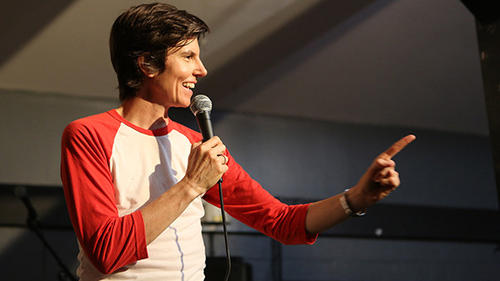
In 2012, comedian Tig Notaro experienced a rough few months that culminated with her walking onstage at the Los Angeles comedy club, Largo, and addressing the packed audience: “Hello. Good evening, hello. I have cancer, how are you?”

The timeline preceding that night went like this: In March, Notaro collapsed while filming the movie, In A World, and at the hospital a doctor discovered her insides were inflamed “beyond recognition.” She tested positively for C. diff, an infection of the intestinal tract that causes bacteria to eat away at its victim’s digestive system.

Notaro was released from the hospital a week before her 41st birthday. On March 24, her mom sang to her in a voicemail and expressed her desire to visit California. Two days later, Notaro received a second voicemail, this time from her stepfather. “Your mother fell last night and it looks like she’s not going to make it.” She didn’t.

On June 24, doctors discovered a lump in Notaro’s breast. She underwent a mammogram and eight days later was diagnosed with stage two cancer that could potentially spread throughout her body. The next night, Notaro performed the standup set at Largo, one Louis C.K. later deemed “truly great [and] masterful.” When Notaro asked the audience of the show whether she should change up her material, quit talking about her dead mother and cancer diagnosis, they responded with a resounding no. “This is awesome,” one man shouted.

Psychologist Alex Lickerman wrote in Psychology Today that humor is often considered a mature defense mechanism (compared to a psychotic, immature, or neurotic one) and helps one endure trauma. Lickerman considers laughter a defense against despair because “it diminishes or even eliminates the moment-by-moment suffering we might otherwise experience as a result of a traumatic loss, which actually makes it more likely we will make it through a trauma unmarred.”

Maybe that’s why David Sedaris jokes in The New Yorker that his sister’s suicide is ultimately inconvenient because “you can’t really say, ‘There used to be six [kids]’… it just makes people uncomfortable.” Or why Nancy Mairs laughs at her handicap in an essay called “On Being a Cripple.” Mairs begins the essay with an incident in which her movements in a bathroom stall unbalanced her, and she fell backward and landed fully clothed, legs splayed on the toilet seat—“the old beetle-on-its-back routine.” Disabilities are hardly a laughing matter, but Mairs’ sense of humor gives readers permission to laugh with her and at their own disadvantages.

Almost two years ago I wrote an opinion editorial about slut-shaming. The topic is a personal one for me. When I was eighteen, my boyfriend told me that he felt ashamed of me because I was a slut—I’d slept with other men before him. Never mind that he’d had four times as many sexual partners. Never mind that he had been unfaithful. “Slut” was thrown around often—to win an argument, to guilt me, to prove his superiority over me—and I spent years apologizing for my sexuality. When I set out to write this particular essay, I understood the gravity of slut-shaming and its effects firsthand, but abuse is heavy and discussing it is difficult. I opted to write comedically, using a man’s Tinder profile that said, “Nice guys don’t like dirty girls,” as my angle into the subject. The use of humor in the essay accomplished two things: there was new distance between me and my painful memories, and the topic of abuse was more accessible for readers.

Standup comedy is not unlike writing prose, in that each comic has a shtick, a persona, similar to that of an author’s distinctive voice. Tig Notaro tells jokes deadpan—she takes her time, lets stories unfold slowly. Opposite of that is a comic like Demetri Martin, who veers away from personal stories and tells joke after joke with little to no build-up. In the comedy special, “My Girlfriend’s Boyfriend,” Mike Birbiglia tells from start to finish the story of his relationship with a girl named Jenny. It’s heartbreaking, as love stories can be, and hilarious, revealing at the end a true change within himself, the narrator.

Had I the know-how, I’d advise you on what works, what doesn’t. I can make suggestions: include an element of surprise or comparisons that create incongruities, follow the rule of three, truth and irony are funny, timing matters significantly, and for whatever reason ‘K’ sounds are funnier than other sounds. But comedy is an imperfect science. The first advice a comedian would offer is this: go to an open mic night. Try out the jokes you found funny—you’re always your first audience—and pay attention to how the crowd responds. Take the jokes to your therapist, keep a journal of every time she leans her head back laughing and slaps her knee.

In a seminar on writing comedically at last December’s residency, Erin Aubry Kaplan concluded with this: “Comedy implies life is a performance. It is meant to be laughed at.” Hear, hear.

Lyndsay Hall, author's photo

Lyndsay Hall lives in Los Angeles where she teaches writing to children and teens. She is pursuing an MFA in Creative Writing at Antioch University and she serves as an editor for Lunch Ticket, Zoetic Press, and Prague Revue. Her essays have appeared in xoJane, Rhizomatic Ideas, and elsewhere.

https://lunchticket.org/wp-content/uploads/2015/09/Tig.jpg 281 500 Lyndsay Hall https://lunchticket.org/wp-content/uploads/2021/12/lunch-ticket-logo-white-text-only.png Lyndsay Hall2015-09-11 10:38:122022-02-10 09:58:36This Is (Not) a Laughing Matter

Friday Lunch Archive

  • 2025
  • 2024
  • 2023
  • 2022
  • 2021
  • 2020
  • 2019
  • 2018
  • 2017
  • 2016
  • 2015
  • 2014

Midnight Snack

Take a bite out of these late night obsessions.

Tonight’s bites:

The Lilac and The Housefly: A Tale of Tortured Romanticism

October 24, 2025/in Midnight Snack / Nikki Mae Howard
Read more
https://lunchticket.org/wp-content/uploads/2025/10/Headshot_Nikki-Howard_1770x2000.jpg 2000 1770 Nikki Mae Howard https://lunchticket.org/wp-content/uploads/2021/12/lunch-ticket-logo-white-text-only.png Nikki Mae Howard2025-10-24 23:55:032025-10-20 10:59:03The Lilac and The Housefly: A Tale of Tortured Romanticism

Dig Into Genre

May 23, 2025/in Midnight Snack / Lauren Howard
Read more
https://lunchticket.org/wp-content/uploads/2025/05/Lauren-Howard-credit-Terril-Neely-scaled-773x1030-1.jpg 1030 773 Lauren Howard https://lunchticket.org/wp-content/uploads/2021/12/lunch-ticket-logo-white-text-only.png Lauren Howard2025-05-23 23:59:492025-06-17 18:29:02Dig Into Genre

The dreams in which I’m (not) dying

April 25, 2025/in Midnight Snack / paparouna
Read more
https://lunchticket.org/wp-content/uploads/2025/04/paparouna-photo.jpeg 960 720 paparouna https://lunchticket.org/wp-content/uploads/2021/12/lunch-ticket-logo-white-text-only.png paparouna2025-04-25 23:55:312025-08-14 16:18:41The dreams in which I’m (not) dying

More Midnight Snacks »

Amuse-Bouche

Little bites every third Friday to whet your appetite!

Today’s plate:

Three Poems

February 6, 2026/in Amuse-Bouche / Reynie Zimmerman
Read more
https://lunchticket.org/wp-content/uploads/2026/01/Zimmerman_headshot.jpg 1969 1754 Reynie Zimmerman https://lunchticket.org/wp-content/uploads/2021/12/lunch-ticket-logo-white-text-only.png Reynie Zimmerman2026-02-06 12:00:252026-02-06 09:21:43Three Poems

Three Poems

January 30, 2026/in Amuse-Bouche / Jen Karetnick
Read more
https://lunchticket.org/wp-content/uploads/2026/01/Jen_Karetnick-headshot_Credit-Loma-Smith-scaled.jpg 2048 2560 Jen Karetnick https://lunchticket.org/wp-content/uploads/2021/12/lunch-ticket-logo-white-text-only.png Jen Karetnick2026-01-30 22:55:262026-01-29 15:07:18Three Poems

I Try So Hard Not to Bite Off His Tongue & One Poem

November 21, 2025/in Amuse-Bouche / Sheree La Puma
Read more
https://lunchticket.org/wp-content/uploads/2025/11/La-Puma_headshot.jpg 1599 881 Sheree La Puma https://lunchticket.org/wp-content/uploads/2021/12/lunch-ticket-logo-white-text-only.png Sheree La Puma2025-11-21 11:00:222025-12-11 17:48:51I Try So Hard Not to Bite Off His Tongue & One Poem

More Amuse-Bouche »

School Lunch

An occasional Wednesday series dishing up today’s best youth writers.

Today’s slice:

I’ve Stayed in the Front Yard

May 12, 2021/in School Lunch, School Lunch 2021 / Brendan Nurczyk
Read more
https://lunchticket.org/wp-content/uploads/2021/05/SL-Insta-Brendan-Nurczyk-2.png 1500 1500 Brendan Nurczyk https://lunchticket.org/wp-content/uploads/2021/12/lunch-ticket-logo-white-text-only.png Brendan Nurczyk2021-05-12 10:18:392022-02-01 13:24:05I’ve Stayed in the Front Yard

A Communal Announcement

April 28, 2021/in School Lunch, School Lunch 2021 / Isabella Dail
Read more
https://lunchticket.org/wp-content/uploads/2021/04/SL-FB-Isabella-Dail.png 788 940 Isabella Dail https://lunchticket.org/wp-content/uploads/2021/12/lunch-ticket-logo-white-text-only.png Isabella Dail2021-04-28 11:34:132021-04-28 11:34:13A Communal Announcement

Seventeen

April 14, 2021/in School Lunch, School Lunch 2021 / Abigail E. Calimaran
Read more
https://lunchticket.org/wp-content/uploads/2021/04/SL-Insta-Abigail-E.-Calimaran.png 1080 1080 Abigail E. Calimaran https://lunchticket.org/wp-content/uploads/2021/12/lunch-ticket-logo-white-text-only.png Abigail E. Calimaran2021-04-14 11:22:062021-04-14 11:22:06Seventeen

More School Lunch »

Word From the Editor

Editing issue 28, I felt something similar to the way I feel near water: I dove into my own private world. The world above the surface kept roaring, of course. The notifications, deadlines, the constant noise was always there. But inside the work, inside these poems and stories and artwork, there was a quiet that felt entirely mine. A place where I could breathe differently.

More from the current editor »
Current Issue »

Connect With Us

lunchticket on facebooklunchticket on instaX
Submit to Lunch Ticket

A literary and art journal
from the MFA community at
Antioch University Los Angeles.

Get Your Ticket

We’ll keep you fed with great new writing, insightful interviews, and thought-provoking art, and promise with all our hearts never to share your info with anyone else.

Newsletter Signup
Copyright © 2012-2025 LunchTicket.org. All Rights Reserved. Web design and development by GoodWebWorks.
Scroll to top Scroll to top Scroll to top