Lunch Ticket
  • Current Issue
  • Archive
    • Issues Archive
      • Issue 29: Summer/Fall 2026
      • Issue 28: Winter/Spring 2026
      • Issue 27: Summer/Fall 2025
      • Issue 26: Winter/Spring 2025
      • Issue 25: Summer/Fall 2024
      • Issue 24: Winter/Spring 2024
      • Issue 23: Summer/Fall 2023
      • Issue 22: Winter/Spring 2023
      • Issue 21: Summer/Fall 2022
      • Issue 20: Winter/Spring 2022
      • Issue 19: Summer/Fall 2021
      • Issue 18: Winter/Spring 2021
      • Issue 17: Summer/Fall 2020
      • Issue 16: Winter/Spring 2020
      • Issue 15: Summer/Fall 2019
      • Issue 14: Winter/Spring 2019
      • Issue 13: Summer/Fall 2018
      • Issue 12: Winter/Spring 2018
      • Issue 11: Summer/Fall 2017
      • Issue 10: Winter/Spring 2017
      • Issue 9: Summer/Fall 2016
      • Issue 8: Winter/Spring 2016
      • Issue 7: Summer/Fall 2015
      • Issue 6: Winter/Spring 2015
      • Issue 5: Summer/Fall 2014
      • Issue 4: Winter/Spring 2014
      • Issue 3: Summer/Fall 2013
      • Issue 2: Winter/Spring 2013
      • Issue 1: Spring 2012
    • Genre Archive
      • Creative Nonfiction
      • Essays
      • Fiction
      • Flash Prose
      • Interviews
      • Lunch Specials
      • Poetry
      • Translation
      • Visual Art
      • Young Adult
  • About
    • Mission Statement
    • Lunch Ticket Staff
      • Issue 29: Summer/Fall 2026
      • Issue 28: Winter/Spring 2026
      • Issue 27: Summer/Fall 2025
      • Issue 26: Winter/Spring 2025
      • Issue 25: Summer/Fall 2024
      • Issue 24: Winter/Spring 2024
      • Issue 23: Summer/Fall 2023
      • Issue 22: Winter/Spring 2023
      • Issue 21: Summer/Fall 2022
      • Issue 20: Winter/Spring 2022
      • Issue 19: Summer/Fall 2021
      • Issue 18: Winter/Spring 2021
      • Issue 17: Summer/Fall 2020
      • Issue 16: Winter/Spring 2020
      • Issue 15: Summer/Fall 2019
      • Issue 14: Winter/Spring 2019
      • Issue 13: Summer/Fall 2018
      • Issue 12: Winter/Spring 2018
      • Issue 11: Summer/Fall 2017
      • Issue 10: Winter/Spring 2017
      • Issue 9: Summer/Fall 2016
      • Issue 8: Winter/Spring 2016
      • Issue 7: Summer/Fall 2015
      • Issue 6: Winter/Spring 2015
      • Issue 5: Summer/Fall 2014
      • Issue 4: Winter/Spring 2014
      • Issue 3: Summer/Fall 2013
      • Issue 2: Winter/Spring 2013
      • Issue 1: Spring 2012
    • Achievements
    • Community
    • Contact
  • Weekly Content
    • Friday Lunch Blog
    • Midnight Snack
    • Amuse-Bouche
    • School Lunch
  • Contests
    • Diana Woods Award in CNF
      • Issue 29: Summer/Fall 2026
      • Issue 29: Summer/Fall 2026
      • Issue 28: Winter/Spring 2026
      • Issue 27: Summer/Fall 2025
      • Issue 26: Winter/Spring 2025
      • Issue 25: Summer/Fall 2024
      • Issue 24: Winter/Spring 2024
      • Issue 23: Summer/Fall 2023
      • Issue 22: Winter/Spring 2023
      • Issue 21: Summer/Fall 2022
      • Issue 20: Winter/Spring 2022
      • Issue 19: Summer/Fall 2021
      • Issue 18: Winter/Spring 2021
      • Issue 17: Summer/Fall 2020
      • Issue 16: Winter/Spring 2020
      • Issue 15: Summer/Fall 2019
      • Issue 14: Winter/Spring 2019
      • Issue 13: Summer/Fall 2018
      • Issue 12: Winter/Spring 2018
      • Issue 11: Summer/Fall 2017
      • Issue 10: Winter/Spring 2017
      • Issue 9: Summer/Fall 2016
      • Issue 8: Winter/Spring 2016
      • Issue 7: Summer/Fall 2015
      • Issue 6: Winter/Spring 2015
      • Issue 5: Summer/Fall 2014
      • Issue 4: Winter/Spring 2014
      • Issue 3: Summer/Fall 2013
    • Gabo Prize in Translation
      • Issue 29: Summer/Fall 2026
      • Issue 28: Winter/Spring 2026
      • Issue 27: Summer/Fall 2025
      • Issue 26: Winter/Spring 2025
      • Issue 25: Summer/Fall 2024
      • Issue 24: Winter/Spring 2024
      • Issue 23: Summer/Fall 2023
      • Issue 22: Winter/Spring 2023
      • Issue 21: Summer/Fall 2022
      • Issue 20: Winter/Spring 2022
      • Issue 19: Summer/Fall 2021
      • Issue 18: Winter/Spring 2021
      • Issue 17: Summer/Fall 2020
      • Issue 16: Winter/Spring 2020
      • Issue 15: Summer/Fall 2019
      • Issue 14: Winter/Spring 2019
      • Issue 13: Summer/Fall 2018
      • Issue 12: Winter/Spring 2018
      • Issue 11: Summer/Fall 2017
      • Issue 10: Winter/Spring 2017
      • Issue 9: Summer/Fall 2016
      • Issue 8: Winter/Spring 2016
      • Issue 7: Summer/Fall 2015
      • Issue 6: Winter/Spring 2015
    • Twitter Poetry Contest
      • 2021 Winners
      • 2020 Winners
      • 2019 Winners
  • Submissions
  • Click to open the search input field Click to open the search input field Search
  • Menu Menu
  • Link to Facebook
  • Link to Instagram
  • Link to X

Writing: The Toolbox IV

May 7, 2015/in Blog / Bettina Gilois

Let’s talk. About dialogue. About speech. About sentences.

As a screenwriter, dialogue is one of the mainstays of my craft. In fact, it’s one of the only two tools I am allowed to use to bring a story to life: dialogue and action. It’s like writing with one arm tied behind my back.

Sentences are vital to the reading experience and the communication of meaning. They are more than conveyors of information. They are more than the sum of their content. It is important to look at the building blocks of a sentence. Sentence construction affects everything, and with every choice of sentence formation, a new meaning and a new perception is born in the reader.

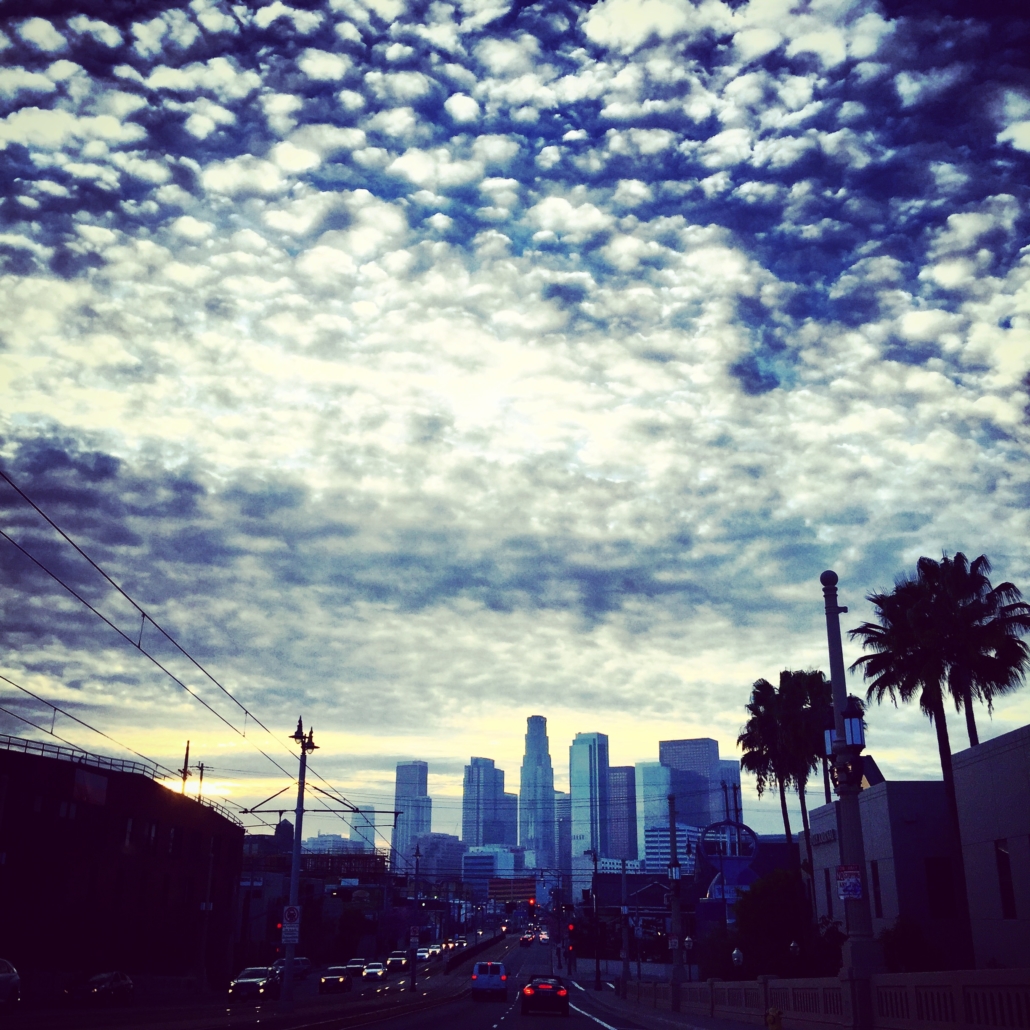
I see sentences as pictures. To me they have color, texture, shape. They are sensory experiences, with flavor, sound, and a feel of their own. They are word images, letter pictures. When I write, I want my sentences to look good, literally. I don’t want the seams to show. I don’t want the reader to see the writing choices. I want my sentences to appear as though they were born perfect and could be no other way when, in fact, much work and thought went into their construction.

IMG_6145

I continue writing about the collected tools of the craft, based on my years of experience. Here are a few of my tools for writing effective sentences and dialogue:

10. The First Line

The first line of dialogue, and the first sentence of a work of prose, is like a name. It’s the first impression a reader gets about a person, a character, and even the writer. If it’s a good name and a good sentence, you make a good impression.

In screenwriting, the reader of a script is the gatekeeper, the one to recommend a script to their superior, or not. The power of thumbs up or down often lies in the hands of an intern, an assistant, a nary beginner, but if you can’t get past the first reader, you’ll never make it on the screen. How will you get past the first reader?

When people browse a table of new book releases, you will see them pick up a book, read the first few lines and either buy it or put it back down. The first line is a great opportunity to engage the reader quickly, and perhaps make the sale. Ideally it also encapsulates the meaning of the entire work.

In the script of Bull Durham, the first line of a voice-over dialogue is: “I believe in the church of baseball.” That statement encapsulates everything the movie is about as well as the character. It captures the film’s characters’ obsession, and devotion at all expense, to the game of baseball.

In Oscar Wilde’s The Picture of Dorian Grey, the first line of dialogue is: “It’s your best work, Basil, the best thing you’ve ever done.” Of course, these are the famous first/last words for the entire book, which end in disaster for the central characters.

In Leo Tolstoy’s Anna Karenina (translation by Richard Pevear and Larissa Volokhonsky),  the first line of the book is: “All happy families are alike; each unhappy family is unhappy in its own way.” This portentous line prefaces the entire book in summary of theme and meaning, and projects the coming tragic story.

In Huxley’s Brave New World, the very first line of dialogue on the first page is: “And this,” said the Director opening the door, “is the Fertilizing Room.” It is the core summary of the subject of the book, a perfect teaser.

In Joan Didion’s collection of essays, The White Album, the first line is: “We tell ourselves stories in order to live.” This line captures the heart of her musings on murders and migraines, The Doors and the Hoover Dam. Stories are the fabric of our lives, and Didion grabs her idea with the first sentence.

In Robert Towne’s Chinatown, the first line of dialogue the protagonist speaks is: “All right, enough is enough. You can’t eat the Venetian blinds, Curly. I just had ‘em installed on Wednesday.” This first line serves not only as an attention grabber, but it gives away the subtleties of Gittes’ life. He’s a low rent private who deals with guys named Curly. Venetian blinds are a luxury to him. He takes the kind of cases that are sordid and sad, the kind that make grown men cry and eat Venetian blinds. This will all come to haunt him later.
IMG_6078

11. Empty Dialogue

Don’t write empty dialogue. Empty dialogue is the kind of exchange that gives the reader nothing in characterization or drama: “Hello.” “How are you?” “Fine.” “Come in.” “Sit down.” “How have you been?” “I’m fine.” These are exchanges we have spoken and heard a million times in our lives. Find a new way to say an old thing.

If you find you’ve written an empty line of dialogue, cut it if you have to. It’s better to have silence. Let a character walk into a room without the usual greeting, perhaps in silence, and the reader immediately wonders what is going on and is quickly engaged.

Open a produced screenplay of a well-liked movie to any page, and you won’t find a boring line of dialogue in it.

In Paul Thomas Anderson’s Magnolia, Phil, the nurse, comes into the room of the cancer patient, and instead of asking, “How are you?” says, “How’s the day then?” The difference between these two lines is the difference between the reader being mentally asleep or awake. A new way of saying things is exciting for the mind of the reader, and the well-worn path is tedious or so uninspiring it becomes invisible.

In F. Scott Fitzgerald’s The Great Gatsby, Nick Carraway is introduced to Daisy for the first time, and her greeting to him is not “I’m pleased to meet you,” but “I’m p-paralyzed with happiness.” New ways of saying things in dialogue not only excite the reader, but also create vibrant, compelling characters.

In The Big Sleep by Raymond Chandler, the first line of dialogue, Carmen greeting Philip Marlowe as he enters the house, is not a boring, “How do you do?” it’s “Tall, aren’t you?” Marlowe responds wryly, “I didn’t mean to be.” This first exchange could have been boring, but never in the hands of Raymond Chandler. It’s vibrant and fresh and grabs us right away.

IMG_5726

12. Line Leaks

This is a personal pet peeve. I believe in strong lines. Direct lines. A clear sentence is muscular, energetic, compelling. When I teach my screenwriting students about dialogue, I tell them to revisit their script when they’ve written their first draft and slash every “Well,” “Ok,” “So,” “Look,” from the beginnings of their dialogue lines. I tell them to cut every word that requires a comma at the beginning of a sentence. In every day life we often resort to these “time buyers.” But they clutter the line. They leak the energy out of the sentence. And they weaken the content.

“Well, I want to go to the fair now,” is not as good as, “I want to go to the fair now.”

“So, when did you arrive?” is not as good as, “When did you arrive?”

“Ok, what did you have in mind?” is not as good as, “What did you have in mind?”

We put these little buggers into the beginnings of sentences out of habit, out of a desire to sound natural, but this is often at the expense of clarity and energy. Try it out on your own work. Don’t let the energy leak out. See how many “well” words you find at the beginning of dialogue, and see how much better the line reads without it.

These are a few practical approaches to sentences and dialogue. There are more, and I will share them in upcoming posts. In the meantime, be bold, cut the clutter, get to the point, and make it fresh!

IMG_5499

Previous posts in the series:
https://lunchticket.org/writing-toolbox/
https://lunchticket.org/writing-toolbox-ii/
https://lunchticket.org/writing-the-toolbox-iii/

All images courtesy of Bettina Gilois 
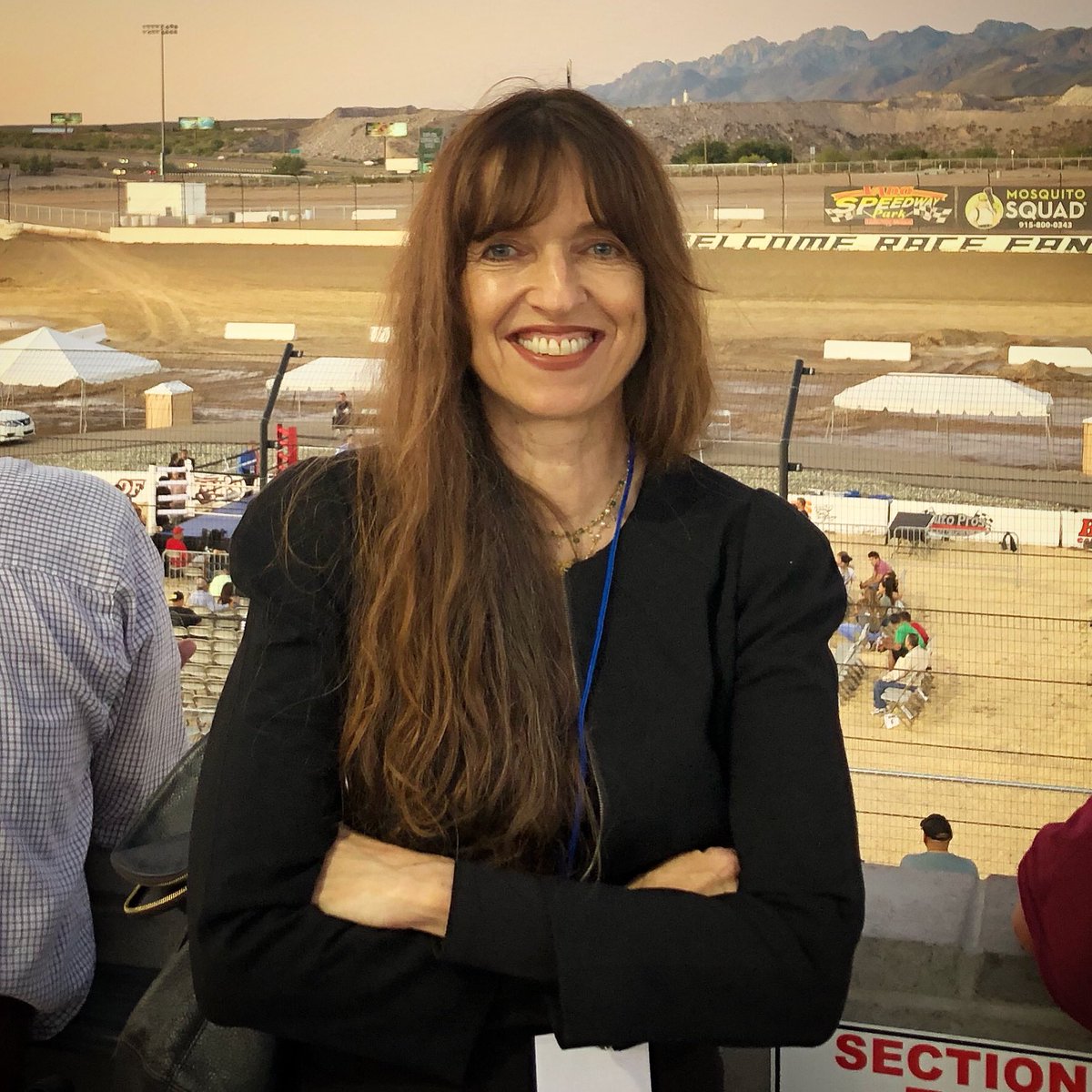
Bettina Gilois, Author's Photo

Bettina Gilois is a Los Angeles based writer whose screen credits include the Bruckheimer film “Glory Road,” for which she was nominated for the Humanitas Prize, as well as “McFarland, USA” starring Kevin Costner, and the HBO movie “Bessie” starring Queen Latifah for which she received an Emmy Nomination for Outstanding Writing. Her book, “Billion Dollar Painter” for Weinstein Books, came out in 2014. She is a special contributor for the Huffington Post in Arts and Culture, and has been a professor of screenwriting at Chapman University, St. John’s College Film Institute in Santa Fe, and now Hofstra University’s Herbert Lawrence School of Communications in NY.

https://lunchticket.org/wp-content/uploads/2015/05/IMG_5941.jpg 2448 2448 Bettina Gilois https://lunchticket.org/wp-content/uploads/2021/12/lunch-ticket-logo-white-text-only.png Bettina Gilois2015-05-07 22:03:462022-02-10 10:11:33Writing: The Toolbox IV

Friday Lunch Archive

  • 2026
  • 2025
  • 2024
  • 2023
  • 2022
  • 2021
  • 2020
  • 2019
  • 2018
  • 2017
  • 2016
  • 2015
  • 2014

Midnight Snack

Take a bite out of these late night obsessions.

Tonight’s bites:

The Lilac and The Housefly: A Tale of Tortured Romanticism

October 24, 2025/in Midnight Snack / Nikki Mae Howard
Read more
https://lunchticket.org/wp-content/uploads/2025/10/Headshot_Nikki-Howard_1770x2000.jpg 2000 1770 Nikki Mae Howard https://lunchticket.org/wp-content/uploads/2021/12/lunch-ticket-logo-white-text-only.png Nikki Mae Howard2025-10-24 23:55:032025-10-20 10:59:03The Lilac and The Housefly: A Tale of Tortured Romanticism

Dig Into Genre

May 23, 2025/in Midnight Snack / Lauren Howard
Read more
https://lunchticket.org/wp-content/uploads/2025/05/Lauren-Howard-credit-Terril-Neely-scaled-773x1030-1.jpg 1030 773 Lauren Howard https://lunchticket.org/wp-content/uploads/2021/12/lunch-ticket-logo-white-text-only.png Lauren Howard2025-05-23 23:59:492025-06-17 18:29:02Dig Into Genre

The dreams in which I’m (not) dying

April 25, 2025/in Midnight Snack / paparouna
Read more
https://lunchticket.org/wp-content/uploads/2025/04/paparouna-photo.jpeg 960 720 paparouna https://lunchticket.org/wp-content/uploads/2021/12/lunch-ticket-logo-white-text-only.png paparouna2025-04-25 23:55:312025-08-14 16:18:41The dreams in which I’m (not) dying

More Midnight Snacks »

Amuse-Bouche

Little bites every third Friday to whet your appetite!

Today’s plate:

Tulip Garden

August 28, 2026/in Amuse-Bouche / Cassandra Baliga
Read more
https://lunchticket.org/wp-content/uploads/2026/08/CassandraBaliga.jpg 640 438 Cassandra Baliga https://lunchticket.org/wp-content/uploads/2021/12/lunch-ticket-logo-white-text-only.png Cassandra Baliga2026-08-28 12:01:202026-08-10 13:01:09Tulip Garden

“Live from the 054 bus in Athens” and “Violanta Biscuit Factory Blast”

August 14, 2026/in Amuse-Bouche / Athena Melliar
Read more
https://lunchticket.org/wp-content/uploads/2026/08/Athena.jpg 1122 688 Athena Melliar https://lunchticket.org/wp-content/uploads/2021/12/lunch-ticket-logo-white-text-only.png Athena Melliar2026-08-14 12:05:312026-08-10 12:58:55“Live from the 054 bus in Athens” and “Violanta Biscuit Factory Blast”

Till Death

May 15, 2026/in Amuse-Bouche, Translation / Lorea Canales, translated by Lia Galván
Read more
https://lunchticket.org/wp-content/uploads/2026/04/galvan_headshot_translator-scaled.jpg 2560 1887 Lorea Canales, translated by Lia Galván https://lunchticket.org/wp-content/uploads/2021/12/lunch-ticket-logo-white-text-only.png Lorea Canales, translated by Lia Galván2026-05-15 12:01:552026-04-30 16:34:25Till Death

More Amuse-Bouche »

School Lunch

An occasional Wednesday series dishing up today’s best youth writers.

Today’s slice:

I’ve Stayed in the Front Yard

May 12, 2021/in School Lunch, School Lunch 2021 / Brendan Nurczyk
Read more
https://lunchticket.org/wp-content/uploads/2021/05/SL-Insta-Brendan-Nurczyk-2.png 1500 1500 Brendan Nurczyk https://lunchticket.org/wp-content/uploads/2021/12/lunch-ticket-logo-white-text-only.png Brendan Nurczyk2021-05-12 10:18:392022-02-01 13:24:05I’ve Stayed in the Front Yard

A Communal Announcement

April 28, 2021/in School Lunch, School Lunch 2021 / Isabella Dail
Read more
https://lunchticket.org/wp-content/uploads/2021/04/SL-FB-Isabella-Dail.png 788 940 Isabella Dail https://lunchticket.org/wp-content/uploads/2021/12/lunch-ticket-logo-white-text-only.png Isabella Dail2021-04-28 11:34:132021-04-28 11:34:13A Communal Announcement

Seventeen

April 14, 2021/in School Lunch, School Lunch 2021 / Abigail E. Calimaran
Read more
https://lunchticket.org/wp-content/uploads/2021/04/SL-Insta-Abigail-E.-Calimaran.png 1080 1080 Abigail E. Calimaran https://lunchticket.org/wp-content/uploads/2021/12/lunch-ticket-logo-white-text-only.png Abigail E. Calimaran2021-04-14 11:22:062021-04-14 11:22:06Seventeen

More School Lunch »

Word From the Editor

Readers,

On December 23rd, 2024, I lost a dear friend of mine, Valerie Goldstein. She was a fellow teacher and writer, and she spent her young adult life being a voice for change. Valerie had organized protests, and her dream was to get into educational policy. When I heard the news of her death, I was grief-stricken. She was so full of life and happiness, and I thought that the world had lost another good one.

More from the current editor »
Current Issue »

Connect With Us

lunchticket on facebooklunchticket on instaX
Submit to Lunch Ticket

A literary and art journal
from the MFA community at
Antioch University Los Angeles.

Get Your Ticket

We’ll keep you fed with great new writing, insightful interviews, and thought-provoking art, and promise with all our hearts never to share your info with anyone else.

Newsletter Signup

Copyright © 2012-2025 LunchTicket.org. All Rights Reserved. Web design and development by GoodWebWorks.
Scroll to top Scroll to top Scroll to top